
Do Binders Work for Mold Illness? Dr. Andrew Campbell Answers
Quick Answer
Binders are a common mold detox recommendation, but no human research shows they help people recover from mold-related illness. Here is what to do first.
Do binders work for mold illness? Binders are one of the most common mold detox recommendations, but no human research shows they help people recover from mold-related illness. If you've taken them for months and you're still sick, you haven't failed. You may have been handed the wrong first step.
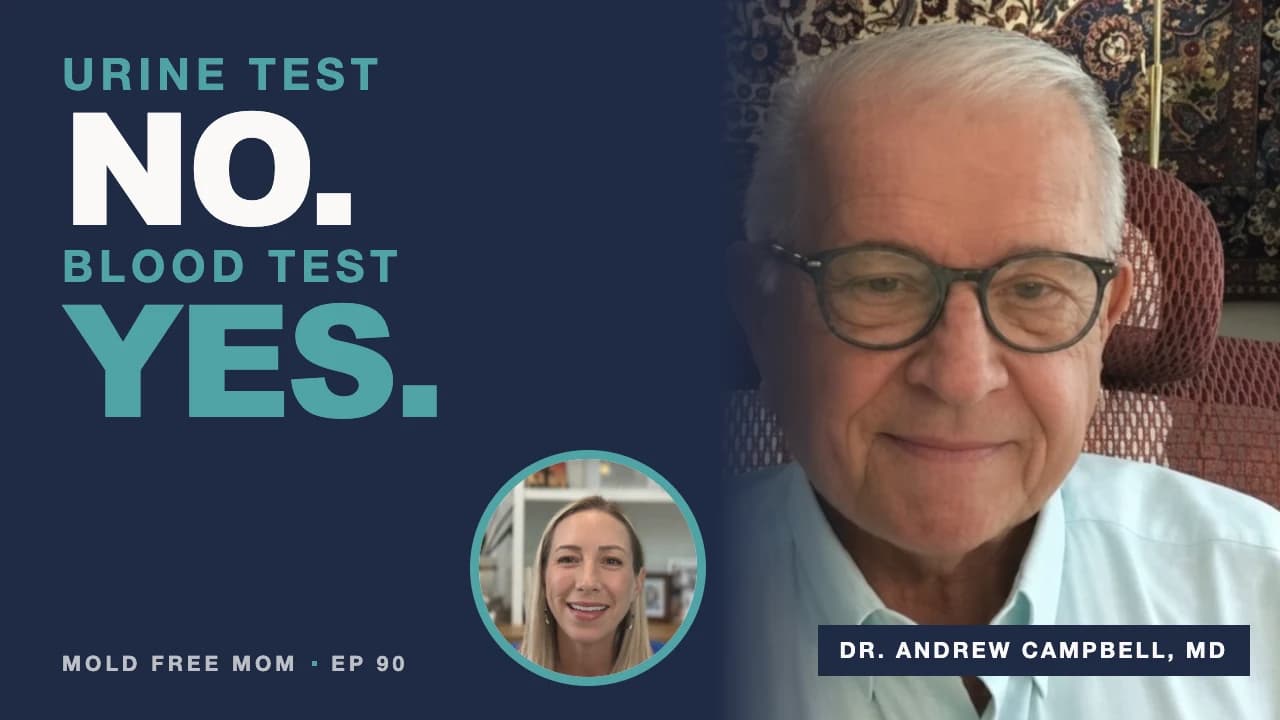
I didn't learn that from a website. I learned it from my personal mentor, Dr. Andrew W. Campbell, a world-renowned physician in the mold illness community with more than 45 years treating mold and mycotoxin illness. He has published more than 100 studies and textbook chapters and has lectured at Oxford and Harvard. He is also the reason I have my life back.
I found him the way many of you are finding me, through a desperate search for answers. I had been sick for 12 years. I had seen more than 30 doctors and spent more than $250,000. I followed his recommended steps, and within months I had my life back.
I wasn't only relieved. I was shocked, angry, and heartbroken at how fast it happened and how many years I had been led in the wrong direction. I decided right then that I would fight for people who were stuck the way I had been.
I started helping others get answers first through MyMycoLab testing. Dr. Campbell took me under his wing. I spent hours learning from him personally as he walked me through lab results and what they actually mean. For months he let me ask every question I had, as many times as I needed, until I had complete clarity. Today I work as a medical consultant for him at MyMycoLab, helping patients understand what their results mean and what to do next to heal.
He changed my life twice. First he gave me the keys to reclaim my health, and then he personally trained me to help others do the same. When we recorded together, he said there are no coincidences in God's universe. I believe that about the day our paths crossed.
I recently sat down with him on Episode 90 of the Mold Free Mom Podcast and asked the questions people bring to me every week. Here's what he told me about binders, testing, and supplements, and about the one step that has to come before all of them.
What does the research actually say about binders in humans?
The few human binder studies that exist were done on people eating aflatoxin-contaminated food, and they measured lab markers, not recovery. None of them show that binders help a person with mold-related illness get well.
When I asked Dr. Campbell about binders, he didn't soften his answer.
"The studies in humans show that binders don't work in humans. They work in sheep, piglets, fryer chickens, rats, mice, rabbits, but not in humans."
Binders are substances like clay and charcoal. They're meant to grab onto toxins in your gut so you pass them instead of absorbing them. Much of the research behind them was done in livestock, where contaminated feed is an expensive problem for farmers.
A few human trials do exist, and you deserve the full picture. In a three-month, placebo-controlled trial in Ghana, a clay binder lowered aflatoxin markers in the blood and urine of adults eating contaminated grain (PubMed: NovaSil clay intervention in Ghanaian adults). A 2022 trial in 200 children ages 2 to 9 found a similar drop in urinary aflatoxin (PubMed: NovaSil clay in Ghanaian children).
Look closely at who was in those studies and what was measured. The participants had heavy exposure to aflatoxin in their food, and the result was a lab number going down. No one measured brain fog, fatigue, joint pain, or whether anyone got their life back. No one in those trials was sick from a water-damaged home.
That's the heart of it. No published study shows a binder taking someone who is sick from mold and making them well. And if you're still breathing mold every day, a binder does nothing about where the toxins are coming from.
Why does my urine mycotoxin test keep coming back the same?
A urine mycotoxin test shows what your body is excreting at that moment. It can't tell you how much mycotoxin your body is holding or whether it's making you sick. That's why results can look unremarkable while you feel terrible.
Dr. Campbell pointed out that the labs offering urine testing use different methods and different cutoffs. Send one person's sample to three labs and you can get three different answers. He also noted that most people excrete small amounts of mycotoxins from everyday foods, so a positive urine result doesn't prove your home is the problem either.
Ochratoxin A shows how urine can mislead. It binds tightly to albumin, the main protein in your blood, and in humans it has a plasma half-life of about 35 days (PubMed: Studer-Rohr et al., Archives of Toxicology). Protein binding, reabsorption by the kidneys, and recirculation through the gut and liver all keep it in the body longer (PMC: Ochratoxin A and Human Health Risk). A toxin your body holds that tightly won't necessarily show up in your urine at a level that matches how sick you are.
I know this one personally. My urine test came back at zero while I was living in mold and very sick. I wrote about it in My Vibrant Urine Test Said Zero While I Was Living in Mold.
What does a blood serum test show that urine cannot?
A blood serum test measures how your immune system is responding to mycotoxins. That response shows what is affecting your body now, which a snapshot of what you excreted can't do.
The blood test Dr. Campbell uses looks at 14 mycotoxins and tells you three things. It shows how strongly your immune system is reacting to each one. It helps show whether the exposure is in your current environment or a past one. And it flags whether mast cell activation is part of the picture.
The two antibody types matter. Your body makes IgE antibodies within hours of an exposure, while IgG takes about a month to build. Very high IgG usually points to your home, since that's where most people spend 14 or more hours a day. More moderate levels send you looking at other places, like work, the gym, a yoga studio, or an older church building you visit every week.
This part surprises people. Two people in the same moldy house can have completely different results, because every immune system responds differently. He described a family with five children in one moldy home where every test was different. The child sleeping next to the moldy bathroom felt only mildly unwell, while the child at the far end of the house felt awful.
This is why I start with the body before anyone spends thousands on environmental testing. The blood test I use with every client who starts with my testing bundle is the MyMycoLab serum test, the same one Dr. Campbell uses. The Mold Blood Test Bundle gives you that starting point, so every decision after it is based on your own results instead of a guess.
Why isn't a supplement the first move?
Supplements can't fix an exposure you're still breathing, and most people who reach this point are already taking more than their body can handle. Getting away from the source and calming the body down come first.
Dr. Campbell told me people come to him with shopping bags full of supplements. Some take 20, 30, even 50 a day, and they're still sick. With those patients, his first step is to stop supplements for at least three weeks before starting any treatment. Then he rebuilds with anti-inflammatory nutrition as the foundation. Only after that does he add supplements back, slowly and specifically.
Please don't stop anything a practitioner prescribed without talking to them first. The point isn't that every supplement is bad. Targeted support was part of my own recovery. The point is precision. Published studies don't just say "take vitamin C." They name the form, the amount, how often, and for how long. Grabbing whatever a social media post recommends is not the same thing.
He also said something I think about all the time:
"You want to believe in God, but everybody else has got to show you the evidence. Show me a published study."
That's the standard I hold every recommendation to, including my own.
What did he say about supplement contamination?
Many supplements don't contain what their labels promise, and some contain things you would never choose to put in your body, like heavy metals. Dr. Campbell described recent lab testing that turned up contamination and mislabeling often enough that he doesn't trust a bottle until it has been tested.
Part of the problem is how supplements are regulated. The FDA does not have the authority to approve supplements for safety or effectiveness before they are sold (FDA: Dietary Supplements 101). Independent testing has found real problems. One study of 41 plant-based supplements found cadmium, lead, or mercury in 79.2% of the land-plant products and 88.2% of the microalgae products (PMC: Health Risks From Medicinal Plant Dietary Supplements).
He is also certified in forensic medicine, and he checks supplements the way he would check evidence. He removes the label, sends the bottle to an independent lab, and waits for the results. After years of doing this, he told me he has found only one lab he trusts.
For someone who already reacts to everything, contaminated supplements add to the problem. Mycotoxins can push mast cells to release inflammatory signals, especially in the brain, the gut, and the skin. Adding a pile of untested products to a body in that state can make the reactivity worse.
What does getting away from the source actually mean?
Getting away from the source means finding every place you're being exposed to mold, not only your house, and removing yourself from it before expecting any treatment to work. Dr. Campbell calls this the first rule of toxicology: take the person away from the toxin, or the toxin away from the person.
"You have to get away from the source first. Finding the source is a huge problem. Huge problem."
Mycotoxins aren't germs. They're toxic molecules, which is why he compares them to other toxins:
"It's a toxin. It's not a little virus, it's not a little bacteria, it's a toxin. How much mercury is it okay to be around?"
Mold spores are about 2 to 4 microns across, compared to roughly 100 microns for a human hair, so they travel deep into the lungs and sinuses. A little moisture on a windowsill after a storm is enough for mold to start growing.
The source isn't always obvious. He told me about a woman whose home passed two mold inspections, a foundation inspection, and a roof inspection. She knew something was still wrong, pulled up her own tile, and found it covered in mold. Another family got sick within a month of moving into a brand new home, where a nail had punctured a pipe behind the wall. He has even found his own car seat wet after leaving the windows cracked during a Florida thunderstorm.
Exposure can also come from a workplace, a gym you visit four times a week, or a church building. The World Health Organization's review of the research found that people in damp or moldy buildings face higher risks of respiratory symptoms and infections, and that fixing dampness problems can reduce those health effects (WHO Guidelines for Indoor Air Quality). I've written more about the research on leaving a moldy home.
If you're not sure whether mold is behind your symptoms, the Mold Symptoms Assessment is a good place to start.
What if I left the mold and I'm still sick?
Leaving the source is the first step, not the finish line. Many people still need help after the exposure ends, and that doesn't mean you did something wrong.
Once a patient is away from the source, Dr. Campbell's approach addresses what the exposure left behind. Spores that settled in the sinuses or lungs may need antifungal treatment prescribed by a physician. Inflammation comes down through nutrition. Specific supplements get added back carefully, based on testing. If you're wondering whether your lingering symptoms make sense, read Mold Symptoms After Remediation: Is This Normal?
I went through this twice. After my second exposure, what brought me back was the right testing, a physician who understood antifungal treatment, and nervous system work. No one can promise you a timeline, and recovery looks different for every person. But years on a plan that isn't working don't have to be the rest of your story.
If you want someone to go through your results with you and build a plan, that's what the Complete Mold Recovery Program is for. My mentor gave me the keys. Now I get to hand them to you.
Sources
- NovaSil clay intervention in Ghanaians at high risk for aflatoxicosis: II. Reduction in biomarkers of aflatoxin exposure in blood and urine (PubMed)
- Safety and Efficacy of Novasil Clay (Calcium Montmorillonite) in Children Exposed to Aflatoxin in Ghana (PubMed)
- Kinetic parameters and intraindividual fluctuations of ochratoxin A plasma levels in humans (PubMed)
- Ochratoxin A and human health risk: A review of the evidence (PMC)
- FDA 101: Dietary Supplements (U.S. Food and Drug Administration)
- Health risks from consumption of medicinal plant dietary supplements (PMC)
- WHO Guidelines for Indoor Air Quality: Dampness and Mould (NCBI Bookshelf)
Frequently Asked Questions
Should I stop my binders?
Don't stop or change anything you were prescribed without talking to the practitioner who recommended it. Then ask them what human evidence shows this binder helps people with mold-related illness get well. Dr. Campbell's view is that no such evidence exists. Your energy is better spent confirming what's happening in your body with blood testing and finding your source of exposure.
Is the urine test I already paid for useless?
It can't answer the question you bought it to answer. A urine test shows what your body excreted that day, which can include small amounts from everyday food. It can't tell you how much mycotoxin your body is holding or whether your immune system is reacting to it. My own urine test came back at zero while I was living in mold.
Aren't there any human studies on binders?
There are a few. Clay binder trials in Ghana lowered aflatoxin markers in adults and children who were eating contaminated food. Those trials didn't include people sick from water-damaged buildings, and they measured lab markers, not symptoms. No published study has shown that binders help someone with mold-related illness recover.
If binders don't work, why was I told to take them?
Many mold protocols grew out of animal research and got repeated online until they sounded like settled science. Most practitioners who recommend binders sincerely want to help. The standard I use is simple: show me the published human study. When that study doesn't exist, it's fair to ask why the recommendation does.
What test should I do instead of a urine test?
A blood serum test that measures your immune response to mycotoxins. It can show whether exposure is affecting you now, help point to whether your home is the likely source, and flag mast cell activation. I use the MyMycoLab serum test with every client who starts with my Mold Blood Test Bundle.
Why do I react to every supplement now?
Mycotoxins can push mast cells to send out inflammatory signals, especially in the brain, gut, and skin. Many people in that state are also taking large numbers of supplements, and some of those may carry contaminants. Stopping, resetting with nutrition, and rebuilding slowly under guidance is often the way back.
My spouse tested positive but feels fine. Do they need to do anything?
Dr. Campbell said yes. Every immune system responds differently, even in identical twins, so two people in the same home can have very different symptoms. A positive result means the exposure is reaching their body, whether they feel it yet or not. Talk with a mold-literate physician about next steps for each person.
I moved out and I'm still sick. Did I do something wrong?
No. Leaving the source is the first step, not the finish line. The body's response to mycotoxins can linger after exposure ends, and spores can settle in the sinuses or lungs. Testing, a mold-literate physician, and a clear plan will show you what your body still needs.
Aubree Felderhoff
Board Certified Holistic Health Practitioner | Mold Recovery Concierge | Certified Primal Health Coach | Master Personal Trainer
Aubree spent 12 years and more than $250,000 searching for answers to a mystery chronic illness that 30-plus doctors couldn't solve. The first culprit was a mycotoxin-overloaded home that triggered a cascade of symptoms nobody could trace back to the source. After finally identifying the connection, remediating, and rebuilding her health, she faced a second exposure years later when water damage in her next home brought the symptoms flooding back.
That second experience is what shaped everything. She found a physician who understood antifungal treatment, completed neuroplasticity training, and fully recovered. Having navigated mold illness twice, from two different sources, she understands both how it starts and how it ends.
Aubree is a Board Certified Holistic Health Practitioner through the American Association of Drugless Practitioners (AADP), a Certified Primal Health Coach, NASM Certified Trainer, and Cooper Clinic Certified. Before mold illness defined her life, she spent 14 years in elite fitness as a national champion collegiate gymnast. She brings that same discipline and evidence-based approach to mold recovery, helping families get clear answers faster, without the decade of wrong turns she endured.
The newsletter
A little hope in your inbox
One email a week from me, with what actually helps families get better. No spam, unsubscribe anytime.
Recommended Products
Recommended Products may include affiliate links. See our Affiliate Disclosure for details.
 Aubree's Protocol
Mold Recovery Supplement Protocol
Professional-grade supplements curated by Aubree for mold detox and recovery. Available in Adult and Youth formulations through Fullscript with practitioner pricing.
 Best Value
Mold Blood Test Bundle
The mycotoxin blood test ordered through my practitioner account, a personalized written review of your results, and a 50-minute call with me. One purchase, one practitioner, one path forward.
Keep learning with mold illness guides
Start-here pages on symptoms, testing, CIRS, remediation, and hiring an inspector. Free tools and program paths are linked from each guide.
- How to Test for Mold IllnessWhy blood testing comes first, where urine mycotoxin and ERMI fall short, and how to order body vs home testing without wasting money.
- Mold Illness Symptoms GuideHow mold-related symptoms show up across body systems, why they get misdiagnosed, and when a pattern points to exposure.
Need personalized guidance?
Start with free guides and the symptom assessment, or talk with Aubree about the right program path.