
Is Leaving a Moldy Home Enough to Heal? What One Million People's Data Shows

Quick Answer
The single most effective intervention for mold-related illness is removing the source of exposure. This isn't opinion. It's backed by randomized controlled trials, a Cochrane systematic review, and population-level studies involving over one million people. No pharmaceutical protocol has evidence even close to this strong.
The Question Nobody Asks
If you've been told you need months or years of binders, supplements, and cholestyramine to recover from mold illness, there's a question worth sitting with: what if the most important thing you can do is also the simplest?
Remove the mold. Leave the environment. Fix the building. Let your body do what it was designed to do.
That sounds too straightforward for a health issue that has cost many families tens of thousands of dollars in treatment. But the peer-reviewed science doesn't care about treatment protocols or supplement revenue. It just reports what happens when researchers actually study this. And what happens is remarkably consistent: when people leave moldy environments, they get better.
Not sometimes. Not anecdotally. Across thousands and thousands of studied participants, in controlled trials, in systematic reviews, and in population-level data involving over a million people.
Let's look at the actual evidence.
Study 1: The Randomized Controlled Trial That Changed Everything
Kercsmar CM, Dearborn DG, Schluchter M, et al. "Reduction in Asthma Morbidity in Children as a Result of Home Remediation Aimed at Moisture Sources." Environmental Health Perspectives, 2006; 114(10):1574-1580.
This is the study that anyone making claims about mold treatment should have to reckon with, because it's the one thing the Shoemaker Protocol never produced: a randomized controlled trial studying what happens when you remove the mold.
Researchers at Case Western Reserve University enrolled 62 asthmatic children, ages 2 to 17, all living in homes with documented indoor mold. They randomly assigned them to two groups. Both groups received an asthma action plan, education, and problem-solving support. On top of that, the remediation group received actual construction repairs targeting the root cause: reduction of water infiltration, removal of water-damaged building materials, and HVAC alterations. The control group received only home cleaning information.
The results were not subtle.
The remediation group experienced a statistically significant decrease in asthma symptom days (p = 0.003). In the follow-up period after repairs were completed, only 1 out of 29 children in the remediation group had an asthma exacerbation. In the control group? 11 out of 33.
Read that again. One child versus eleven, in the as-treated analysis. Same city. Same demographics. Same disease. Same asthma education. The difference was whether the moisture problem in their home was actually repaired.
No one gave these children cholestyramine. No one put them on binders or supplement protocols costing hundreds of dollars a month. The mold was removed, and the children got better.
This study was published in Environmental Health Perspectives, one of the most respected environmental health journals in the world. The authors declared no competing financial interests. It is also one of the intervention studies cited in the major 2011 review of dampness and mold health evidence by Mendell and colleagues.
Source: PubMed - Kercsmar et al., 2006
Study 2: The Cochrane Review - The Highest Level of Evidence in Medicine
Sauni R, Verbeek JH, Uitti J, et al. "Remediating buildings damaged by dampness and mould for preventing or reducing respiratory tract symptoms, infections and asthma." Cochrane Database of Systematic Reviews, 2015; Issue 2, Art. No.: CD007897.
If the Kercsmar study is a powerful single study, the Cochrane Review is the entire weight of evidence-based medicine brought to bear on one question: does fixing mold-damaged buildings improve the health of the people inside them?
Cochrane Reviews are considered the gold standard for medical evidence. They don't run new experiments. They systematically analyze every qualifying study on a topic, assess the quality of each one, and synthesize the findings. When a Cochrane Review reaches a conclusion, it carries more weight than any individual study, any individual doctor's clinical experience, or any protocol developer's theory.
This review analyzed 12 studies with a combined total of 8,028 participants. The interventions ranged from thorough renovation to basic cleaning. The findings:
- In adults, repairing mold-damaged homes reduced the odds of wheezing by about 36% (OR 0.64, 95% CI 0.55-0.75)
- Rhinitis in adults decreased by about 43% (OR 0.57, 95% CI 0.49-0.66)
- For children, the one qualifying study did not show a difference in asthma days or emergency visits, so the review could not draw the same conclusion for kids
- For pupils in repaired schools, visits to doctors for colds were less frequent, though that evidence was very low quality
The quality of evidence for the adult findings was rated as moderate, which in Cochrane terms means the true effect is likely close to the estimated effect. Evidence for offices and schools was rated lower. This is stronger than anything that exists for cholestyramine and mold. It's stronger than anything that exists for binder protocols. It's stronger than anything supporting the idea that you need an indefinite supplement regimen to recover.
The conclusion was straightforward: repairing mold-damaged houses and offices decreases asthma-related symptoms and respiratory infections in adults compared to doing nothing, and the authors called for better trials to confirm it.
Eight thousand twenty-eight participants. Twelve studies. The most rigorous evidence synthesis methodology in medicine. And the answer is the same one your common sense already told you: get rid of the mold, and people get better.
Source: PubMed - Sauni et al., 2015
Study 3: 4,407 People in a Cluster Randomized Trial
Howden-Chapman P, Matheson A, Crane J, et al. "Effect of insulating existing houses on health inequality: cluster randomised study in the community." BMJ, 2007; 334:460.
This New Zealand study took the question even further. Researchers enrolled 1,350 households containing 4,407 people living in older, uninsulated homes, the kind of houses where dampness and mold thrive. Half the homes received a standard retrofit insulation package. The other half served as controls.
The insulation made homes modestly warmer and drier, with bedroom temperatures up about half a degree and relative humidity down about 2%. Those are the conditions that discourage dampness and mold, and the health differences were clear.
- Residents in insulated homes had roughly half the odds of wheezing in the past three months (OR 0.57, 95% CI 0.47-0.70, p<0.0001)
- They had about half the odds of winter colds and flu (OR 0.54, 95% CI 0.43-0.66, p<0.0001)
- Children were half as likely to miss school (OR 0.49, 95% CI 0.31-0.80)
- Adults missed fewer days of work (OR 0.62, 95% CI 0.46-0.83)
- Visits to doctors decreased (OR 0.73, 95% CI 0.62-0.87)
Nobody prescribed these 4,407 people anything. Nobody started them on a protocol. The homes were made drier and less hospitable to mold. And the people living in them got healthier.
This was published in the BMJ, formerly the British Medical Journal, one of the four most influential medical journals in the world. It was a cluster randomized trial, meaning entire communities were randomized rather than individuals, which is a particularly strong design for studying environmental interventions.
Source: PubMed - Howden-Chapman et al., 2007
Study 4: Over One Million People Confirm the Pattern
Fyfe C, Telfar Barnard L, Douwes J, Howden-Chapman P, Crane J. "Retrofitting home insulation reduces incidence and severity of chronic respiratory disease." Indoor Air, 2022; 32:e13101.
If you want to know whether an intervention works, there's no substitute for seeing what happens at scale. This 2022 study examined data from 1,004,795 residents across 205,001 New Zealand homes that received insulation through a national energy efficiency program. Researchers linked the insulation records to health records and compared what happened before and after the homes were retrofitted.
- Retrofitting insulation was associated with a 10% reduction in new-onset chronic respiratory disease (OR 0.90, 95% CI 0.86-0.94)
- Prescriptions for treating respiratory flare-ups decreased by 4% (RR 0.96, 95% CI 0.96-0.97)
- The effect was even more pronounced in children under 15, who saw a 15% reduction in new respiratory disease onset (OR 0.85, 95% CI 0.75-0.98)
One million people. Two hundred thousand homes. No protocol. No supplements. No binders. Fix the environment, and respiratory health improves measurably at the population level.
Source: Fyfe et al., Indoor Air, 2022
What This Means for Your Recovery
These four studies represent different levels of the evidence hierarchy, from a single randomized trial to a Cochrane systematic review to population-level data, and they all point to the same conclusion: the most important thing you can do for mold-related illness is eliminate the exposure.
This doesn't mean that medical treatment isn't valuable. For people with internal fungal colonization, targeted systemic antifungal therapy can address what environmental remediation alone cannot reach: mold that has taken up residence in your sinuses, gut, or respiratory tract. Treatment that addresses root cause colonization has a beginning, a middle, and an end.
But here's what the evidence does mean: if someone is selling you an indefinite protocol while you're still living in a moldy home, they have the order of operations backwards. And if someone is telling you that pharmaceutical intervention is the reason you got better after you moved out of a contaminated building, the science says they can't actually prove that, because they never ran the study that would separate the two variables.
Shoemaker's most cited mold study involved 21 patients who were simultaneously removed from their water-damaged buildings and given cholestyramine. He attributed the improvement to the drug. But across 8,028 participants in the Cochrane Review, across 4,407 participants in New Zealand, across over one million people in the insulation study, the same improvement happens when you just fix the environment.
The simplest explanation is usually the right one. Your body heals when you stop poisoning it.
Leaving the exposure is the biggest lever, but it is not the whole story for everyone. If you moved out and still feel unwell, mold symptoms after remediation explains what else is usually going on, and can your body heal from mold covers what recovery looks like after that.
The Practical Takeaway
If you suspect mold is making you or your family sick, here is what the evidence supports:
First, confirm the exposure. Blood testing for mycotoxins can tell you whether your body has been affected before you spend thousands on environmental testing. This is faster and more affordable than starting with home inspections.
Second, eliminate the source. Professional remediation that addresses the root cause of moisture, not just surface cleaning, is the intervention with the strongest evidence base in the entire mold health literature. This is not optional. It is the foundation everything else builds on.
Third, address internal colonization if it exists. For some people, mold doesn't just expose you from the outside. It colonizes internally. If blood testing confirms ongoing mycotoxin production after you've left the contaminated environment, working with a physician who understands antifungal treatment can address the root cause with a defined protocol, not a lifetime subscription.
Fourth, rebuild your foundation. Your body has remarkable healing capacity when the insult is removed. Supporting that process with anti-inflammatory nutrition, movement, stress management, and nervous system regulation helps you recover faster and builds the resilience that makes you less vulnerable to future exposures.
None of this requires spending years on a protocol. None of it requires living in fear. And all of it is supported by more evidence than any binder, supplement stack, or prescription has ever produced. The body is designed to heal, it just needs the right tools in the right order.
Not sure whether mold is even your problem? The free mold symptoms assessment takes a few minutes and tells you whether exposure is worth investigating.
Sources
- Kercsmar CM, Dearborn DG, Schluchter M, et al. Reduction in asthma morbidity in children as a result of home remediation aimed at moisture sources. Environmental Health Perspectives. 2006;114(10):1574-1580. PubMed
- Sauni R, Verbeek JH, Uitti J, et al. Remediating buildings damaged by dampness and mould for preventing or reducing respiratory tract symptoms, infections and asthma. Cochrane Database of Systematic Reviews. 2015;(2):CD007897. PubMed
- Howden-Chapman P, Matheson A, Crane J, et al. Effect of insulating existing houses on health inequality: cluster randomised study in the community. BMJ. 2007;334:460. PubMed
- Fyfe C, Telfar Barnard L, Douwes J, Howden-Chapman P, Crane J. Retrofitting home insulation reduces incidence and severity of chronic respiratory disease. Indoor Air. 2022;32:e13101. Indoor Air
Disclaimer: This content is for educational purposes only and does not constitute medical advice. Always consult with a qualified healthcare provider regarding your specific health situation.
Frequently Asked Questions
What is the strongest evidence for mold recovery?
The strongest evidence comes from a Cochrane systematic review analyzing 12 studies with 8,028 participants, showing that repairing mold-damaged buildings reduces wheezing by 36% and rhinitis by 43%. This is the gold standard of medical evidence.
Do I need binders or supplements to recover from mold illness?
The peer-reviewed research shows that removing mold exposure is the primary intervention for recovery. Population-level studies involving over one million people show improvement from environmental remediation alone, without pharmaceutical protocols.
How effective is mold remediation for health improvement?
In a randomized controlled trial, only 1 out of 29 children had an asthma exacerbation after home remediation, compared to 11 out of 33 in the control group. This demonstrates the dramatic health impact of proper mold removal.
What should I do first if I suspect mold illness?
First, confirm the exposure through blood testing for mycotoxins. This is faster and more affordable than starting with home inspections. Then focus on professional remediation that addresses the root cause of moisture.
Can you fully recover from mold illness without medication?
Yes, the research shows most people recover when the mold source is eliminated. However, if you have internal fungal colonization confirmed by testing, targeted antifungal therapy may be needed to address mold that has colonized your sinuses, gut, or respiratory tract.
How long after leaving a moldy house do people start to feel better?
Most people notice the first changes within weeks of leaving the exposure, with steadier improvement over several months. The studies in this post measured outcomes at six and twelve months, and the gains held. Your timeline depends on how long you were exposed and whether mold has colonized the body, which is why I have clients test their blood rather than guess.
Do I have to move out, or can I stay while the house is remediated?
It depends on where the mold is and how bad the water damage is. If the problem is contained to one area and remediation is done under proper containment, many families stay. If the mold is in the HVAC, across multiple rooms, or the source of the moisture is not fixed yet, staying usually means staying sick. A licensed inspector can tell you which situation you are in.
If leaving is enough, why are some people still sick after they move?
Leaving stops new exposure, but it does not always clear what already built up. Mycotoxins stored in the body, mold colonizing the sinuses or gut, and a nervous system stuck in a stress loop can keep symptoms going after the house is no longer the problem. Those are treatable, and a blood test is how you find out which one applies to you.

Aubree Felderhoff
Board Certified Holistic Health Practitioner | Mold Recovery Concierge | Certified Primal Health Coach | Master Personal Trainer
Aubree spent 12 years and more than $250,000 searching for answers to a mystery chronic illness that 30-plus doctors couldn't solve. The first culprit was a mycotoxin-overloaded home that triggered a cascade of symptoms nobody could trace back to the source. After finally identifying the connection, remediating, and rebuilding her health, she faced a second exposure years later when water damage in her next home brought the symptoms flooding back.
That second experience is what shaped everything. She found a physician who understood antifungal treatment, completed neuroplasticity training, and fully recovered. Having navigated mold illness twice, from two different sources, she understands both how it starts and how it ends.
Aubree is a Board Certified Holistic Health Practitioner through the American Association of Drugless Practitioners (AADP), a Certified Primal Health Coach, NASM Certified Trainer, and Cooper Clinic Certified. Before mold illness defined her life, she spent 14 years in elite fitness as a national champion collegiate gymnast. She brings that same discipline and evidence-based approach to mold recovery, helping families get clear answers faster, without the decade of wrong turns she endured.
The newsletter
A little hope in your inbox
One email a week from me, with what actually helps families get better. No spam, unsubscribe anytime.
Recommended Products
Recommended Products may include affiliate links. See our Affiliate Disclosure for details.
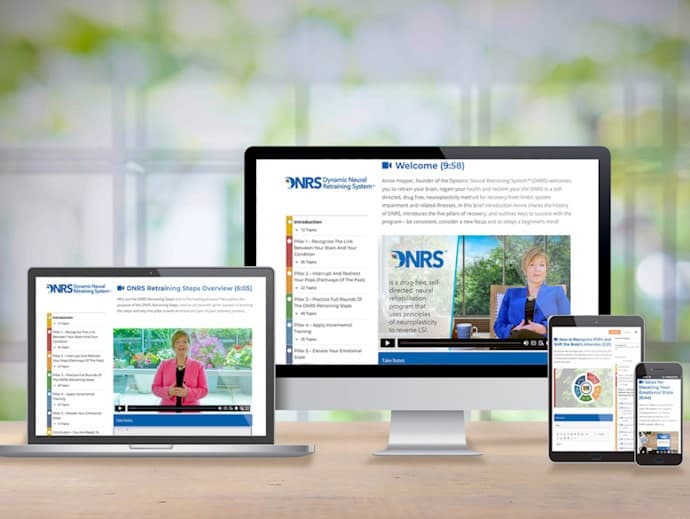 Brain Retraining
DNRS (Dynamic Neural Retraining System)
A neuroplasticity-based program that helps rewire limbic system dysfunction caused by mold exposure, trauma, and chronic illness. Self-paced video training you can do from home.
 Full Support
The Complete Mold Recovery Program
For families who are done figuring it out alone and want someone in their corner through every phase of recovery.
 Aubree's Protocol
Mold Recovery Supplement Protocol
Professional-grade supplements curated by Aubree for mold detox and recovery. Available in Adult and Youth formulations through Fullscript with practitioner pricing.
 Nervous System Reset
Primal Trust Academy & Community
Brain retraining + nervous system regulation program for chronic illness recovery. The missing piece for mold patients whose bodies stay stuck in stress mode.
Keep learning with mold illness guides
Start-here pages on symptoms, testing, CIRS, remediation, and hiring an inspector. Free tools and program paths are linked from each guide.
- Mold Remediation GuideWhat proper remediation looks like, how to separate inspection from the fix, and what to do when you are still sick after the work.
- What Is CIRS and Mold Illness?What people mean by CIRS, where labels help or hurt, and why forever protocols are not the path I teach families.
- Mold Illness Symptoms GuideHow mold-related symptoms show up across body systems, why they get misdiagnosed, and when a pattern points to exposure.
Need personalized guidance?
Start with free guides and the symptom assessment, or talk with Aubree about the right program path.