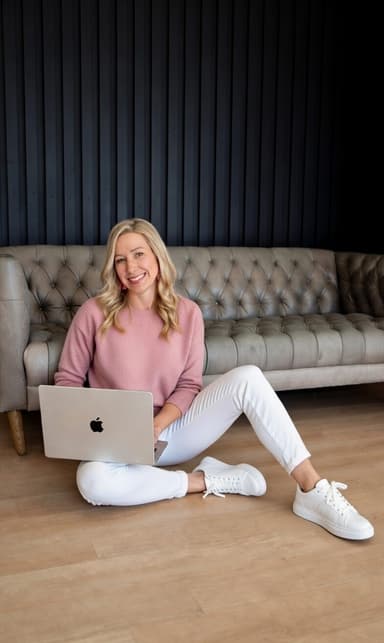
Aubree Felderhoff: Welcome to Mold Free Mom, where we cut the confusion and break down what it really takes to heal from mold illness. Whether you're dealing with unexplained symptoms and no real answers, or you know mold is your problem, you've done everything right, and yet you're still not better. This podcast is for you. I'm Aubree, and I spent 12 years struggling with mold toxicity. before finally learning why nothing was working. Mold wasn't my only problem. Not knowing how to heal from it was. This is where guessing ends and real healing begins. Let's get started. Aubree Felderhoff | Mold Fr... Hey, before we get into today's episode, I just wanted to say, if you or someone that you love is dealing with mold illness or symptoms that look like they could be related to mold, and you're not sure where to start, you're feeling overwhelmed with even the thought of what to do next, you don't have to keep piecing this together alone. I offer a free discovery call where we can talk through where you are right now and what would actually help you get unstuck and move towards healing. Head over to moldfreemom.com and grab a free discovery call. See you there. Aubree Felderhoff | Mold Fr... Welcome back to Mold Free Mom. And today I have an amazing guest. This is my friend, Becca Yon, and she has helped over a hundred women and couples nationwide navigate fertility challenges through cycle education and natural hormone support. With a background in psychology and training as a FEMM educator, FIAT, hormone coach, doula and childbirth educator, she is known for helping women understand their bodies. through both a scientific and a faith-based lens. She leads women through her signature program, Fertility Framework, where they learn how to support their hormones and prepare for pregnancy naturally. I love that. So welcome, Becca.
Bekah Yawn: Thank you, excited to be here. Aubree Felderhoff | Mold Fr... Yeah, I'm excited to have you. So I want to start off, tell me a little bit about your story and how you were led to start this, you know, ministry passion.
Bekah: I am Becca Yahn. I am from Colorado and I have four kids here on earth and three in heaven. So what led us to this journey and how I serve women today is our three kiddos in heaven. So we had two boys, pretty straightforward. And then we had three losses. We had a 15 week miscarriage and then two chemical pregnancies after that. And we were left with just really no answers and no support by our OB. And that was kind of what jumped me into the natural world of things and all of that. I had a healing journey of learning how to track my cycle through a fertility awareness method. I had no idea what that was. And so I'm more than happy to share about like, what is that? So we learned about natural family planning that way to be able to avoid pregnancy for a time to heal and to figure out what was going on. And then I also got myself a hormone coach because she seemed like she knew what she was talking about and got a lot of guidance on what was going on with my hormones and root issues. So that was kind of a big part of my healing journey. took me about six months. until I was able to see on my cycle charts how things were improving and my cycle was looking healthier and my hormones were looking better and we felt like we had the green light from the Lord to go ahead and try to get pregnant again. And we did and that was our rainbow baby, our precious daughter. Our 15 week we knew was a girl and so that was really hard to lose her and so the Lord gave us another girl and it was just incredible. And it was through that pregnancy you know, at that point I had kind of gone more into the natural crunchy world. And so was like, I'm going to have a natural birth and in all of this. And then the Lord ended up leading us to going from a planned hospital birth to a planned home birth with a Christian midwife. And my care in the short eight weeks that I had her, because I transferred very late, was so life changing that that's what made me want to become a doula and a childbirth educator because it was It was so life-changing from having the care of an OB with my boys to having that midwifery care. So we had our daughter at home in the shower. It was amazing. Very fast birth, two hours. And then we just enjoyed being a family, a sweet time. I will say maybe not as sweet because Aubrey, that's, and I usually don't share this part of my story, but that's actually, you know, in my postpartum and in my year and a half, I was working on detoxing from being on birth control for over 10 years. and also finding out that I had mold in my system, which is not something I'd found out before I was pregnant with my daughter. And she was born with eczema. We're still dealing with it. I need to talk to you about that, ⁓ apparently. But anyways, in this postpartum, after my third child, we were working on some mold stuff and getting through that. then, We got pregnant again, planned, and the Lord gave us this sweet precious child, So from my healing journey, from my miscarriages, I became extremely passionate about helping other women learn what I had learned about learning how to track their cycle. So I became a certified fertility awareness instructor. And then I also became a certified hormone coach because it was kind of frustrating and not enough for me to be able to be like, hey, here's your cycle and your hormones and good luck and not be able to help with imbalances we observed. So I got certified as a hormone coach to be able to help naturally with that. And I am a strong, strong, strong Christian. So with my podcast for the love of hormones, we approach it from a faith-based lens. So we do bring in science. We do talk about our body. We talk about the physical. But we cannot do that without addressing the spiritual. So we do talk a lot about our faith because it's so integrated with our fertility, as I know you understand and you know, and have lived through. So that's a little bit, about me and about just my journey for how I've gotten to be where I am. Aubree Felderhoff | Mold Fr... Well, gosh, that's a huge journey. And I'm so sorry about all of your losses. And my heart just hurts for you. But it sounds like you've been able to turn some of that pain into helping others, which I love that you're using it for good, even though it was so painful. So now that you're helping others, are you mostly helping women with infertility? with the pregnancy loss and trying to conceive just with hormone dysregulation, like what is a typical person that you're helping come to you for?
Bekah: Yeah, so it is either they've been trying to get pregnant for a long time. So it could be a year, two years. I've had 10, 12 years. They haven't been able to conceive. Or they have dealt with a miscarriage or more than one miscarriages. And sometimes we have a combination of both. Like they've had a baby, and then they got pregnant, and then they had a miscarriage, and now they can't get pregnant or something like that. Or they've had a child. and then they can't get pregnant. So it's kind of all, it's all in that boat. Aubree Felderhoff | Mold Fr... Yeah, yeah. So from your just experience working with other women, what do you find are the most common hormonal patterns that you see in women that are dealing with this type of thing?
Bekah: Yeah, well, unfortunately, just like in the society we live in, based off of a number of reasons, maybe they have been dealing with mold. Like that is definitely a thing that can come up. But we've got hormonal issues, period. But oftentimes, the hormonal issues are not just because your hormones are off. It's because we're dealing with some kind of root issue. So whether we're dealing with gut issues, liver issues, inflammation, and then trying to figure out why. Aubree Felderhoff | Mold Fr... Mm-hmm.
Bekah: or thyroid or whatever. You know, like, why am I having a thyroid issue or why am I having a gut issue or a liver issue and just continuing to go deeper and deeper. So I would say, you know, one of the biggest things that I'm a huge proponent of with women is we're going to understand what your body is trying to tell us so much better when we learn how to track your ovulation cycle. And when I say your ovulation cycle, like that's your menstrual cycle. Like that's what everybody knows the words are, but. We need to make it your ovulation cycle because that's the main event that we need to be looking at and tracking. And oftentimes when we learn how to track our cycle, it's giving us so much information and data about our body. Before we even look at blood work or before we even go down other rabbit holes, mineral testing, whatever, let's look at your cycle chart first because that is giving us a lot of information for what's going on with the hormones. I often see women with low hormones across the board. So like they're having low estrogen, low testosterone. obviously they're not having any progesterone because if you're having low estrogen, you're not going be ovulating healthfully. You get progesterone from ovulating. So we might see things low across the board. I also often see women with too much estrogen in their system. And then we're curious as to why. When we see someone with too much estrogen, they may just be demonstrating that symptomatically. And it could be from natural estrogen. It's often from synthetic estrogen, which we call xenoestrogens, which is from the toxins. that could literally be from mold in the system. And other toxins and chemicals, which we're just kind of flooded with in our society. So we might be presenting as estrogen dominant I'll start with that. Those are the most common that I see and work with. Aubree Felderhoff | Mold Fr... Yeah. So let's say someone comes to you and they do this testing and you're like, woo, you are off the charts, you know, out of all sorts of dysfunction. Where do you start with them?
Bekah: Yeah, so I'm not a licensed medical practitioner. So I don't do medical testing, although I do a lot of advocacy work for blood work. ⁓ If a client has had that done previously, I'll help her look at it and give her recommendations for what it could mean and ways to discuss that with her practitioner or bringing in a different practitioner. But my first goal is to educate the woman on how to track that cycle. Like that's the number one thing. Let's get you charting your cycle. And then sometimes we'll have a woman do a hormone assessment and it's symptomatic based. And from there, we can often identify like, you're checking lots of boxes in this zone. And those are all the root issues that I addressed earlier. a lot of times when we're having a lot of dysfunction, we're having multiple root issues. So it's really looking at, okay, what's the biggest root issue to tackle first and making a step-by-step plan that way. Aubree Felderhoff | Mold Fr... Okay, yeah, that makes total sense. So kind of bringing it into the mold spectrum, which I know that you've come across, you know, your own personal, unfortunately, your own personal testimony includes mold, but do you think mold exposure can play a role in infertility, miscarriage, difficulty, staying pregnant? Do you have the science behind that or what is just your experience in this, phase tell you about that?
Bekah: Yeah, well, when we just kind of have a general understanding of mold, it's extremely inflammatory. And it sets off a huge trigger for your body's entire endocrine system. So if you're dealing with mold and that inflammation, yes, it can absolutely have a role in miscarriage or infertility. When I think of mold, I think of that as a really, really deep root issue. So if we're having mold issues, and I know you know this and probably your listeners can jive with, okay, and start connecting the dots. But if you see mold as like one of the deepest root issues, then you're gonna see above that the root issues of gut issues or thyroid or inflammation or liver. So mold is like the deeper part of that. So if we're seeing some of those things, like, you know, maybe we need to work on that in general, but if... the general stuff that we're working on, it working for your gut or liver inflammation or thyroid, definitely we need to see is mold a contributing factor, Aubree Felderhoff | Mold Fr... And as far as cycle tracking, I'm curious if you can, like if a woman's cycle could actually tell her about if she's dealing with environmental toxins like mold or if she's recovering, like how would you use that as a tool or can you? Maybe you can.
Bekah: Yeah, I mean, I don't know if we would, you know, every time we look at it, like connect it to mold, because I think it's a pretty big picture and a deeper picture. But when we're thinking of mold and the cycle, I would assume we would be seeing things like estrogen dominance, or at least symptomatically estrogen dominant, because the cells would be, you know, inflamed and toxic, and natural estrogen probably couldn't play out very well. So we would probably be seeing issues with in what we call the follicular phase when estrogen is kind of the ⁓ star hormone. And so we'd be seeing issues with her estrogen, which would mean we would then see issues with her ovulation, and we would then see issues with her progesterone. So because if we're not ovulating, we're not going to be making proper levels of progesterone and being able to sustain a pregnancy, whether that means getting pregnant or we get pregnant and then You don't have sufficient levels of progesterone to hold the pregnancy. My other concerns with mold when it comes to fertility would be just thinking of the uterine lining and the endometrial health. So the endometrium is a fancy word for your uterine lining, like the lining, the tissue of your uterus. ⁓ And when we think about a baby implanting into your uterine lining, when a baby implants, there are secretory glands that give nutrients to the baby, like immediately. And it's absolutely incredible and really cool. And another thing to think about is with our endometrial health, it's tissues, It's cellular. And so if our tissues or our cells are inflamed or we're having a lot of illness within them, that can really contribute to the baby having a hard time implanting, or the baby not getting the nutrients it or maybe the baby implanting at all. So we might have some miscarriages. So it really is something to truly consider and be aware of. I would think for your listeners who maybe they're recovering from their mold journey, I would really wanna be tracking the cycle. Because when we look at that cycle chart, it might not necessarily scream mold or something like that, but it's gonna tell us what our hormones are doing and what our ovulation is doing. And if it's not in healthy ranges for whichever cycle phase we're looking at, then that is a flag that our body is still dealing with something. But once we have a healthy cycle chart, it is our body telling us our hormones are healthy. And if our hormones are healthy, that means we have gotten healing. from the deep, deep, deep parts that we've been working on. Aubree Felderhoff | Mold Fr... when you're talking about this chart and you're, charting your cycle, can you dummy that down for me and explain what that is? Like when, does chart your cycle mean? What does that look like and how are you pulling information from?
Bekah: Yeah. Right. So first I'll say like what it's not because this is what most people think it is, but it's not. So I love talking about this. It's not just tracking the days of your period on an app. Okay. That is not tracking your cycle. It's not paying on some sticks on some ovulation test strips. That's not tracking your cycle. when we think of your cycle, we're thinking of day one of your period until the very last day before your next period. a healthy range is 24 to 36 days. Aubree Felderhoff | Mold Fr... Okay.
Bekah: by FEM standards, ranging anywhere from in there. And when we learn how to track your cycle, you're learning the science-y way to track each little weird, cool way that God made us in the different parts of our cycle from day one to the last day. So obviously, we start off with our period. So you learn how to track not just your period, but the actual flow amounts, the color, the consistency. And that tells us. was our endometrial lining healthy? And then that tells us was our ovulation from the last cycle healthy? I'm gonna try not to go too deep in the weeds. Okay, but we learned how to track the period. And then we learned how to track your cervical mucus throughout the rest of your cycle. And what that really is, is tracking the sensations of your perineum when you're using the restroom. So whether you're having like it's dry when you wipe and it's kind of not hard to wipe, like it sticks a little more because your skin is really dry. there's no moisture, there's no mucus, there's no slipperiness, there's no egg white, whatever. Okay, so you're learning when to track that time and you're learning when is that normal to have, when is it not normal to have. So typically in a healthy cycle, we see a woman have a period, a healthy period, okay, so no brown bleeding, no spotting, and then she usually has some days of dryness. And then she goes into her ovulatory phase when her body's really working towards ovulation and she starts secreting cervical mucus. And in that time, we really want to see a healthy range of, four to six days in this ovulatory phase where her mucus is increasing in quality and quantity in that time. And then at the peak of that is the end of the ovulatory phase is when she ovulates. And then after that, things should go dry. and that's what's called her luteal phase. So that's what it looks like to chart, what it really looks like. I love teaching women to chart on paper because it's just so nice. We do way too much stuff on our phones. And it's just really nice to have a nice little paper on your nightstand and you just kind of track your day and you track your cycle. We go real bougie with how I teach women how to chart because it's so sacred with wanting to get pregnant. So we're not. just doing like the FEM method. We're doing FEM plus all of Becca's stuff on top of that. So we're checking like how are you doing symptomatically? And then you can see, how much sugar did I have today? How much caffeine did I have? How much did I move? And so you can get this whole amazing picture of your whole cycle on a single piece of paper in addition with your biomarkers. And it gives us a huge indicator for just how you're doing, Aubree Felderhoff | Mold Fr... did not realize how detailed it was down to your movement, your nutrition, what you're intaking water-wise. That's very comprehensive and that makes a lot of sense. So how does that equate then? I'm tracking my cycle and I'm seeing, you mentioned like spotting or some other unhealthy signs, I assume, of the cycle. What would you do with that? Like what do you do from there if I'm coming to you and saying, okay, I'm tracking my cycle and it's not healthy. What do I do?
Bekah: Right, yeah. Yeah, so in my program, number one, I teach you how to track your cycle. And then number two, we talk about how do we help it. OK, so we go through those issues. I like to teach on different pillars. So we talk a lot about nutrition, hydration, supplementation, herbs, essential oils, sabathing. We root everything a lot with our. walk with the Lord. So you kind of get like this whole cycle syncing knowledge and then you prayerfully seek the Lord on what you should personally do. And obviously I'm giving you tips and advice like we do group coaching. And so if you're someone who's presenting as, this girl probably has low estrogen, low progesterone based off of her symptoms and based off of her chart. So I'm going to really have a lot of conversations with her. guided by the Holy Spirit, right? Because we can't talk about all seven pillars at the same time. So a lot of this is guided by the Lord. So one of the first things that will come to mind is like, okay, let's do a food journal. Track the last three days of food that you've eaten and send it to me. And that could be really interesting and informative. It could tell me like, this girl's got like a perfect diet. She's eating great. She's having balanced macros. She's checking the boxes. She's eating enough. Like, okay, cool. But if they send me like, well, here's my diet and it's just kind of not great, you know, like she's not eating enough, she's not having enough protein, she's not having any healthy fats, she doesn't eat nuts or seeds, okay, let's start there. And then there's always recommendations about different ways to cycle sync food that could be helpful based off of what she's dealing with. I always ask about sleep. Because if we're not sleeping, no, we are not going to ovulate. No, we are not going to be able to get pregnant. Okay, and then why are we not sleeping? So we start there and we work through that. And if we are doing all those things, then we go to the next layers of the onion, so to speak. Aubree Felderhoff | Mold Fr... so I have a question and this pertains to a lot of personal friends that I have that they've been able to conceive successfully. They have healthy pregnancies, even healthy babies, maybe one, two, three times, and then something happens and it seems to kind of set off this roller coaster of either miscarriages after that. Usually it is a miscarriage. And then it rolls into inability to conceive or just kind of almost like what you had mentioned in your story, you know, of losing your little girl at 15 weeks and then the miscarriages after. I don't understand why that would happen. Can you walk us through what is like, what is the root cause? If you were someone that was able to, what seemed to be have healthy fertility, healthy pregnancies, healthy birth, why would it all of a sudden flip a switch? So to say.
Bekah: Yeah, that's such a great question. And it's a hard thing to live through. So the first thing I want to address, especially I'm also like a doula childbirth educator, The amount of work that our body goes through to be pregnant is insane. Like it's crazy. So that's a huge thing. And then giving birth is insane. And then being postpartum. is a whole thing. I feel like we just don't think about that in our culture and our society. And I have to tell my doula clients, like, rest. Take really good care of yourself after they've given birth. my encouragement is our bodies go through a lot with being pregnant, giving birth postpartum. And then we think about raising the child. How are we doing with that? You know, are we dealing with postpartum anxiety or postpartum depression? Are we dealing with a lot of stress? Are we nourishing ourselves well? Are we hydrating ourselves well? Have we had our thyroid checked? Our thyroid works 33 % harder when we are pregnant than when we're not. And then there's so many thyroid fluctuations postpartum. So if we are not taking care of these things and addressing them and checking on them and taking really good care of ourselves, it makes perfect sense if we've, you know, if it's been like 10, 16 months or something and we get pregnant again and then maybe we lose the baby because maybe our hormones weren't stabilized yet. Maybe our thyroid was off. Maybe we're having all this stress stuff going on and of course that's going to impact our bodies and our ovulatory health and the health of the baby and all of that. Aubree Felderhoff | Mold Fr... yeah, yeah. Just overall understanding the massive amount of stress, even though our bodies are made to carry children, it is still, you're literally forming another person and growing it and helping its blood and its cells and its brain and all these things to develop in you. then you, birth can be... It can be a lot and a lot of trauma on the body, right? Even though we're meant to birth children, it's still a lot. And then, you know, so many of us jump right back in and then we're chasing our toddlers and we're doing it again. And so just giving yourself the time to replenish and rebuild is a huge part of it, it sounds like. Yeah.
Bekah: Yeah. And just one other thing on top of that that I just really encourage for moms is to track your cycle. Like learn a fertility awareness method, whether it's through me, through someone else, and check your hormones. Check your charts before you get pregnant again. Because that is the best thing you can do to assess, like, how are my hormones doing? How is my body doing? Are we in a good space to be pregnant again? Because your chart is going to tell you if. you've got imbalances or things going on and maybe it's not a good idea to get pregnant quite yet. Maybe we have some things we need to work on before trying to get pregnant again. It's just a wise thing to do. Why would we not do it if we have this information and this knowledge and gift from the Lord to be able to observe before getting pregnant? It's just a wise thing to do coming from a mama who lost too many babies and who just had no clue. And then I had to use that discipline and that patience and that time to... to make the changes and then slowly watch the chart and see how it changed over time with healing. Aubree Felderhoff | Mold Fr... Yeah. Yeah. It kind of goes back to the idea that our bodies don't lie. Like if we were able to sit back and really take in, same with, you know, mold, like symptoms, symptoms are us telling us that there's something wrong and we're not, we're not supposed to fight the symptoms. We're supposed to fight the roots, you know, when it comes to mold and it's kind of the same thing as what you're saying. Like our bodies don't lie. So take the time to take a step back and really assess, am I in healthy spot or do I need to do something to support myself more? You know, my body is struggling in this area and I need to support it. to give myself an optimal chance and an optimal health. So, well, Becca, this has just really taught me so much. I didn't even know about how to track my cycle aside from, you know, what you said, tracking it on an app. So I learned a ton, but I really appreciate you just coming on. And I would love if I have people in the audience that want to get in touch with you or learn more about your method, where can they go?
Bekah: Yeah, so I have a podcast as well. It's called For the Love of Hormones. So you guys can find me there. I've been doing it for several years and sharing. And you can also just go to my website, beckayon.com and see more information. And I do have a quiz. If you're on the upside of things, girlfriend, if you're dealing with mold, you're going to be having hormone imbalances. So get done with that first and then come over to me after that and we'll see how your cycles are doing and how your hormones are doing. But you can go to beckayon.com slash quiz. and take a quiz to see how your hormones are doing and kind of get an idea of that too. But yeah, Aubrey, it's been such a pleasure to partner with you and I just appreciate all that you're doing. So thank you for having me. Aubree Felderhoff | Mold Fr... Thanks for coming on.
Aubree: Thanks for listening to Mold Free Mom. If this episode has helped you make sense of some of your symptoms, diagnoses, or why nothing has worked in the past, please make sure to follow the show and leave a quick review so others who are struggling can find it quicker. If this episode brought someone struggling with unexplained sickness or mold to mind, please share it so they don't have to waste years of their life chasing the wrong answers like I did. Remember, you're not broken. You can get your life back. You just need to be shown how.