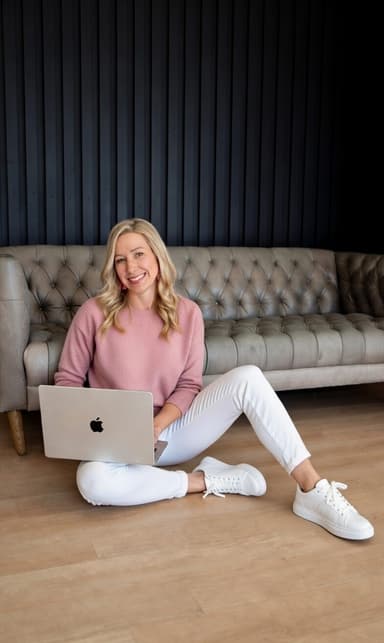
Heather Sunderland: I had major dementia, brain fog, severe symptoms. Food was probably 85 % of my healing. because I was eating to nourish, to bring down inflammation, to alkalize. And the food was detoxing my body and starving the pathogens. So at three months, my brain fog lifted. ligament laxity was gone. at six months, I didn't need assistive devices to walk. And at 23 months, I was told I didn't have Lyme. didn't have BART. I didn't have mold, I didn't have SIRS, but the next three years my body had a lot of stuff to unpack because I was still pretty toxic even though I didn't meet the criteria for those things. I had been on drugs for 20 years, 20 prescription drugs. So I had a lot my body needed and wanted to let go of. And we created that internal terrain that the body started to release on its own without me having to kill. Aubree Felderhoff | Mold Fr...: Welcome back to Mold Free Mom, and I am so excited to share my friend and guest today, Heather Sunderland. She is a board certified functional health coach, the founder of Health Coaching by Heather LLC, and the co-owner of Navigating Mold and SIRS LLC. After spending nearly three decades searching for answers to her mysterious symptoms, she later discovered she had undiagnosed Lyme disease and mold toxicity. She now dedicates her work to helping others shorten that journey. And her mission is simple, to bring hope, clarity, and direction to those facing complex chronic conditions. nearly three decades of suffering with undiagnosed chronic mystery symptoms. That's a lot. So can you take us back a little bit through a shortened version of your story and how you finally found healing?
Heather: Sure. I actually was like a pretty active kid, but I had health issues even as a child, asthma, chronic sinus infections, chronic bronchitis, irritable bowel. But it wasn't really until I was 30 that I started to have daily pain, started to have neuropathy. Pain was pretty chronic and acute every day. And I was labeled with chronic fatigue and fibromyalgia. As time went on, I just accumulated a long... long list of labels, about 22 labels of illnesses from 30 to my early 50s. And it wasn't until I was 52 that my doctor said, maybe you have chronic Lyme disease. And I had chronic Lyme disease and I started to treat herbally and I improved, but I still wasn't well. and it was actually in health coaching school. I got very sick. The Lyme came back. I had Graves' disease mono. I had SIBO. I was down to 10 foods, severe ligament laxity. And this is like trying to make a long story short, but hit some of the major stuff. I even had a spinal cord stimulator implanted. My neuropathy was so bad and I had so much trouble walking. And... My friend in health coaching school said, I think you have mold or SIRS. And I was in Arizona in a new build in the desert. like, and then I remembered we had a water leak in our house in Pennsylvania where the water heater burst and we had like four inches, six inches of water and a finished basement with carpet. And we just went back to it up. And a year or two later, all of us had health issues that were very different. And that was like, you know, a lifetime ago, that water incident. So I went and had the testing done for SIRS. And I had SIRS and we tested our house and we had some building material mold on our new build. yeah, so that's like the shortened version of my health journey. But I did, I had 22 labels of illness and all 22 have since been reversed. Aubree Felderhoff | Mold Fr...: my gosh, what a miracle, number one. And number two, I know everyone is dying to know how were they reversed?
Heather: Well, it was definitely a process. I mean, our environment wasn't bad where we were living. So that's always step number one. I think your listeners probably know that. And step two was I was doing nervous system work, but I didn't know I was doing nervous system work. And so that was huge. And then the other piece was I was nothing my doctors did worked in terms of binders. They weren't opening my drainage pathways. I found a nutrition approach to using food to detox. And I started on this super food protocol that was organic and farmed and regenerative farms. So the nutrient density was higher and the meals were liquid. I did eat solid food as well, but my diet was down to 10 foods. And I thought, what do I have to lose? Like I knew a liquid meal would be easier to digest. And I started on a gut. got support with that liquid meal and vegan amino acids. And three days, my diet was expanding by one food. And every three days I added in a new food. And I thought, this is interesting. And I had major dementia, brain fog, severe symptoms. So I didn't totally comprehend it till later when my brain fog lifted at about three months. But it was crazy. Food was probably 85 % of my healing. because I was eating to nourish, to bring down inflammation, to alkalize. And the food was detoxing my body and starving the pathogens. So at three months, my brain fog lifted. ligament laxity was gone. I was at the chiropractor previously three times a week for eight years because my vertebrae just did not stay in alignment. And it was due to the inflammation and the toxicity in my body, not just the mold, right? Just the whole entire. bucket that was so high in my body. And at six months, I didn't need assistive devices to walk. So it was, it was gradual. Like people see me now and probably think, wow, well, that's great. But, but I'm five and a half years out. And it was such a process where I was seeing improvements, but having symptoms as well on the journey of healing. And at 23 months, I was told I didn't have Lyme. didn't have BART. I didn't have mold, I didn't have SIRS, but the next three years my body had a lot of stuff to unpack because I was still pretty toxic even though I didn't meet the criteria for those things. I had been on drugs for 20 years, 20 prescription drugs. So I had a lot my body needed and wanted to let go of. And we created that internal terrain that the body started to release on its own without me having to kill. So sort of crazy, but beautiful. that the body, when you remove what's holding people back or you support the body to be able to do what it was designed to do, my body started to release parasites on its own without taking something to actually kill. And that was Aubree Felderhoff | Mold Fr...: Yeah
Heather: by eating very heavily plant based. And I ate very high raw. Now I'm in a place of repair and my diet has totally shifted. eating like protein because I'm repairing 28 years of illness and my spine is repairing. So I've learned with clients, you really got to like listen. I can teach people principles, but each person has to listen to their body and what it's calling for. I really wanted to be plant-based for the rest of my life, but in this season, it's not enough for me right now. And I think once I'm done with repair, I'd love to go back to eating plant-based personally. but right now my body needs protein from animal sources. Aubree Felderhoff | Mold Fr...: Yeah. Yeah. So when you say listen to your body, I mean, I think about like sometimes I crave, I don't know, a cookie or a brownie. Obviously that's not what my body needs. So how do know the difference? You know?
Heather: Well, I think when you're craving something healthy, right? If you're Aubree Felderhoff | Mold Fr...: Mm-hmm.
Heather: craving processed foods, sweets, those are the bugs, you know, the bugs that are in your body, right? The pathogens that are craving to be fed. and I had a lot of that, like I had a lot of those cravings, until my pathogen load got pretty low. And now I could have like tiny sliver cake and I'm good. Just like, want the taste. don't even like need it. but I was not that way for most of my, you know, most of my journey. So if you're craving foods that are healthy, like you're craving fat, I was craving eggs and I was needing choline from the eggs and I was needing three or four eggs for breakfast every morning. I hadn't eaten eggs for like five years. I thought this is so weird. I had a season of craving fruit and I did all fruit for three months, but my body went from not walking well and needing assistive devices to not needing those assistive. But I can't do all fruit now. Like my body needs too much protein for the repair and other things. But when I needed to detox and my body was ready to do that, craving the fruit was really helping flush things out and get the lymphatic system moving. so if you're not craving unhealthy processed stuff, then lean in and listen to that. have patients who say, I've got to have my meat. I'm like, have your meat, right? Just have it cleanly sourced. Ideally, if people have the budget to do that. Aubree Felderhoff | Mold Fr...: Yeah, so it almost sounds like your approach is more what the individual body needs at each time, even because you crave different things at different times, but making sure it's clean, it's regenerative, it's not increasing your toxin load so that you can then age your body to begin to detox.
Heather: Right, right. Yeah. And I always teach people the principles, right, of detox through diet. But if I know somebody is already detoxing and having symptoms, I want to be careful. I don't want to increase too many foods that are going to help with detox too quickly because I don't want them detoxing quicker than their body can handle, if that makes sense. And everybody is a little different how they, how they respond. Aubree Felderhoff | Mold Fr...: Yeah. So what does it look like Heather to nourish your body at a cellular level? Is that kind of what we're talking about or is it deeper than that?
Heather: Yeah, mean, so I mean, I was using foods that were regeneratively farmed. Like I said, I was using these superfood shakes that were from organic farms that were regeneratively farmed. And so they were liquid, not meals. They were meal replacement, but I had food in between as well. But it was flooding my body with nourishment and people could do that right with juicing, right? Or making their own. I just had a powder that I could add to water. and I only could handle like a tablespoon of the product and the normal dose was six tablespoons. And even with that, I started to detox on day three and have improvement in my gut. so it's food is very, very powerful tool to help in the process of detoxification and fruit is the highest form of detoxification and like mono fruiting. But like, again, you have to listen to your body. You don't start. detoxing and just do all fruit when you're sick, right? You gradually listen to your body increase fruit to tolerate. You everybody's coming in with different issues. Some people histamine issues, mast cell oxalate. So I didn't get to all fruit till I was three months out, because my gut was healthier and I could then eat fruit. I hadn't been able to touch fruit for two years because of the SIBO. So it looks different for each person, but Your fruits are going to help with detox, your vegetables are going to help with repair, rebuilding, supporting the liver. But we have to do it in a way that works for that person's body. And people who've been in mold, it looks different for each person. If people have oxalate issues, you know, and as we heal the gut, then they're able to tolerate more foods and lean in. My husband never, he had serves and mold, he didn't have the lime piece. He never did all fruit, but he had seasons where he was craving it and he was never a fruit eater, like meat and potatoes kind of guy. And he did like seasons of 75 % fruit for short periods of time, just listening and leaning in, you know, to his own body. And sometimes he'll be like, I just need to, he'll take frozen fruit and blend it and add water. And I'm like, And I'll be like, he's listening to what his body needs. Aubree Felderhoff | Mold Fr...: Yes.
Heather: It's just interesting. But sometimes we don't, in the beginning, we're learning, right? We're learning how we respond to food and the healthier you eat, the more you don't respond as well when you eat something that's not healthy and you get some negative feedback when you have something that probably isn't best for you. Aubree Felderhoff | Mold Fr...: Yeah, yeah. Yeah. And I'm thinking too, back to when I was at my sickest, I was so brain fogged. was so, I mean, was basically bedridden. I can't imagine being able to listen to my body at what I craved because like you, I was down to four or five foods. You know, I was railed
Heather: It's awesome. Aubree Felderhoff | Mold Fr...: in, I was unable to tolerate anything. So when you're there or when you're just inundated with that brain fog and fear, How do you recommend someone starts to listen to their body, you know, and start to be able to open that kind of communication or knowledge?
Heather: think that's what you and I do as coaches, right? Like we can help people feel more comfortable around what they can try and what will be good for them. And I use kinesiology to sort of hone in on what's going to work for that person, even food wise, like what foods will they tolerate? What foods won't they tolerate? It was very helpful for me because I was pretty restricted as well to use kinesiology or muscle testing to sort of assess what did I need that day? Even if I thought I knew what I needed, I would confirm it with muscle testing. And it works really well for people who are very complex clients to have someone who can do that and help you hone in. But it's a process healing the gut, right? So when our diets are limited, my diet didn't just change overnight. It changed every few days I was adding in. you know, like a quarter cup of blueberries or a half a banana. Like it was small, but it was, I knew it was huge that nothing my doctors did to treat the SIBO or address the toxicity was shifting my gut because they weren't addressing the whole picture at once, right? They, they were focused on binding toxins or giving me an antibiotic to kill bacteria in the small intestine, but they weren't. focused on the nervous system, which affects the gut. They weren't opening the drainage pathways. They weren't nourishing my body. Food wasn't talked about. I was really limited. But for me, having liquid meals was huge because I was able to absorb it and assimilate it. And I was on a gut support and a gut protocol to help detox the gut. And I think that's why my diet started to expand. But each person's different. My story was You know, three days I started to see a tiny little shift that gave me hope that we were moving in the right direction. Cause six months working with my practitioner, nothing shifted. And it's, see it a lot, you know, people are going in and killing or binding, but you have to address the whole picture. And I had to address the whole picture, you know, to get better. I couldn't skip pieces. just didn't work. Aubree Felderhoff | Mold Fr...: Yeah, it 100 % backfires. I have been
Heather: Let's. Aubree Felderhoff | Mold Fr...: a very big candidate of that, of aggressively going in, trying to take care of the mold, first thing, kill it, pull it, bind it. No, it does not work. You've got to go in order.
Heather: Yeah, there's an order and it's work. I mean, for those of us who are not well, it's not fun. You know, to have to have so many things that you need to do, right? To get things, to Aubree Felderhoff | Mold Fr...: Yeah, yeah. But it's worth it.
Heather: get your bowels to work or to get your digestive tract to work or to get out of bed and you've got this list in your mind. But in reality, we need to take that time to take care of ourselves. No matter if people are on the beginning of the journey, the middle or the end, I still have a lot of self care. things I need to do in the end of repair mode. And if I don't do them, I'm not as functional because my body's doing a lot of work repairing 28 years of cleaning up the system after 28 years of illness. So I do feel like sometimes it feels like a part-time, sometimes it feels like a full-time job doing those things, but is it worth it? I mean... I think it's worth it after where I was, you know, came from, I struggled to walk and to stand and I wasn't participating in life and I hadn't worked. I didn't work from the age of 35 until I was health coaching while I was sick and healing six years ago. So I think it's worth it, you know, but you do have to be motivated to get well and you have to be willing to do the work and it looks different. Your journey is different than mine. what that work looks like is different for each person. So I think we have to be really careful not to compare. I'm a lot older than some of my friends who were health coaches who had mold and SIRS. And we were using the same approach and they were out hiking and doing things within weeks of using the same approach. And because of the Lyme and all my pieces and the Bart and the nerve pain, and it took me longer. to be able to get out and participate in things, because my healing was more intense. And they were half my age, you know, so they, had to like sort of let go of where they were and just focus on what I needed to do to, you know, continue the process and rejoice in every little, every little victory along the way, you know, adding in one new food or being able to stand without an assistive device, you know, all those things. we need to rejoice in. I reversed 22 illnesses, but one happened while I was healing and I developed Hashimoto's or hypothyroidism. And I had already had Graves' disease, so I was sort of primed, but so much was leaving, taxed my thyroid. And so that's the one thing I'm healing now, but sometimes I get frustrated. My body is not where it was two or three years ago. And I have to like stop and go, but Heather, look at where you've come from. You know, I want to be, you know, back to the weight I was at and, I'm working on all of that and I'm sure it'll come, but it's not coming as quickly as I would like. but I'm seeing shifts in my thyroid with the stuff I'm doing to reverse, the Hashimoto's. So I know it's just a matter of time to be able to reverse that, but. The whole healing journey can be such a roller coaster ride and then life happens and you know, something comes your way that you have to deal with. And sometimes it's a health issue that you don't expect. And I think that's just the reality of life that there's going to be ongoing challenges in our life and going through something like this, Muldon Sars can make us more appreciative of all the little blessings that we have in life. and hopefully more able to handle the challenges that come our way without freaking out. with, you know, sometimes there is a trauma response when something new comes our way, but I've been through so much that I've just learned to trust God for whatever the next thing is and that he'll guide me. Aubree Felderhoff | Mold Fr...: Yeah. yeah. Faith was a huge pivotal point to my healing as well. And I think even if you're not someone that is, you know, faith filled, if you're more spiritual or whatever, I really think it's such an important piece to recognize, you know, the surrender because ultimately we don't have control over our bodies and how we're responding. And, you know, there are things in our control, what we put into our bodies and what we eat and where we live and how we respond. But ultimately, I had no control over so much of my journey. And so I had to learn to surrender and that can be really hard. Yeah, but that's a huge piece.
Heather: let it go. I think that is the hardest part. And even you and I as coaches, right? I want to take control of everything I can, right? Aubree Felderhoff | Mold Fr...: Yes.
Heather: To move the needle in my health. But still my journey, some people might look at it and think it was short, but it's surely I was diagnosed with the Lyme at 52, I'm 61. And I'm in this last phase of repair mode that didn't feel short, nine years, even though You know, I can see all the positives and all the shifts I saw. so, I mean, we do have to let go of the process. You know, we have control of how we think about it. I tell people all the time that I'm working with, they'll say, I'm so sick. I'm like, actually you're healing. I know you don't feel well. Right. And, you are actually healing your body's releasing toxins and pathogens and your body's doing the work of healing, but that doesn't always feel. comfortable or pleasant. but how we think about, never, once I started healing, I never thought I wasn't healing. Even though I had a lot of symptoms. I never thought I thought, no, my body's doing exactly what it needs to do to get the job done. And I'm just coming alongside and, and supporting it. But it is, a bit of a, I don't know, an endurance kind of thing. Cause it's never as quick as any of us want it to be. Aubree Felderhoff | Mold Fr...: No, no, we would love to snap our fingers and be back to health. But
Heather: It's on. Aubree Felderhoff | Mold Fr...: you know, it takes a long time for your health to get to the point that we get to. It's not an overnight, you know, I used to think it was like, I walked into a moldy house and I got sick. Well, now once I realized, you know, what it took of me not responding, my nervous system being fried and trauma and my eating patterns and my type A personality, there were so many pieces that came to the point where, yeah, exactly. So it's not
Heather: layers. Aubree Felderhoff | Mold Fr...: gonna undo itself overnight either. You know, you've got to repair
Heather: Now, Aubree Felderhoff | Mold Fr...: all of it.
Heather: and yeah, and I think people don't realize, yeah, you walk in a moldy house and it tips your bucket, but your bucket might've been already pretty full of other toxins and pathogens and poor habits and poor lifestyle. And then that happens. And so a lot of people think, I'm just gonna deal with the mold or the mycotoxins, but that's typically not enough to restore health. You really do have to deal with the whole picture. And it is like peeling away an onion. and different layers show up at different seasons that you're ready to work on or address. Aubree Felderhoff | Mold Fr...: So tell me, I luckily did not have Lyme, although my son did, but there are so many that are dealing with Lyme and they're dealing with mold and they're dealing with so many things at the same time. And for someone that's in that, know you were in that, how do you begin to even know what to tackle first? There's a lot of controversy, right? You go to Lyme first, you go to mold first. So what is your recommendation as someone that's been through it and is healing?
Heather: Well, the order is still the same. Like you still have, you have to address the nervous system because when you've got these pathogens, Lyme and Bartonella, Candida, they all impact the nervous system negatively. And if we don't address the nervous system, your, your guts not going to work as well. You're not going to detox as well. You're going to be in sympathetic mode. Your body's not going to be in healing mode. And that, those are simple things, right? That people can do to start. Some people need a lot more help. with their nervous system outside of breath work and somatic practices, it depends on the person. But that's a great place to start and opening drainage exit routes. The drainage pathways, making sure bowels are moving, liver, gallbladder, kidneys are supported, lymph may need support. Sometimes people need lung or sinus support. It's different for everybody. But if we start to shift the internal terrain of the body, right, by making it more alkaline, making it less inflamed, making it less toxic. Anytime we bring any of that pathogen toxic load down, the body's gonna be less toxic, acidic, inflamed. It'll be more alkaline. Things can't survive in alkalinity. So it doesn't mean you can't have meat. I'm just saying, so as we bring down these loads, we increase foods that are anti-inflammatory. and whole foods and not processed and increase some alkaline foods, that starts to shift the internal terrain as we're cleaning up the terrain. And so if somebody's got active Lyme or BART, I had active BART at the beginning of my journey with mold and SARS, we had to treat the BART. I had pretty severe, intense neuropathy my whole journey, but the BART was active. And so I went in hard with herbs and I didn't take a break. I was on anti... antimicrobial herbs for 10 months straight, no break. And totally whooped my butt. Killing is really can make, anytime I do killing, it just always whoops me. I'm like really wiped out and tired. But 10 months, the BART was gone, but I was also eating in a way that was really starving pathogens. was eating high fruit, high vegetable, high raw, but I was tolerating that as well. So I say that, some people They may not tolerate that and you've got to be where you're at and that's fine. Eat non-processed, eat whole food, eat clean. But I had to take it up a notch because I had BART 22 years undiagnosed. had to hit it hard and then the BART was gone. So I mean, you've got to address the whole picture. So if somebody's got active Lyme and BART, you may have to treat while you're nourishing, while you're detoxing, while you're opening drainage pathways, while you're doing nervous system work. I find most people don't do well if they're just killing. We've got to prepare the body first before we kill or detox, period, across the board. Sadly, it's not done, and a lot of times in the lime literate world, if you have a doctor who's doing it, and I know some who do, you're in really good hands that they're doing that. First, you've got to set up the foundation, hydration, and minerals, and all of that before you go in. to start to release stuff. And that usually takes two to four weeks for most people to start to lay a foundation. Aubree Felderhoff | Mold Fr...: Yeah. And then speak a little bit on the opening, the detox pathways, the drainage pathways, supporting those areas. What does that look like when you say supporting? that supplements or is it rebounding? What do you recommend there?
Heather: Well, I mean, it's always great to do the tools that you have at home like rebounding movement, dry brushing for the lymph. In the lime mold service world, for most people, that is not gonna be enough to support their pathways. I have never had a client who that was enough, right? So most people are gonna need typically some homeopathic or herbal support, supporting the liver, the gallbladder, the kidneys. Sometimes the bowels, sometimes the lymph and it depends. I needed support of every pathway the entire journey. And even now in repair mode, even though I'm not like detoxing and I'm not, sometimes I have days where I'll have a little bit of die off. I'm needing support because there's stuff that's leaving in the repair process, waste that's leaving. So I'm still needing organ support because of that waste, even though it's not specifically a toxin. So still five and a half years out, I'm needing pathway support. Aubree Felderhoff | Mold Fr...: Yeah, I guess as you're pruning, right, if you're repairing, you're kind of pruning off, I think of like a shrub, you're pruning off the old and you're branching out, you're gonna need support to flush that out still, especially if you're compromised.
Heather: The lymphatic system, yeah, the lymphatic system cleans up at the end, the immune system. mean, my cells hadn't cleaned out in like 28 years and I went through a season of cellular waste cleaning out. a lot of people don't get to that place where their body is repairing at the level my body is repairing. Aubree Felderhoff | Mold Fr...: After 28 years, I would assume there's some repair that needs to happen, right?
Heather: Well, in any old injury, I had 12 bulging discs, a spinal cord injury. So that's what my body is doing right now is a lot of spinal repair, which has been painful. It's mimicking Aubree Felderhoff | Mold Fr...: Yeah.
Heather: some of those injuries that I had, but I know nothing's wrong. And so that's the part that's so hard when people are on this journey. We have so many symptoms that we sort of freak out when we have a symptom. can't tell you how many patients. When they get neuropathy, they'll think, my gosh, the Lyme's back. But people don't understand. You can have neuropathy from die-off of anything, any pathogen. If it's hanging out near your spine and they release chemicals, it can irritate the nerves. If you've had Lyme and BART, eventually, if you heal enough, your nerves have to heal. And my nerves had to heal and that was very painful. Pain and symptoms don't always mean something's wrong. It's just people need to know what's going on. It doesn't always mean, like when I started to have symptoms of my spinal cord injury, I didn't think, I have an injury. I knew my body was healing. My doctor confirmed it was repair. I was assessing it was repair based on how my diet was needing to shift and based on what I was researching and reading. so that gave me peace of mind. but a lot of people do freak out when they have symptoms. They've reme... I had a patient remediated the house, right? And her, her son has all this awful eczema after they remediated the house. And I said, well, take a deep breath. It doesn't mean that the house wasn't properly remediated. It could be that he's just detoxing and has one, his pathways need support. Number two, he could, you know, be dealing with parasitic activity too with his rashes that he was getting. And so we did a call to sort of assess what was going on, but it can be a little hard. So a symptom doesn't always mean, sometimes people get out of mold and they feel miserable because their body can now let go and release and so much starts releasing and people are like, no, I have the flu. I'm sick. And I'm like, you are detoxing. And when we put in the right supports and they feel better, I'm like, that's your verification that it was detox and it is not the flu, but it can feel exactly like having the flu. So that part is hard, you know. Aubree Felderhoff | Mold Fr...: Yeah, it can be scary and it goes back to that nervous system piece being in place, you know, so that you can handle that, tell yourself you're okay, you're safe, even with symptoms, you know, and come out of that
Heather: Right, Aubree Felderhoff | Mold Fr...: fight and flight.
Heather: Yeah, yeah. I had Graves' disease before I was diagnosed with SIRS and my heart rate, I'd wake up, my heart rate would be 130 laying flat in bed, which I just met somebody yesterday whose heart rate was like 200 with some issues. And I thought, okay, 130 wasn't as bad. But once I got up and moving, my heart rate would go up to 150, 160 just standing. And so I did have that nervous system dysregulation. And I would freak out and think, my gosh, my heart's going to stop. Because it was, it went on for a very long time until I could sort of figure out the root and support my body. And then I found out I had SERS and realized the SERS is probably what triggered the graves. I had thought it was the line, but I really had to lean in to scripture and God's word and remind myself that this was going to be a process. And he was walking alongside me and he would guide me and direct me. didn't mean I got better right away, because I didn't. It was six months, I think, until my heart rate normalized once I was diagnosed with Graves, but I didn't respond to any of the medications, and I ended up going to Herbals. And then I really started to deal with the root livers once I found out I had SERS. Aubree Felderhoff | Mold Fr...: Yeah, you see that often that oftentimes you treat a symptom that you think is the root, know, like Hashimoto's, Graves, that sort of thing, and use the medication that the typical doctor will tell you to use. it's especially common with anxiety and depression actually.
Heather: yeah. Aubree Felderhoff | Mold Fr...: You use the medication and it doesn't work. And so you feel helpless and you're not, but it's because you're not treating the root. You're not treating the root cause.
Heather: Exactly, right. And I mean, and sometimes a medication is a bridge, right? While you're addressing the root, you know, and then you get off the medication. I'm on medication for my thyroid and my hope is I'll get off it, you know, soon with what I'm doing, cause I'm seeing, you know, improvement with my body temperature and certain things about my thyroid. Things are definitely improving, but it is a process, but. yet it upsets me. My mom was in the hospital recently and every symptom she had, they gave her a drug, you know, and she's already got, you know, stage four kidney disease. And I'm thinking like these drugs are not good for her kidneys. And she had shortness of breath, chest pain, and they gave her nitro. And I'm thinking, and then they said, well, she didn't have a heart attack. wasn't. I'm like, well, I'm thinking, why are you giving her nitro? Like they're just, every symptom they gave her a drug. And it just made me so upset. that's the model. And I Aubree Felderhoff | Mold Fr...: Yep. Yep.
Heather: don't, it's a great, you know, it's a good model sometimes when you're in acute situation. I wish, I don't know if I said this to you, I said it to someone recently, I wish there was a hospital that, right, they could use medication when it was absolutely necessary, but you could have anti-microbial. you know, herbs and herbs for kidney support and as a natural diuretic and like you could combine the two. I'm like, I'd go to a hospital like that, you know, where I had the choice of being treated holistically and addressing the root. And if I needed more acute care, I could get more acute care, but you really, you know, you're really, have to be, we have to be our own best advocate with whoever we're working with conventional or a holistic practitioner. You really have to advocate for yourself and what you need and what you want even when you're not feeling well, sadly Aubree Felderhoff | Mold Fr...: I agree, I learned that the hard way. Heather, this has been amazing. We're running out of time, so I wanna make sure to give you the floor on if there is anything you wanna tell my listeners and how they can reach you if they have questions or wanna follow you.
Heather: Sure, healthcoachingbyheather at gmail.com is my email. Healthcoachingbyheather.com is my website. lot of free education on the website. Aubree Felderhoff | Mold Fr...: It's been wonderful just having you on, hearing your story, and it's so inspiring. I hope it inspires everybody listening that even after three decades and 20 plus illnesses that you were on medication for, you're doing it. You're doing the work. You're healing. It's possible. And I truly believe anybody can heal. They just need the right tools. So thank you.
Heather: Yeah, no, I do too. That's my desire to give people who are watching hope that they can get better if they address the root cause. Yeah, thank you so much Aubrey. Aubree Felderhoff | Mold Fr...: Absolutely. You are doing that.
Aubree Felderhoff: Thanks for listening to Mold Free Mom. If this episode has helped you make sense of some of your symptoms, diagnoses, or why nothing has worked in the past, please make sure to follow the show and leave a quick review so others who are struggling can find it quicker. If this episode brought someone struggling with unexplained sickness or mold to mind, please share it so they don't have to waste years of their life chasing the wrong answers like I did. Remember, you're not broken. You can get your life back. You just need to be shown how.