
How to Choose a Mold Inspector: Questions to Ask and Red Flags to Watch
Quick Answer
Your mold inspection came back clean but you are still sick? Here is how to choose a mold inspector, the questions to ask, and the red flags to watch for.
You paid for a mold inspection. It came back clean. And you are still sick. If that is you, the problem may not be your body. It may be who you hired. The way you choose a mold inspector comes down to one thing: find out how they actually hunt for hidden moisture and mold, not just whether they will set an air pump on your kitchen counter for ten minutes and hand you a number.
I learned this the hard way over twelve years, more than thirty doctors, and a quarter of a million dollars spent chasing answers. Some of the people we paid to inspect our home walked through, glanced at the obvious corners, ran an air test, and told us everything looked fine. It was not fine. The cost of trusting the wrong inspector is not just the inspection fee. It is months or years of staying sick in a house you have been told is safe. So before you hand anyone your money, here is exactly how to tell a real inspector from someone who is going to miss what is making your family sick.
Why the right mold inspector matters more than the test
A bad inspection is worse than no inspection at all. When you skip testing entirely, you at least keep looking. When an inspector tells you your home is clean and it is not, you stop looking. You turn your attention back to your own body, you spend money on supplements and specialists, and the whole time the source is still in your walls.
This is the part most people miss. The test is only as good as the person choosing where to test and how to interpret it. Two inspectors can walk into the same house with the same equipment and come to opposite conclusions, because one of them understands building science, moisture patterns, and where mold actually hides, and the other one is following a checklist they learned over a weekend. The equipment does not find the mold. The person does. That is why vetting the human being you hire matters more than any single test result they produce.
Almost anyone can call themselves a mold inspector
Here is something that should make you pause. There is no federal license to inspect a home for mold. The EPA states that no EPA or other federal limits have been set for mold or mold spores, and there is no federal license for the people who test for it. Whether inspectors are regulated at all is left to each state, and only a handful of states require a license.
As of early 2026, only around seven states regulate mold professionals at the state level: Florida, Louisiana, Texas, New York, Maryland, Tennessee, and Washington DC. A handful of others have partial rules or pending legislation. In the rest of the country, there is no license to earn, no exam to pass, and no state board checking anyone's work. A mold inspection certification course often takes two to four days and costs a few hundred dollars. After that long weekend, a person can legally charge you to assess a health hazard inside your home.
Now compare that to the person who cuts your hair. Every single state requires a cosmetology license, and the training runs from 1,000 to 2,100 hours, with a national average around 1,500 hours. Read that again. In most of this country, the law demands more than a thousand hours of supervised training before someone is allowed to color your hair, and almost none before someone is allowed to tell you whether the air your children breathe is safe.
I am not saying every uncertified inspector is bad or every certified one is good. I am saying the system is not going to protect you here. The burden is on you to vet the person yourself, because the state probably has not.
The biggest red flag: an inspector who only takes air samples
If an inspector's entire plan is to run a couple of air samples and call it done, keep looking. Air sampling alone is the single most common way sick families get told their home is fine when it is not.
Air sampling has real limits, and the science backs this up. The EPA states plainly that in most cases, if you can see or smell mold, sampling is unnecessary, and that there are no reliable standards for interpreting airborne mold numbers. The CDC agrees that routine sampling for mold is not recommended and that no set standards exist for what counts as a safe or unsafe amount. So when an inspector hands you a spore count and says your numbers look normal, you should ask: normal compared to what? There is no official threshold to compare it to.
It gets worse. An air sample is a snapshot of a single moment in a single spot. Mold inside a wall cavity, under flooring, or behind a vanity may not be releasing spores into the room air at the exact moment the pump is running. The air can read clean while there is active growth two feet away behind the drywall. Air conditioning settings, whether windows were recently open, the time of day, and how the home was prepped can all move the result. A skilled inspector knows this and uses air sampling as one small confirmation tool, never as the whole investigation.
This is the same shortcut thinking behind dust-based tests like the ERMI. I have written before about why the ERMI test usually wastes your money, and the core problem is the same: a single sample run by someone who is not physically hunting for the moisture source gives you a number, not an answer. If an inspector leans on either of these as their main method, that tells you how thorough the rest of their work will be.
What does a thorough mold inspection actually include?
A real mold inspection is detective work, and most of it has nothing to do with sampling. Sampling, if it happens at all, comes at the very end to confirm what the inspector already suspects.
A thorough inspection starts with a full walk of the entire home, not just the room you are worried about, because moisture travels and the smell often shows up far from the source. The inspector should use a moisture meter to read the actual moisture content inside walls, floors, and ceilings, especially around known trouble spots. Many good inspectors also carry an infrared or thermal camera, which does not see mold but does reveal the temperature differences that point to hidden water intrusion behind a surface that looks perfectly dry.
The inspector should be checking the places mold loves and homeowners forget: under every sink, behind the refrigerator and dishwasher, around toilets and tubs, along window frames, inside the HVAC system and ductwork, in the attic, and in the crawlspace or basement. They should be looking for water staining, past leaks, condensation patterns, and any spot where the building has gotten wet and stayed wet. The EPA is clear that the real goal is finding and fixing the moisture source, because mold cannot grow without water. An inspector who finds mold but shrugs at where the water is coming from has done half a job.
At the end, you should receive a written report with photographs, moisture readings, and a clear explanation of what they found and what they recommend. If sampling was done, the report should explain why each sample was taken in that specific location and what the result means in plain language.
The questions to ask before you hire a mold inspector
Before you book anyone, get them on the phone and ask these. You are not being difficult. You are protecting your family. A good inspector will be glad you asked. Someone who gets cagey or annoyed has told you everything you need to know.
- Do you do remediation too, or only inspection? This is the first question for a reason. You want to understand upfront whether the person assessing your home also profits from the fix. More on why this matters below.
- How do you find hidden moisture, not just visible mold? You want to hear about moisture meters and ideally a thermal camera. If the only answer is air sampling, that is your signal.
- Will you inspect the whole house or just the room I am concerned about? The right answer is the whole house. Mold shows up downstream of where the water actually is.
- What happens if you do not find anything obvious but I am clearly sick? You want an inspector who treats a clean first pass as a reason to look harder, not a reason to send you home.
- Do you check the HVAC system and ductwork? The air handler and ducts spread spores through the whole home. Skipping them is a common and serious gap.
- Will I get a written report with photos and moisture readings? Yes should be automatic. A verbal "looks fine" is not an inspection.
- What certifications do you hold, and through whom? Look for training through a recognized body such as the ACAC. Certification is not a guarantee, but a total blank here paired with weak answers elsewhere is a pattern.
- Do you use any tools beyond air sampling, like infrared or a mold detection dog? This tells you how seriously they take finding hidden sources.
- How do you decide where to sample? A good inspector samples to confirm a specific suspicion, not at random to generate numbers.
- Can you give me references from people with health concerns, not just real estate sales? A real estate clearance and a sick-building investigation are different jobs. You want someone who does the second one.
Red flags that tell you to keep looking
Some answers should end the conversation. If you hear any of these, thank them for their time and move on.
- Air sampling only. If the entire method is running spore traps and reading you a number, you already know the ceiling on their work.
- "Your numbers look fine." With no official standard to compare to, this phrase often means they did not look hard enough to find anything.
- They will not look past the visible spot. A surface wipe of one corner is not an investigation.
- They dismiss your symptoms. An inspector who waves off how sick you feel is not on your team.
- One flat price quoted before they have seen anything about your home. Real scoping requires knowing the size and history of the house.
- No written report. If you cannot hold the findings in your hand with photos and readings, you have nothing.
- Pressure or scare tactics. Anyone rushing you into an expensive decision the same day deserves more suspicion, not less.
Where do mold detection dogs fit in?
This is one tool I wish more people knew about. A trained mold detection dog can find what human inspectors and machines miss, and they do it fast.
Mold releases chemical compounds called mVOCs as it grows. Those compounds are the same chemistry behind that musty smell that means mold is releasing chemicals into your air. A dog's nose is sensitive enough to detect those compounds at levels far below what a person can smell, and through walls and flooring that hide the source from view. A good detection dog can sit at the base of a wall and signal active mold inside the cavity while the surface looks spotless and the air sample reads clean.
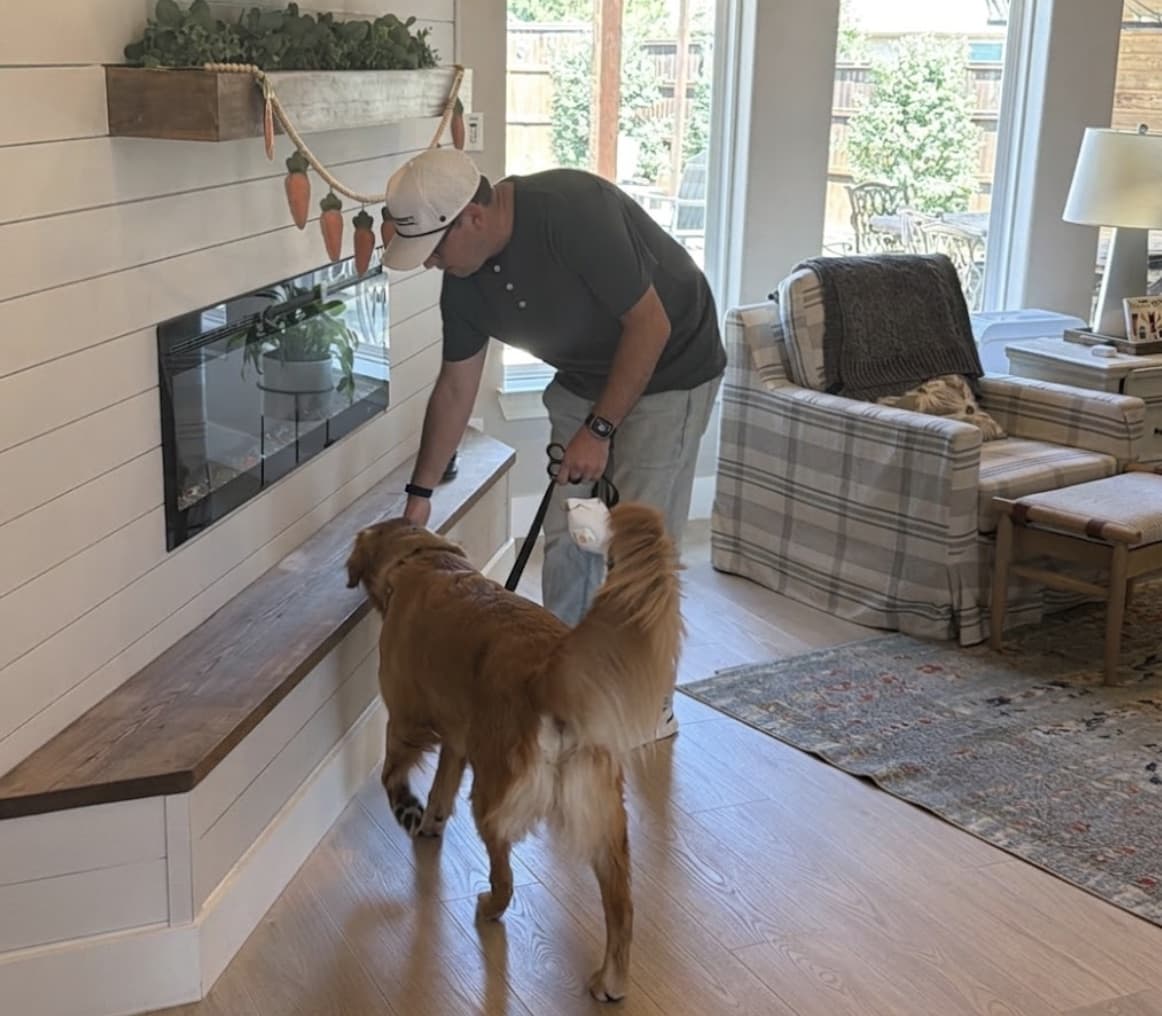
I have seen this work in my own home. We work with Dr. Tate Barrett at Barrett Environmental, and his detection dog Scout has found hidden moisture that would have taken hours of opening walls to confirm any other way. The dog is not magic and it does not replace a careful inspector. It is a screening tool that points a skilled human to exactly where to look. Paired with moisture meters, a thermal camera, and someone who understands building science, it turns a guessing game into a targeted search. If you can find an inspector who works with a trained dog, it is worth asking about.
Should the same company inspect and remediate?
Be careful here. When the same company that inspects your home also sells you the cleanup, there is a built-in conflict of interest. The person telling you how much mold you have is the same person who gets paid more the more mold they find. And after the work is done, the same company often runs the clearance test that decides whether their own job passed.
I am not saying every one-stop company is dishonest. Many are good and genuinely want to help. But you should know the incentive is there, and you do not have to accept it. The cleanest setup is an independent inspector who has no financial stake in the remediation, and a separate remediation crew, with independent testing to confirm the work afterward.
This conflict is real enough that some of the states with the strictest rules have written it into law. Florida and Texas, two of the states that actually license mold professionals, prohibit the same company from both assessing and remediating the same project. When state regulators go out of their way to keep those two roles separate, that should tell you something about why independence protects you.
What to do once you have your inspection results
If your inspector found mold and a moisture source, the path forward is clear. Fix the water problem first, because the EPA is unambiguous that mold will keep coming back until the moisture is gone. Then remediate properly, ideally with an independent crew and independent clearance testing.
But what if the inspection came back clean and you still feel terrible? First, ask whether the inspection was actually thorough, using everything above. A clean result from an air-sample-only inspector means very little. If you got a genuinely deep inspection and the home really is clean, then the question shifts to your body. Mold that grew inside you while you lived in the exposure does not show up on a home inspection at all. This is exactly why your tests can come back normal when you are still sick, and it is the reason the order of testing matters so much. If you have not yet sorted out which test to run first, start there before spending more on your house.
If you are not sure where you fall, the free mold symptom assessment is a good place to begin sorting out what is happening in your body versus your home. And if you want a guide who has been through every version of this, that is what my recovery program is built for.
I spent years being told my home and my body were both fine while my family fell apart. You do not have to repeat my mistakes. Hire the inspector who keeps looking, ask the hard questions before you pay, and trust your own gut when something is off. You know your body and your home better than a stranger with an air pump. There is a way through this, and it starts with finding the truth about what is actually in your walls.
For the bigger picture on getting a home right the first time, the episode How to Build a Mold-Free Home: What Families Get Wrong with attorney Cristina Greenfield is worth a listen.
Sources
- U.S. Environmental Protection Agency. A Brief Guide to Mold, Moisture and Your Home. epa.gov
- U.S. Environmental Protection Agency. Mold and Health. epa.gov
- U.S. Environmental Protection Agency. Mold Cleanup in Your Home. epa.gov
- Centers for Disease Control and Prevention. About Mold. cdc.gov
- World Health Organization. WHO Guidelines for Indoor Air Quality: Dampness and Mould. who.int
- Mendell MJ, Mirer AG, Cheung K, Tong M, Douwes J. Respiratory and Allergic Health Effects of Dampness, Mold, and Dampness-Related Agents. Environmental Health Perspectives. 2011. pubmed.ncbi.nlm.nih.gov
Frequently Asked Questions
How much does a mold inspection cost?
A residential mold inspection generally runs from a few hundred to several hundred dollars depending on the size of your home and how deep the investigation goes. A very cheap inspection often means an air sample and little else, while a thorough investigation with moisture mapping and a written report costs more and is usually worth it. Price should reflect the depth of the work, so be wary of a flat fee quoted before anyone has learned anything about your home.
How long should a good mold inspection take?
A real inspection of an average home usually takes one to several hours, not fifteen minutes. The inspector should be walking the whole house, taking moisture readings, checking hidden trouble spots, and documenting as they go. If someone is in and out in the time it takes to set up an air pump, you did not get an inspection.
Is air sampling for mold accurate on its own?
No. Air sampling is a single snapshot in one spot, and both the EPA and CDC note there are no reliable standards for interpreting airborne mold counts. Mold inside walls or under floors can be active while the room air reads clean. Air sampling can be useful to confirm a specific suspicion, but it should never be the entire inspection.
What certifications should a mold inspector have?
Look for training through a recognized body such as the ACAC, which certifies indoor environmental consultants. Keep in mind most states do not require any license at all, so certification is a helpful signal but not a guarantee of quality. Pair it with the questions in this post rather than relying on a certificate alone.
Can I just test for mold myself instead of hiring an inspector?
Home store mold kits and petri dishes tell you almost nothing useful, because mold spores are everywhere and a dish will always grow something. They cannot tell you whether you have a hidden moisture problem or where it is. If you suspect mold is making you sick, a skilled inspector who hunts for the moisture source is far more valuable than any do-it-yourself kit.
Should I hire the same company to inspect and remediate?
Be cautious. When one company both assesses the problem and sells the cleanup, the incentive to find more mold is built in, and they often run the test that clears their own work. An independent inspector with no stake in the remediation gives you a more honest picture. Some states even prohibit the same firm from doing both on the same project.
Can a mold detection dog actually find hidden mold?
Yes, when the dog is properly trained. Dogs detect the chemical compounds mold releases as it grows, at levels well below what people can smell, and through walls and flooring. A detection dog does not replace a careful inspector, but it can quickly point a skilled human to the exact spot worth opening up.
Why did my mold inspection come back clean when I am still sick?
The most common reason is that the inspection was not thorough, often an air sample with no real search for hidden moisture. The second reason is that mold that grew inside your body during the exposure will not show up on any home inspection. If you got a genuinely deep inspection of the home and still feel sick, the next step is to look at what is happening in your body, not your walls.
What questions should I ask a mold inspector before hiring them?
Ask whether they do remediation too, how they find hidden moisture beyond air sampling, whether they inspect the whole house, whether they check the HVAC system, whether you get a written report with photos and moisture readings, what certifications they hold, and for references from people with health concerns rather than only real estate sales. How they answer tells you almost everything.
Does homeowners insurance cover a mold inspection?
It depends on your policy and the cause. Insurance is more likely to get involved when mold results from a sudden covered event like a burst pipe, and far less likely when it stems from long-term humidity or slow leaks. Inspections themselves are often paid out of pocket. Read your policy and document everything, because coverage for mold is one of the most contested areas in home insurance.

Aubree Felderhoff
Board Certified Holistic Health Practitioner | Mold Recovery Concierge | Certified Primal Health Coach | Master Personal Trainer
Aubree spent 12 years and more than $250,000 searching for answers to a mystery chronic illness that 30-plus doctors couldn't solve. The first culprit was a mycotoxin-overloaded home that triggered a cascade of symptoms nobody could trace back to the source. After finally identifying the connection, remediating, and rebuilding her health, she faced a second exposure years later when water damage in her next home brought the symptoms flooding back.
That second experience is what shaped everything. She found a physician who understood antifungal treatment, completed neuroplasticity training, and fully recovered. Having navigated mold illness twice, from two different sources, she understands both how it starts and how it ends.
Aubree is a Board Certified Holistic Health Practitioner through the American Association of Drugless Practitioners (AADP), a Certified Primal Health Coach, NASM Certified Trainer, and Cooper Clinic Certified. Before mold illness defined her life, she spent 14 years in elite fitness as a national champion collegiate gymnast. She brings that same discipline and evidence-based approach to mold recovery, helping families get clear answers faster, without the decade of wrong turns she endured.
The newsletter
A little hope in your inbox
One email a week from me, with what actually helps families get better. No spam, unsubscribe anytime.
Recommended Products
Recommended Products may include affiliate links. See our Affiliate Disclosure for details.

Keep learning with mold illness guides
Start-here pages on symptoms, testing, CIRS, remediation, and hiring an inspector. Free tools and program paths are linked from each guide.
- Mold Remediation GuideWhat proper remediation looks like, how to separate inspection from the fix, and what to do when you are still sick after the work.
- How to Find a Good Mold InspectorQuestions, red flags, moisture-source criteria, and a free hiring checklist so you do not pay for a flashlight walkthrough.
- How to Test for Mold IllnessWhy blood testing comes first, where urine mycotoxin and ERMI fall short, and how to order body vs home testing without wasting money.
Need personalized guidance?
Start with free guides and the symptom assessment, or talk with Aubree about the right program path.