
Blood Testing vs. Environmental Testing: Which Comes First?
Quick Answer
Suspect mold illness? Start with a blood test before expensive environmental testing. Learn why the order matters and why ERMI tests are unreliable.
If you've been dealing with symptoms that won't quit, you've probably started Googling. And if you've landed anywhere in the mold illness world, you've likely seen a dizzying list of tests people say you need: air samples, ERMI tests, swab tests, spore counts, dust analysis, and on and on. Then on the other side, people talk about blood panels, mycotoxin antibody tests, and urinary panels. It's overwhelming, expensive, and nobody seems to agree on where to start.
I spent years and more money than I care to admit going through testing in the wrong order, for the wrong reasons, using the wrong tools. I want to save you from that. So let me give you the clearest answer I can: where you start depends on what you already know, and I'll walk you through exactly how to think about it.
When You Can See It, You Don't Need to Test It
Before we get into the blood testing vs. environmental testing debate, there's a critical exception that needs to come first.
If you can see mold growing in your home, you don't need a test to tell you there's a problem. Visible mold is confirmation enough. And if you know your home had significant water damage, a flood, a slow leak behind a wall, a roof issue that wasn't caught quickly, the conditions that grow mold are already there whether you can see the mold or not.
In either of those situations, your immediate priorities are:
Get out of the house. This doesn't necessarily mean permanently, but it does mean getting distance from the exposure while the situation is assessed and resolved. If you've been living in a moldy environment, your body is already dealing with a toxic load. Continuing to expose yourself while you figure out the next steps makes recovery harder.
Call a qualified mold inspector. A professional inspection with the right tools and methodology is the only way to understand the true scope of the problem. This is different from a general home inspector. You want someone specifically trained in mold assessment who uses moisture meters, thermal imaging, and targeted air and surface sampling based on clinical reasoning, not just a visual scan.
Get remediation started. Once you have an inspection report that outlines where the mold is and how far it's spread, remediation needs to happen. This is not a DIY project for anything beyond very small surface areas of non-porous materials. Disturbing mold incorrectly sends spore counts through the roof and spreads contamination into areas that were previously clean.
If visible mold or known water damage is your situation, skip to the section on what a qualified mold inspector actually does. The blood testing conversation below is for people who are in a different place: they have symptoms, they suspect mold, but they don't have obvious confirmation yet.
When You're Not Sure: The Case for Blood Testing First
Here's the scenario I hear most often. Someone has been struggling with symptoms for months or years. Fatigue that sleep doesn't fix. Brain fog that makes it hard to hold a conversation. Sinus issues that never fully resolve. Joint pain. Mood changes. Recurrent infections. They've been to multiple doctors who can't find a clear cause. Somewhere along the way, someone mentions mold.
Now they're trying to figure out: is this really mold? And where do they even start?
Most people in this situation go straight to environmental testing of their home. They spend $500 to $1,500 or more on air sampling, dust analysis, or the popular ERMI test. And even when that testing comes back with elevated mold counts, they still don't have a clear answer about whether their body has been affected.
Here's what I wish someone had told me before I went down that road: the better first test isn't of your house. It's of you.
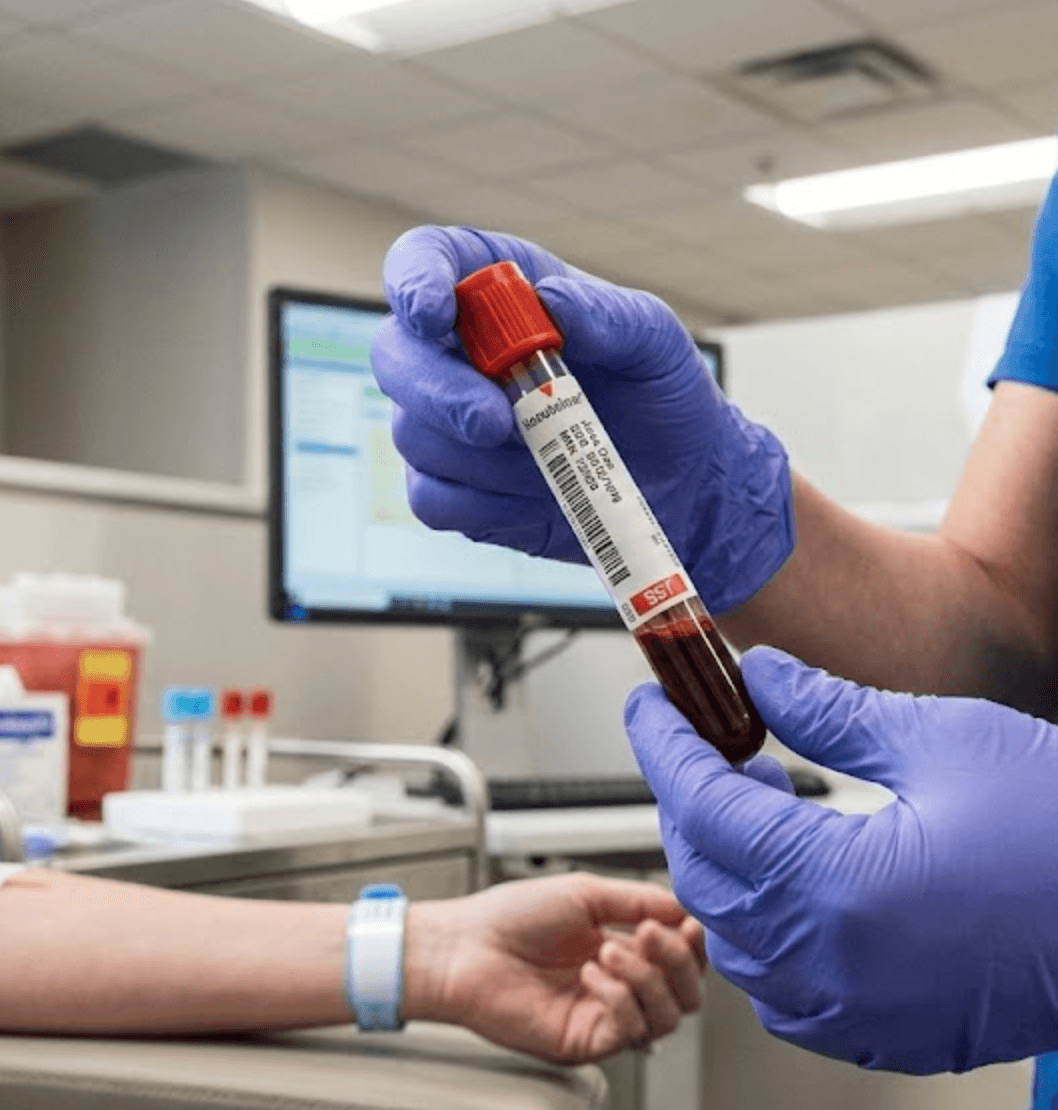
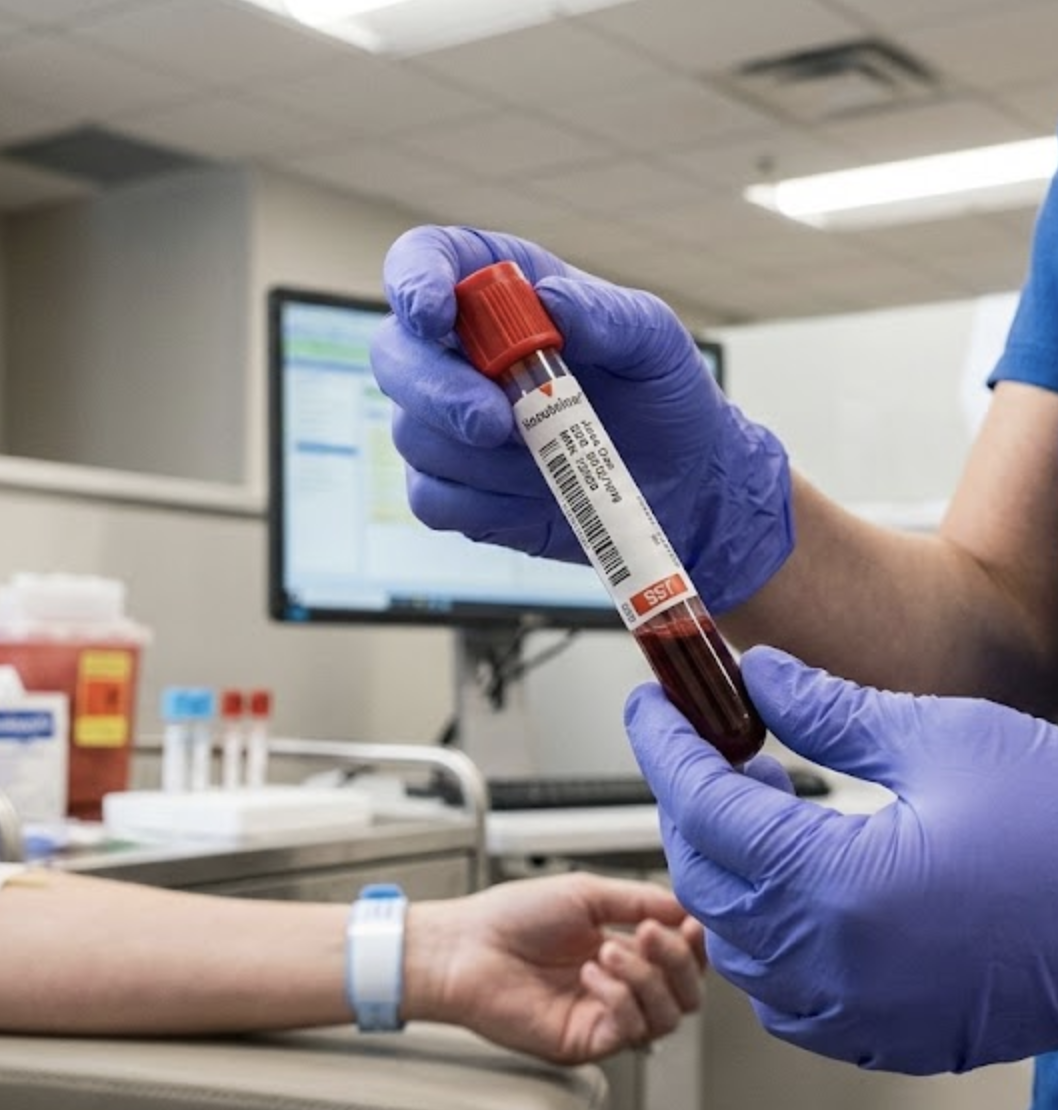
A mycotoxin antibody blood panel typically costs hundreds of dollars. It tests for your body's immune response to specific mycotoxins, which are the toxic compounds produced by certain mold species. If your levels are elevated, you have objective, documented evidence that your immune system has been responding to mold toxin exposure. That confirmation is valuable for several reasons.
It validates your symptoms with evidence you can take to a doctor. It gives you a baseline to measure recovery against. And it helps you make a more informed decision about whether investing in expensive environmental testing is the right next step, and what you're actually looking for if you do.
What a Mycotoxin Antibody Blood Test Actually Measures
When your body is exposed to mycotoxins, your immune system produces antibodies in response, just as it does with any foreign substance it recognizes as a threat. A mycotoxin antibody panel measures the levels of specific antibodies associated with the most clinically relevant mycotoxins, including ochratoxin A, aflatoxins, and trichothecenes.
Elevated antibody levels don't just mean you encountered mold somewhere at some point. They indicate that your immune system mounted a measurable response, which correlates with ongoing or significant past exposure. For many people, this is the first time anyone has looked at their lab work and been able to say: yes, your body is showing signs of mold toxin exposure. Here's the number. Here's what it means.
The test is ordered through a physician. One of the things we help with at Mold Free Mom is connecting clients with mold-literate practitioners who understand how to order and interpret these panels, because most conventional doctors aren't trained to read them. If you're experiencing symptoms and want to understand whether blood testing makes sense for your situation, the mold symptom assessment is a good starting point.
It's also worth noting what blood testing doesn't tell you. It doesn't identify the specific mold species in your environment. It doesn't tell you where the mold is in your home. And it doesn't replace the need for a professional inspection if you do confirm exposure. What it does is establish that your body has been affected, which changes the urgency and direction of everything that follows.
The Cost Comparison Nobody Talks About
Let's put actual numbers to this, because the cost difference matters.
A mycotoxin antibody blood panel typically runs into the hundreds through a lab that accepts clinician orders.
A professional mold inspection, done properly with moisture mapping, thermal imaging, and targeted air and surface sampling, typically runs $400 to $800 depending on your region and the size of your home.
ERMI testing, which we'll discuss in detail below, runs $300 to $400 for the test alone, not counting the professional time to collect samples correctly.
Remediation, once mold is confirmed and located, runs anywhere from a few thousand dollars for a contained area to $10,000 to $30,000 or more for whole-home contamination.
Here's why the order matters financially. If you start with blood testing and your levels come back normal or low, you've spent hundreds of dollars and you have meaningful information: your body isn't showing the immune response associated with significant mold exposure. You can look at other causes for your symptoms without committing to thousands of dollars in environmental testing and remediation.
If your blood levels come back elevated, you now have a clear reason to invest in a professional inspection. You know what you're looking for and why. You're not chasing a maybe. The environmental testing becomes purposeful rather than exploratory.
Going the other direction, spending $1,000 on environmental testing first, can leave you with mold counts that may or may not mean anything without knowing how your body has responded to them. Mold spores exist everywhere. An elevated count in environmental testing doesn't automatically mean you're sick from it, and a negative environmental test doesn't mean your body hasn't been affected.
Environmental Testing: When It Makes Sense and What to Use
Once you've confirmed through blood testing that your body is responding to mold toxins, or once you've identified visible mold or known water damage, environmental testing serves a specific and important purpose: locating the source.
This is the key distinction. Environmental testing isn't primarily about confirming mold exists. It's about finding where it is so that remediation can target the right areas. Good environmental testing, conducted by a qualified inspector with the right tools, answers the question of where the contamination is concentrated and how far it's spread.
Effective environmental testing methods include:
Targeted air sampling. Air samples collected in specific locations, particularly areas where you spend the most time or where moisture problems have occurred, can identify elevated spore concentrations and help pinpoint source areas. This is most useful when the inspector uses the results to guide their investigation rather than as a standalone diagnostic.
Surface and bulk sampling. Swab or tape lift samples from visible growth or suspicious surfaces can identify what species are present and at what density. This helps understand the toxicological profile of what's in the home.
Moisture mapping. Using moisture meters and thermal imaging cameras to identify areas of elevated moisture is often more valuable than any spore count. Mold grows where moisture is. Finding the moisture source is the path to finding the mold.
HVAC and duct inspection. Heating and cooling systems can circulate mold spores throughout an entire home. A thorough inspection includes the HVAC system, air handlers, and ductwork.
What all of these have in common is that they're conducted by a trained professional with clinical reasoning guiding where and how to sample. The results are interpreted in context, not in isolation.
Why ERMI Testing Is One of the Most Unreliable Tools in the Mold Space
I want to spend real time on this because ERMI testing is heavily marketed in the mold illness community and I've watched a lot of families waste significant money and delay real answers because of it.
ERMI stands for Environmental Relative Moldiness Index. It was developed by the EPA as a research tool. That last part is critical, and it's the part that almost nobody tells you: the EPA itself describes ERMI as a research tool and, on its own ERMI research page, says it is not recommended for use in individual homes.
Let me repeat that. The organization that created the test says it wasn't designed for the use case it's being sold for.
Here's how ERMI works. You collect a sample of settled dust from your home, which is then analyzed using DNA-based testing to identify 36 mold species. Those results are compared against a national database to generate a moldiness score. Sounds reasonable. But there are fundamental scientific problems with how this test is used clinically.
The dust sample represents the past, not the present. Settled dust can contain mold DNA from years of accumulation. You're not measuring what's currently in your air. You're measuring what has accumulated on surfaces over an undefined period of time. A one-time water event from three years ago might still show up in your ERMI results today, even if the issue was resolved.
It only tests 36 species. There are hundreds of mold species that can cause health problems. ERMI's 36-species panel was selected for research purposes, not because those are the most clinically relevant species in every home environment. You can have significant exposure to species not covered by the panel and still receive a low ERMI score.
It doesn't measure mycotoxins. ERMI detects mold DNA. It does not detect the mycotoxins that mold produces, which are the actual compounds that cause illness. You can have a mold species present in your home that is technically on the ERMI panel but have no way of knowing from that result whether toxin-producing conditions existed or whether toxins are present in the environment.
It produces misleading results both directions. Families with clean, well-maintained homes can receive elevated ERMI scores from benign historical dust accumulation and spend tens of thousands on unnecessary remediation. Families with active mold problems in areas not represented in the settled dust sample can receive low scores and feel falsely reassured while continuing to be exposed.
It doesn't tell you where the mold is. Even if your ERMI score is elevated, the test result gives you no location information. You still need a professional inspector to find the actual source. You've spent $300 to $400 and you're in the same position you were before, except now you might be anxious about a number that doesn't translate into actionable information.
The EPA scientists who developed ERMI described it as a scale for estimating home mold burden in epidemiological studies, and the EPA has said it was built as a research tool. That's not a fringe critique. That's the agency that created the test describing a different purpose than the one it's being sold for.
If someone recommends you start with an ERMI test, ask them what you'll do with the result that you couldn't do with a qualified professional inspection. The answer, in almost every case, is nothing. The ERMI gives you a number. A professional inspector gives you a location, a scope, and a remediation plan.
What a Qualified Mold Inspector Actually Does
Because environmental testing is only as good as the professional conducting it, understanding what to look for in an inspector matters.
A qualified mold inspector does more than look around with a flashlight. The inspection process should include:
Pre-inspection conversation. A good inspector will want to know your symptoms, where you spend the most time in the home, any history of water events or humidity issues, and where you've noticed musty smells. Your experience is data.
Moisture mapping. Using calibrated moisture meters and thermal imaging cameras, the inspector should map areas of elevated moisture throughout the home. This is often where the most important findings come from: the slow leak behind a wall, the condensation point in a crawl space, the window that seeps water in heavy rain.
Targeted sampling. Rather than collecting random air samples and averaging them, a skilled inspector uses their moisture findings and visual assessment to determine where targeted sampling will be most informative. Air samples in the areas of concern, surface samples from suspicious areas, and comparison samples from outside and from low-concern areas of the home all contribute to a meaningful picture.
HVAC assessment. The heating and cooling system is the central nervous system of your home's air quality. A thorough inspector will assess the condition of air handlers, coils, and ductwork, because contamination in the HVAC system spreads throughout the entire living space.
A written report with clear findings. You should receive a report that documents what was found, where it was found, the species identified, and clear recommendations for remediation. Not a vague statement that mold was present, but a specific accounting of scope and location.
When you work with us, part of what we do is help you ask the right questions before you hire an inspector so you can vet whether they're actually qualified to do this work. Most people don't know what to ask. We do. You can learn more about our approach at moldfreemom.com/coaching.
How to Put the Testing Sequence Together
Here's the practical framework, put simply.
If you have visible mold or confirmed water damage: You don't need blood testing as a first step. Get out of the home, call a qualified inspector, and get remediation scheduled. After you're out of the exposure environment and remediation is complete, blood testing can serve as a useful baseline for your recovery.
If you have chronic symptoms and aren't sure whether mold is involved: Start with a mycotoxin antibody blood panel. It's the most affordable first step, it gives you objective information about your body's response, and it helps you make a smarter decision about whether and how to proceed with environmental testing.
If your blood panel comes back elevated: Use that confirmation to move forward with a professional mold inspection. Now you're not wondering whether mold is a factor. You're trying to find the source.
If your blood panel comes back within normal range: Take that information seriously. Your symptoms are real, but the pathway to answers may not be mold. Exploring other causes with the same methodical approach makes more sense than spending thousands on environmental testing for a cause that may not be there.
If you're not sure where to start or which test makes sense for your situation: That's exactly what our mold symptom assessment is designed for. It helps map your symptom profile against known patterns of mold illness so you can go into any conversation with a practitioner or inspector with real information.
The mold industry has a vested interest in selling you as many tests as possible, as quickly as possible. I've been on the receiving end of that, and it cost my family years and significant money. The sequence I've described here is the one I wish we'd followed from the beginning: start with the most affordable, most informative test of your actual body, then use those results to guide every decision that follows.
Sources
- Vesper, S. et al. "Development of an Environmental Relative Moldiness Index for US Homes." Journal of Occupational and Environmental Medicine, 2007. https://pubmed.ncbi.nlm.nih.gov/17693779/
- U.S. Environmental Protection Agency. "A Brief Guide to Mold, Moisture, and Your Home." https://www.epa.gov/mold/brief-guide-mold-moisture-and-your-home
- U.S. Environmental Protection Agency. "ERMI: Is It Valid for Use in All Homes?" EPA Research Summary, 2013. https://cfpub.epa.gov/si/si_public_record_report.cfm?Lab=NHSRC&dirEntryId=256667
- Brasel, T.L. et al. "Detection of Trichothecene Mycotoxins in Sera from Individuals Exposed to Stachybotrys chartarum in Indoor Environments." Archives of Environmental Health, 2004. https://pubmed.ncbi.nlm.nih.gov/16238166/
- Hossain, M.A., Ahmed, M.S., Ghannoum, M.A. "Attributes of Stachybotrys chartarum and its association with human disease." Journal of Allergy and Clinical Immunology, 2004. https://pubmed.ncbi.nlm.nih.gov/14767429/
- CDC. "Basic Facts About Mold and Dampness." Centers for Disease Control and Prevention. https://www.cdc.gov/niosh/topics/indoorenv/mold.html
- Hurraß, J. et al. "Medical diagnostics for indoor mold exposure." International Journal of Hygiene and Environmental Health, 2017. https://pubmed.ncbi.nlm.nih.gov/27986496/
- Norbäck, D. "An update on sick building syndrome." Current Opinion in Allergy and Clinical Immunology, 2009. https://pubmed.ncbi.nlm.nih.gov/19532093/
Frequently Asked Questions
Can I have mold illness even if I don't see mold in my home?
Absolutely. Most toxic mold grows in hidden areas: inside wall cavities, under flooring, in crawl spaces, in HVAC systems, and behind cabinets where moisture has accumulated over time. Many people with documented mold illness exposure have never seen visible mold in their home. If you have chronic symptoms that don't have a clear explanation, the absence of visible mold isn't a reason to rule it out.
Is an ERMI test ever useful?
In a very narrow research context, yes, which is exactly what it was designed for. For individual home assessment, no. The EPA created ERMI as a research tool to study mold patterns across a population of homes. It was never designed to diagnose or characterize mold problems in specific residences. A professional inspection conducted by a qualified inspector will give you far more actionable information.
What's the difference between a mycotoxin antibody blood test and a urinary mycotoxin test?
A mycotoxin antibody blood panel measures your immune system's response to mycotoxin exposure, looking for antibodies your body produced. A urinary mycotoxin test attempts to detect mycotoxins or their metabolites being excreted. The antibody test is generally a more reliable first-line test because it measures your immune response directly, which is less subject to the timing and hydration variables that affect urinary testing.
If I get out of a moldy home, will my symptoms go away on their own?
Getting out of the exposure environment is the most important first step, and for some people this allows their body to begin recovering. But for many people who were exposed for a long period of time, mycotoxins can persist in the body and symptoms continue even after leaving the moldy environment. Recovery typically involves addressing the toxic load that has already accumulated, which is why working with a mold-literate physician matters.
How do I find a mold-literate doctor who can order blood testing?
Most conventional physicians aren't trained to recognize or treat mold illness, and even fewer know how to order and interpret mycotoxin antibody panels. We maintain relationships with mold-literate practitioners and can help connect you with options through our coaching program at moldfreemom.com/coaching.
What should I do if my blood test comes back elevated but my home inspection doesn't find mold?
First, make sure your inspection was conducted by a qualified inspector using thorough methods including thermal imaging and moisture mapping. If no source was found in your current home, consider whether you spend significant time in other environments such as a workplace, a family member's home, or a car with water damage. Also consider past exposures: the immune response measured in a blood panel can persist after you've left a moldy environment.
Is environmental testing required before remediation?
A professional inspection is required to locate the mold and understand the scope of the problem so that remediation can be targeted correctly. What's not required is DIY testing or mail-in kits as a preliminary step. Those add cost and time without adding meaningful information compared to a professional inspection.
How do I know if a mold inspector is actually qualified?
Look for inspectors with certifications from recognized bodies like the American Council for Accredited Certification (ACAC), the National Organization of Remediators and Mold Inspectors (NORMI), or the Indoor Air Quality Association (IAQA). Ask whether they use thermal imaging and moisture meters, whether they have any financial relationship with remediation companies, and what their written report includes.
How long does it take to get blood test results back?
Typically one to two weeks. Once your physician orders the panel and your blood is drawn, the lab processes the sample and sends results back to your ordering provider. Some labs are faster, but plan for two weeks. Use that time to document your symptoms and note any patterns in how you feel at home versus elsewhere.

Aubree Felderhoff
Board Certified Holistic Health Practitioner | Mold Recovery Concierge | Certified Primal Health Coach | Master Personal Trainer
Aubree spent 12 years and more than $250,000 searching for answers to a mystery chronic illness that 30-plus doctors couldn't solve. The first culprit was a mycotoxin-overloaded home that triggered a cascade of symptoms nobody could trace back to the source. After finally identifying the connection, remediating, and rebuilding her health, she faced a second exposure years later when water damage in her next home brought the symptoms flooding back.
That second experience is what shaped everything. She found a physician who understood antifungal treatment, completed neuroplasticity training, and fully recovered. Having navigated mold illness twice, from two different sources, she understands both how it starts and how it ends.
Aubree is a Board Certified Holistic Health Practitioner through the American Association of Drugless Practitioners (AADP), a Certified Primal Health Coach, NASM Certified Trainer, and Cooper Clinic Certified. Before mold illness defined her life, she spent 14 years in elite fitness as a national champion collegiate gymnast. She brings that same discipline and evidence-based approach to mold recovery, helping families get clear answers faster, without the decade of wrong turns she endured.
The newsletter
A little hope in your inbox
One email a week from me, with what actually helps families get better. No spam, unsubscribe anytime.
Recommended Products
Recommended Products may include affiliate links. See our Affiliate Disclosure for details.
Keep learning with mold illness guides
Start-here pages on symptoms, testing, CIRS, remediation, and hiring an inspector. Free tools and program paths are linked from each guide.
- How to Find a Good Mold InspectorQuestions, red flags, moisture-source criteria, and a free hiring checklist so you do not pay for a flashlight walkthrough.
- How to Test for Mold IllnessWhy blood testing comes first, where urine mycotoxin and ERMI fall short, and how to order body vs home testing without wasting money.
- Mold Illness Symptoms GuideHow mold-related symptoms show up across body systems, why they get misdiagnosed, and when a pattern points to exposure.
Need personalized guidance?
Start with free guides and the symptom assessment, or talk with Aubree about the right program path.