
What Mold Smells Like and Why That Musty Odor Is a Warning
Quick Answer
That musty smell in your house is mold releasing mVOCs into your air. What mold smells like, why dangerous mold often has no smell, and how to find it.
If your house smells faintly musty, you are not imagining it and it is not "just an old house." That smell is mold actively feeding, growing, and releasing chemical byproducts into your air. The technical name for those byproducts is microbial volatile organic compounds, or mVOCs, and the moment you smell them, you are already breathing them in. The harder truth most people miss is this: some of the most dangerous mold in a home has very little smell at all.
I have spent more than a decade learning what mold smells like, what it does not smell like, and how often "I do not smell anything" gives a family a false sense of safety. This is what I wish someone had told me before mold cost us our health, our home, and a quarter of a million dollars.
What Is That Musty Smell, Really?
When mold grows, it eats. It feeds on the organic material around it, drywall, wood, carpet backing, dust, even the paper coating on insulation. As it digests that material, it releases gases. Those gases are mVOCs, and they are what your nose is picking up when a room smells musty, earthy, like damp socks, like old books, or like a basement that never quite dries out.
The EPA describes mVOCs as compounds produced by mold that are "volatile and quickly released into the air," and notes that a moldy odor "suggests that mold is growing in the building and should be investigated." Translation: if you can smell it, something is alive and active behind a wall, under a floor, or inside a vent.
The smell itself is not random. Researchers have catalogued dozens of specific mVOC compounds tied to active mold growth, including 1-octen-3-ol (which smells like mushrooms), geosmin (the earthy-after-rain smell), and 2-methyl-1-butanol. Different molds produce different mixes of these compounds, which is why a Stachybotrys colony in a wet wall does not smell quite the same as Aspergillus growing in an HVAC duct. But musty, earthy, and damp are the consistent themes.
So When You Smell Mold, What Are You Actually Breathing In?
Here is the part nobody wants to hear. Smell is not vibes. Smell is particles. When you walk into a musty bathroom and your nose registers it, those mVOC molecules have physically traveled into your nasal passages and your lungs. You are not detecting mold from a safe distance. You are inhaling it.
I have three boys. As a boy mom, I know better than anyone that when somebody does something foul in the bathroom, holding your breath afterward is not just polite. It is self-defense. The reason it works is the same reason mold smells matter: the smell is real material entering your body. With a stinky bathroom, the worst you get is a memory you would like to forget. With a moldy house, what you are inhaling is the metabolic exhaust of a living organism that does not stop growing while you sleep.
That is why the dose-response question matters so much in mold illness. People who say "but I only smelled it for a minute" are still describing exposure. People who say "we have lived with that smell for years" are describing chronic exposure. And exposure to mVOCs has been linked in research to headaches, dizziness, fatigue, nasal irritation, and nausea, though the EPA is clear that the health effects of inhaling them are still largely unknown, with early lab evidence that some mVOCs may have toxic properties beyond simple odor annoyance.
Is Mildew Different From Mold? (No, and Here Is Why That Distinction Is Dangerous)
I want to clear this up because it costs people their health. Mildew is mold. They are not two different organisms. "Mildew" is the casual word people use for surface mold growth, usually in a bathroom, often on grout or caulk, sometimes on a windowsill or a shower curtain. It feels less scary than "mold" because the word sounds smaller and softer. It is not.
When you see what you think of as mildew on the outside of your bathroom tile or grout, you are seeing visible mold growth. That is the part you can see. The part you cannot see is what may already be developing behind the tile, inside the grout line, or in the wall cavity where the moisture has had nowhere to dry. Calling it mildew does not make it safer. It just makes you less likely to act on it.
The same logic applies to that ring around the bottom of your shower curtain, the dark speckling along the caulk line, the spotting on a windowsill in winter. Those are mold colonies. Small ones, usually. But they are also environmental warning signs that the room has too much humidity and not enough airflow. If conditions are right for visible surface mold, conditions are also right for hidden growth in places you cannot see and cannot easily test.
If you take one thing from this section, take this: when you see "mildew," do not just clean it. Ask why it is there in the first place.
What Mold Smells Like in Real Life: The Airbnb Education I Never Asked For
After we left our home, we stayed in seven Airbnbs before we found a rental we could actually live in. Seven. I did not plan to become a human mold detector. I just needed a safe place for my family to sleep, and my body, by then, had become extremely good at telling me when a place was not safe.
In most of those Airbnbs, you could smell it the second you walked in. Not always strong. Sometimes it was a whisper of mustiness in the entryway that got more obvious as you moved deeper into the house. Once you walk into enough mold, the smell becomes unmistakable. It is not the same as old furniture. It is not the same as a house that needs to be aired out. It is its own thing.
In one Airbnb, I smelled it most strongly in the kitchen. We could not figure out where it was coming from until I crouched down and looked under the dishwasher. There was standing water sitting underneath it. A slow leak that had been going on long enough that the smell was filling the room. The host had no idea, or did not want to know.
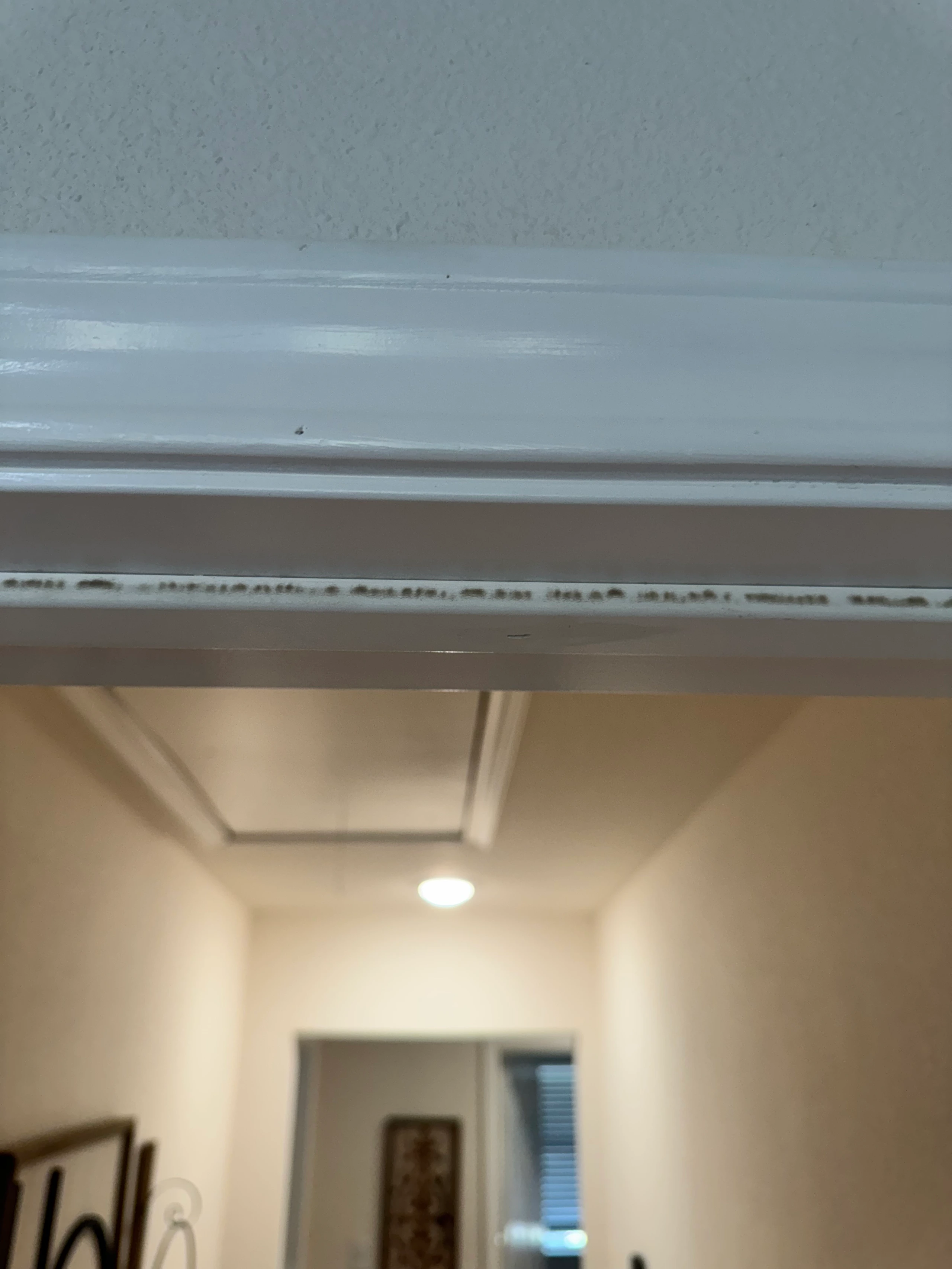
I have walked into hotel rooms that smelled fine in the entry and then noticed it the moment I pulled back the curtains. Mold all the way around the outside of the window where condensation had been collecting and never drying. You will see it in the corners, on the trim, sometimes spreading out onto the wall.
In another Airbnb, the bathroom looked like every Pinterest-worthy guest bathroom on the internet, except the grout was speckled with what most people would shrug off as mildew. We knew enough by then to know what the grout was telling us. We did not stay.
These are the patterns. Smell first, then look. If your nose is picking up something musty, the next step is to walk every wet area of the house, kitchen, bathrooms, laundry, near every window, and look for what is feeding the smell.
Where Mold Hides When You Can Smell It But Cannot Find It
Sometimes you will smell it and you will find it quickly. A leak under the sink. A patch behind the toilet. Visible growth at the base of a wall where the dishwasher leaks.
Other times you will smell it and have no idea where it is.
This is when mold becomes the most frustrating problem in your house. Common hiding spots include:
- Inside wall cavities where a slow leak has been going for months
- Under flooring, especially in bathrooms, kitchens, and laundry rooms
- Inside HVAC ductwork and on the cooling coils of the air handler
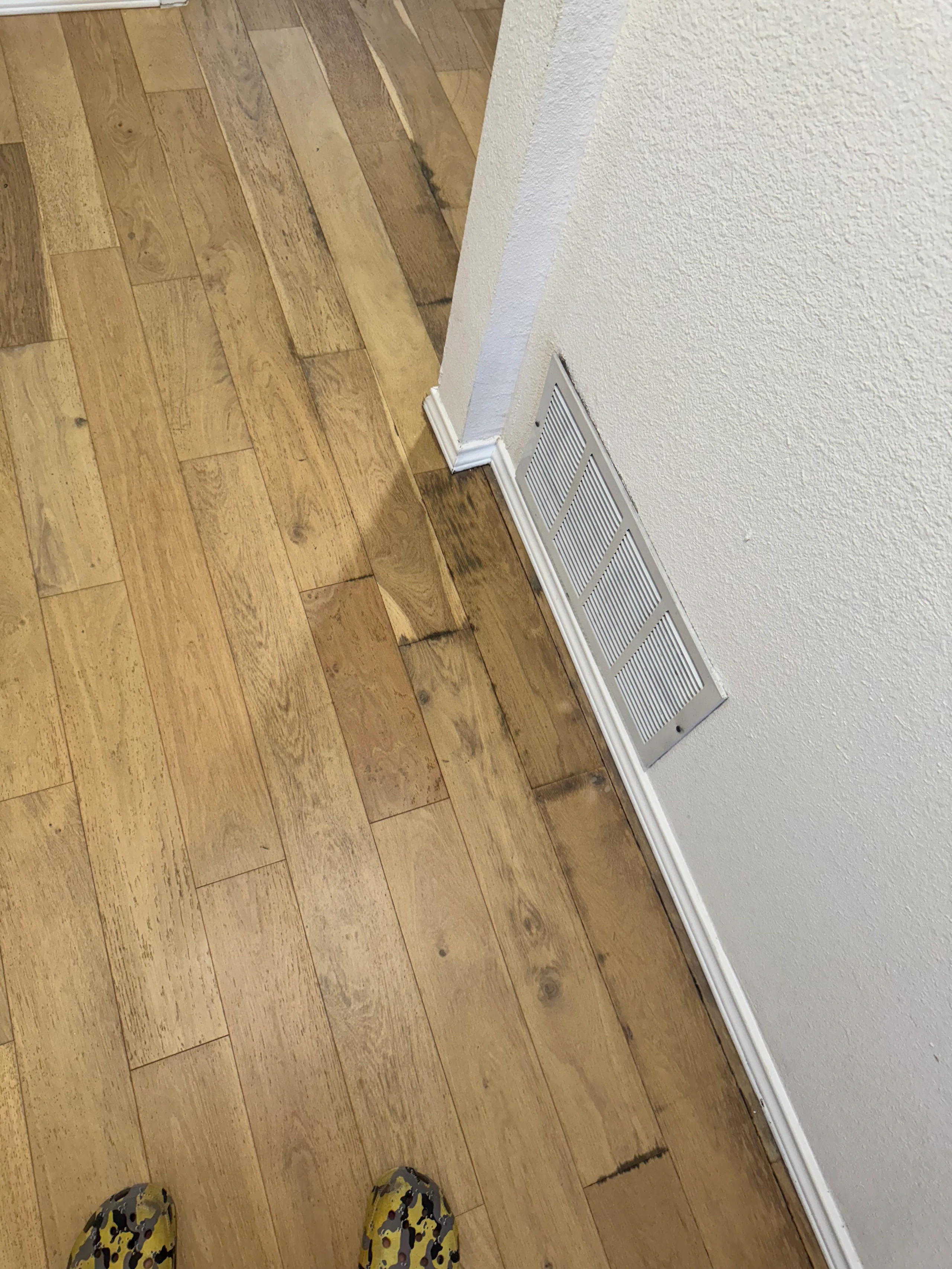
- Behind baseboards, particularly along exterior walls
- Above ceiling tiles in basements and finished garages
- Inside crawl spaces where humidity sits and never moves
- Behind vinyl wallpaper, which traps moisture against drywall
- Inside the drip pan and drain line of a window air conditioner
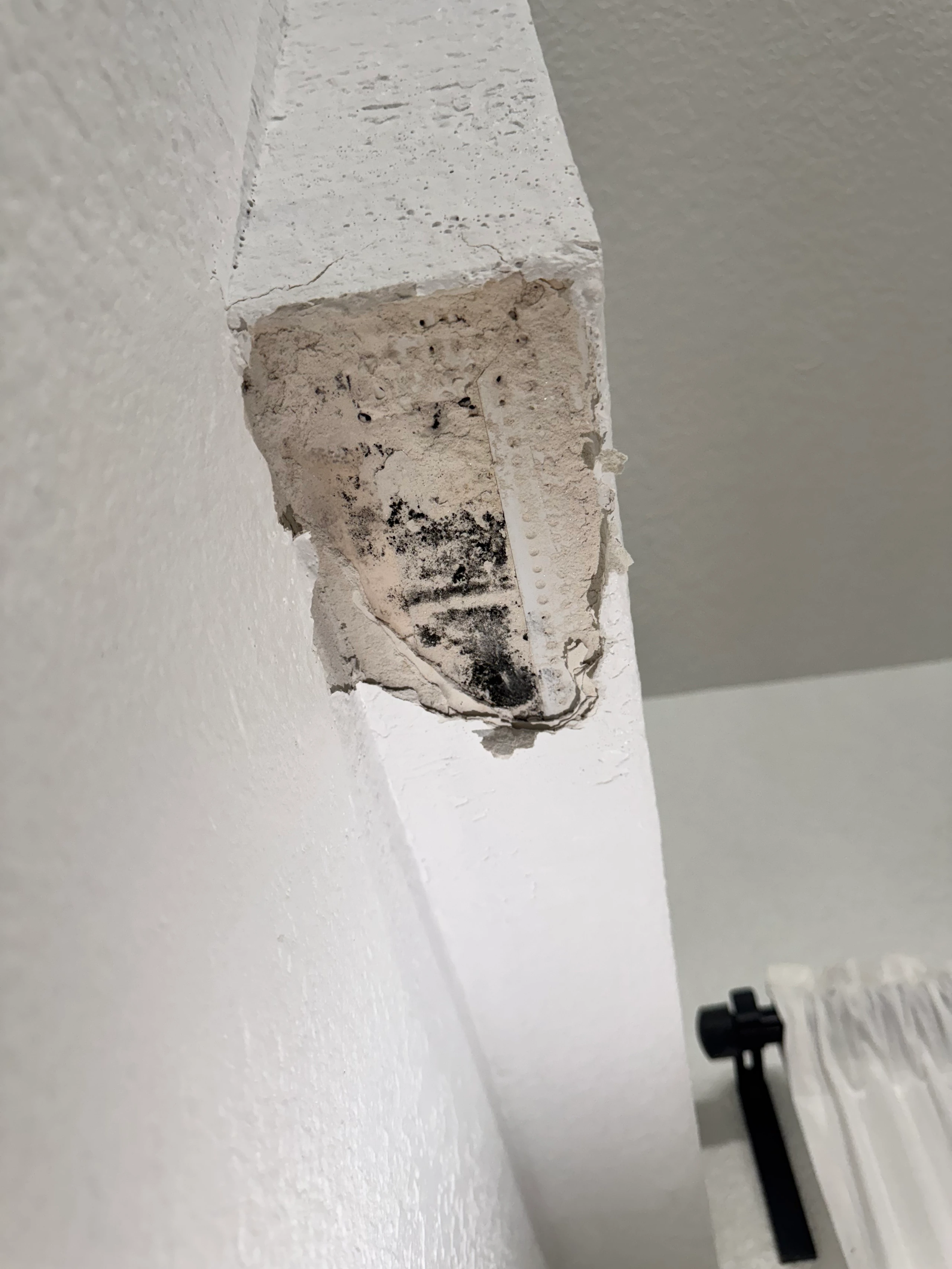
You can have a clearly musty room and absolutely no visible mold anywhere in the room. That does not mean the smell is in your head. It means the source is hidden. And that is exactly the situation where the right inspector, with the right tools, makes all the difference.
Why Mold Dogs Can Find What Human Noses Miss (Meet Scout)
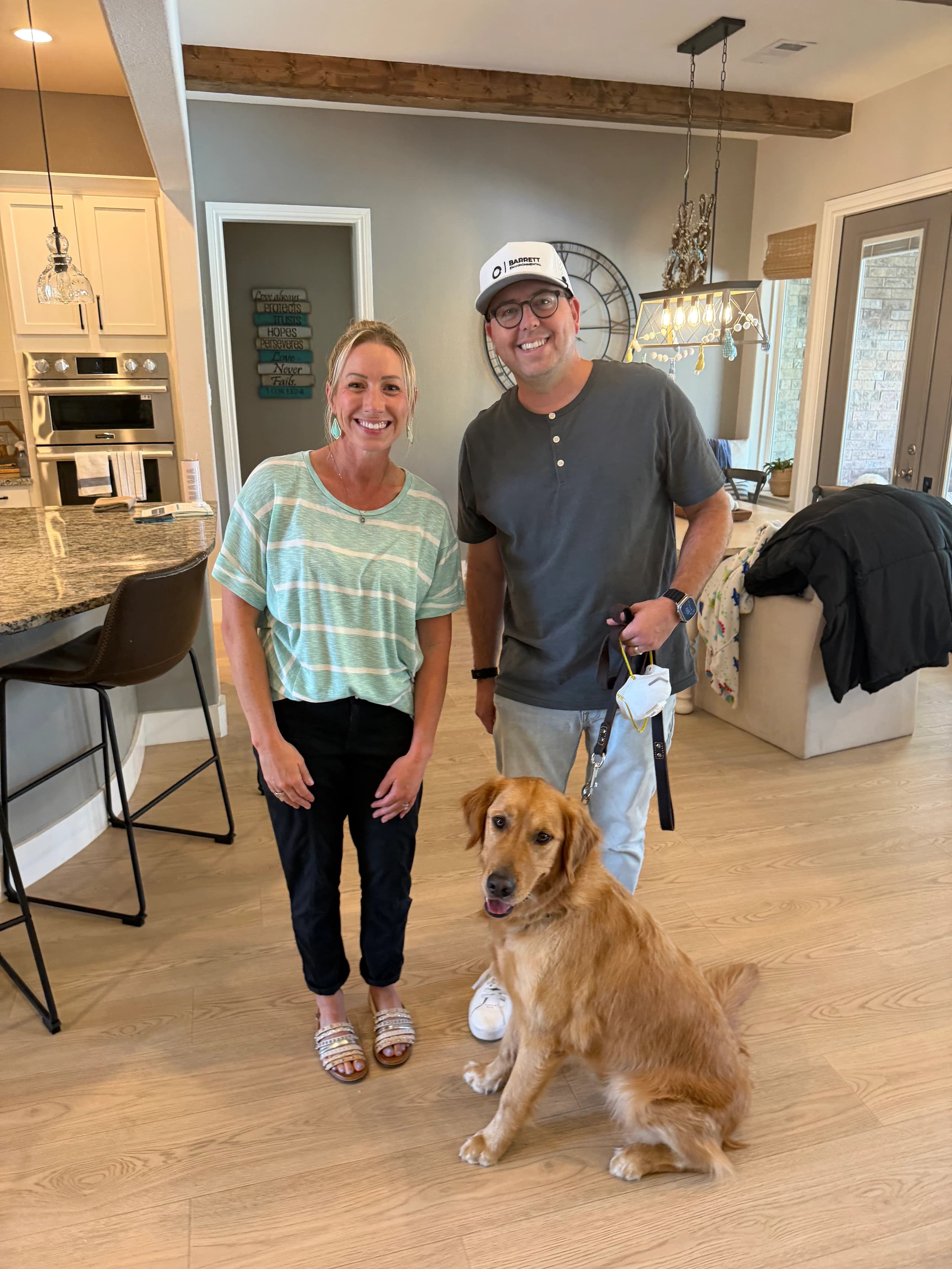
This is one of my favorite parts of modern mold inspection, because dogs are doing something we genuinely cannot. A trained mold detection dog is not finding "mold" in some general sense. The dog is detecting the specific mVOC compounds that active mold growth produces. To Scout, the mold detection dog at Barrett Environmental, an mVOC pattern is a scent signature, the same way a drug-detection dog identifies a specific chemical fingerprint.
A dog like Scout can sit at the base of a wall and tell his handler that there is active mold inside the wall cavity, even when the surface looks perfect. He can identify a hot spot under flooring, behind a built-in cabinet, or inside an HVAC chase. He can do it without any cutting, drilling, or destruction. And he can do it in minutes, in places where a human inspector might spend hours and still miss it.
Our family used Barrett Environmental for our own home and the difference was night and day compared to traditional inspections we had paid for in the past. Tate Barrett's team is PhD-led, Texas licensed, and uses the dog as one tool inside a much bigger toolkit that also includes real-time air sampling, moisture mapping, and lab analysis. The dog is not the whole answer. But for finding mold that hides where humans cannot get to, there is no substitute.
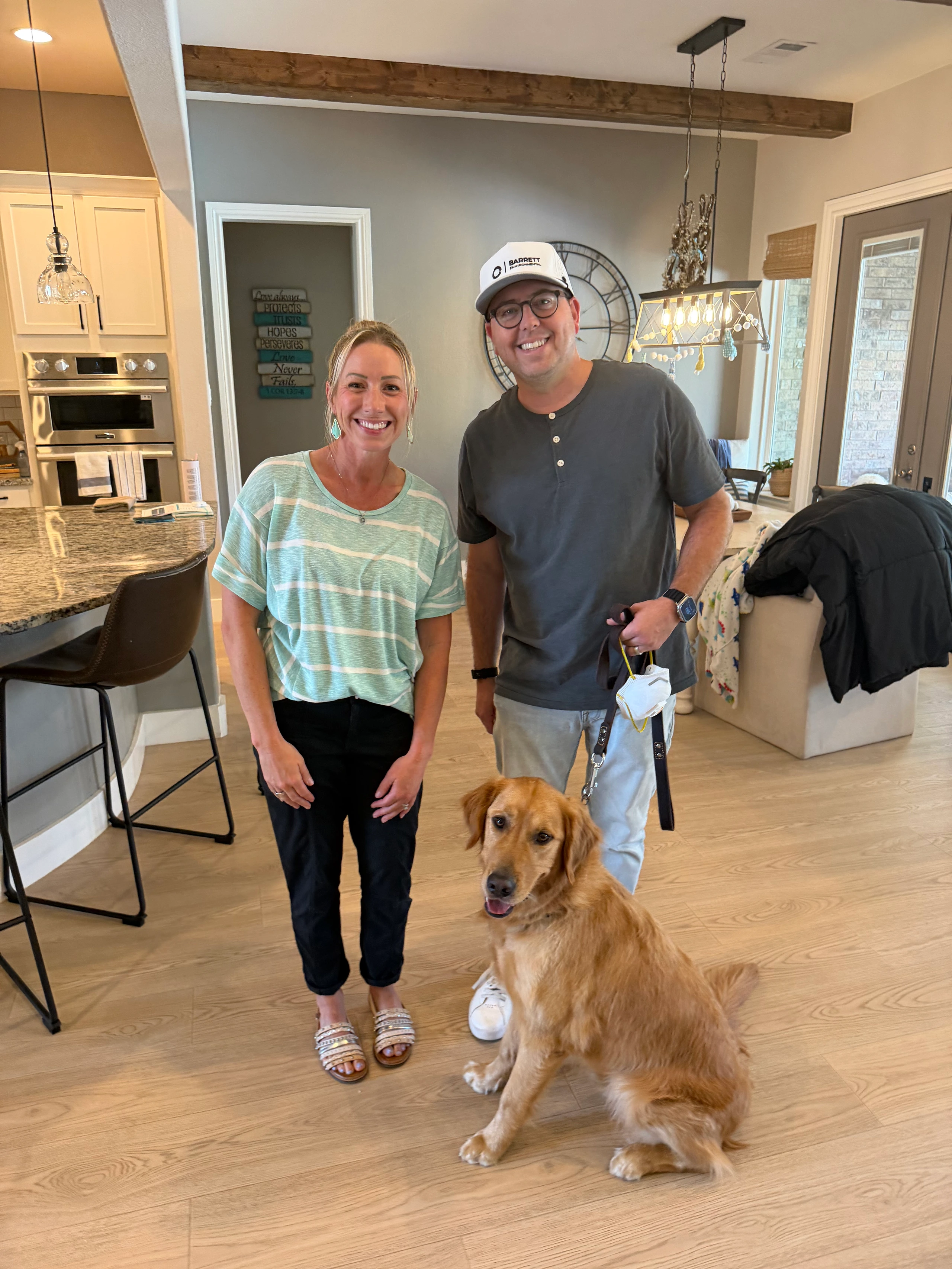
If you smell mold and cannot find it, this is the level of inspection I would push you toward. Not a guy with a flashlight and a clipboard. An inspection that takes mVOCs seriously, because that is the language mold actually speaks.
What About When There Is No Smell at All?
Here is the part that humbled me. There were homes my family stayed in where my nose detected nothing, and my body was already in trouble. Not always after a long stay. Sometimes within hours.
Mold smells exist on a spectrum. Some species, in some conditions, produce strong mVOC output. Others produce very little. Stachybotrys, the species commonly called black mold, can grow in walls and produce dangerous mycotoxins while smelling almost neutral. Aspergillus growing inside an HVAC system may not smell at all from inside the rooms it is contaminating. And human noses adapt. If you have been in a low-level moldy environment long enough, your brain stops registering the smell at all. This is called olfactory fatigue, and it is the reason your guests can smell something in your house that you literally cannot.
So here is the rule I had to learn the hard way: do not let "I do not smell anything" be your green light. Bodies pick up on mold long before noses do, and sometimes nose and body never agree.
If you are noticing symptoms that started or worsened in a specific home, building, or season, and you cannot explain them with anything else, that pattern matters more than the smell test. I built a free mold symptoms assessment for exactly this reason. It walks through 87 of the most common mold-related symptoms and gives you a clearer read on whether what you are experiencing is consistent with mold exposure, even if your house "smells fine."
The absence of a smell is never proof of safety. The presence of symptoms is information.
Does Running Your Bathroom Vent Actually Help?
Yes. And most people are not running theirs long enough.
The reason your bathroom is the most common place to see early visible mold is simple: every shower dumps gallons of water vapor into a small enclosed space. If that vapor does not get pulled out fast enough, it lands on cool surfaces, grout, the back of the toilet tank, the corner of the ceiling, the windowsill, and stays there. Repeat that twice a day for a few months and you have ideal mold conditions.
In our house, we run our bathroom vent during the shower and then we keep it running long after we are done, usually 30 to 45 minutes. The exhaust fan needs that time to actually pull the moisture out of the room, not just buy you a minute or two of feel-good airflow. If the visible "mildew" along your grout keeps coming back after you scrub it, your vent is not running long enough or your vent is not actually venting outside (a surprisingly common installation mistake).
If your bathroom does not have a vent, or it has one that does not work properly, a dehumidifier is a logical next step. The goal is not the appliance, it is the moisture level. The EPA recommends keeping indoor relative humidity below 60 percent, ideally between 30 and 50 percent. At those levels, mold struggles to grow. Above 60 percent, conditions favor it. A simple humidity meter from a hardware store costs less than dinner out and will tell you in real time what your home is actually doing.
This is one of the cheapest, most boring, most effective mold prevention steps in any home. Manage moisture and you starve mold of the one thing it cannot grow without.
When to Stop Sniffing and Start Testing
If your house smells musty and you cannot pinpoint why, the goal is not more sniffing. The goal is information. That usually means two things in parallel: a competent inspection of the building, and an honest look at what your body is doing.
For the building, find an inspector who takes mVOCs and hidden moisture seriously. Someone who does real-time air monitoring, who understands moisture mapping, who is willing to tell you what they do not yet know, and ideally, who has access to a trained detection dog for the cases where smell is present but visible source is not.
For your body, start with the mold symptoms assessment. If your symptom pattern is consistent with mold exposure, the next step is usually a blood test for mycotoxin antibodies, not a urine test, and not waiting for a perfect environmental result first. I wrote a full breakdown of why blood testing comes before environmental testing for most people here.
If you have already remediated and your symptoms persist, this post explains why the problem may have moved from your walls into your body and what to do about it.
The musty smell is your nose doing its job. Mold has tipped you off. The question now is whether you will treat that information as an annoyance to mask with a candle, or as the warning system it is.
If that musty smell has you sure something is hiding where you cannot find it, the episode Is Hidden Mold Making Your Family Sick covers the toxic mold symptoms doctors most often miss.
Sources
- United States Environmental Protection Agency. "What does mold smell like?" Available at: https://www.epa.gov/mold/what-does-mold-smell
- United States Environmental Protection Agency. "A Brief Guide to Mold, Moisture and Your Home." Available at: https://www.epa.gov/mold/brief-guide-mold-moisture-and-your-home
- United States Environmental Protection Agency. "Mold Course Chapter 2: Why and Where Mold Grows." Available at: https://www.epa.gov/mold/mold-course-chapter-2
- Bennett JW, Inamdar AA. "Are Some Fungal Volatile Organic Compounds (VOCs) Mycotoxins?" Toxins (Basel). 2015;7(9):3785-3804. PubMed Central. Available at: https://www.ncbi.nlm.nih.gov/pmc/articles/PMC4591661/
- Schleibinger H, Laussmann D, et al. "Microbial volatile organic compounds in the air of moldy and mold-free indoor environments." Indoor Air. PubMed. Available at: https://pubmed.ncbi.nlm.nih.gov/18333991/
Frequently Asked Questions
Does mold always have a smell?
No. Some species produce strong mVOCs that humans easily detect, while others produce very little odor even when actively growing. Stachybotrys, often called black mold, can grow inside walls and produce dangerous mycotoxins without producing a strong smell. The absence of a musty odor does not mean a home is mold-free.
What does mold smell like?
Mold most commonly smells musty, earthy, damp, or stale. People describe it as smelling like a wet basement, old books, damp socks, or a locker room. The smell comes from microbial volatile organic compounds, or mVOCs, that mold releases as it grows and feeds on organic material in your home.
Is mildew the same as mold?
Yes. Mildew is mold. The word "mildew" is informal language for surface mold growth, usually in bathrooms or on damp surfaces. Calling it mildew does not change what it is or make it safer. Visible surface growth is also a warning sign that conditions in that space favor hidden mold growth nearby.
What are mVOCs and are they harmful?
mVOCs are microbial volatile organic compounds, gases released by mold and other microbes as a byproduct of metabolism. They are responsible for the musty odor associated with mold growth. The EPA notes that mVOC exposure has been linked to symptoms including headaches, dizziness, fatigue, nasal irritation, and nausea, and ongoing research is examining whether some mVOCs may have toxic properties beyond odor effects.
Can you smell mold through walls?
Often, yes. Active mold growth inside a wall cavity can release mVOCs that diffuse through drywall, baseboards, and electrical outlets into the room. This is why a room can smell distinctly musty without any visible mold. A trained mold detection dog or a professional inspection with moisture mapping and air sampling can identify hidden sources.
Can you get sick from mold you cannot smell?
Yes. Many people develop mold-related symptoms in environments where they detect little or no odor. Some species produce minimal mVOCs, some hidden growth releases mVOCs into spaces other than where you spend time, and human noses adapt to chronic low-level exposure and stop registering the smell. Symptom patterns are often a more reliable signal than smell.
Are mold-sniffing dogs accurate?
Trained mold detection dogs are highly effective at identifying the location of active mold growth, especially mold hidden inside walls, under flooring, or in HVAC systems where visual inspection cannot reach. The dog is detecting specific mVOC compounds rather than mold itself. Dogs are most reliable when used as part of a full inspection alongside moisture mapping, air sampling, and lab analysis.
What should I do if I smell something musty in my house?
Walk every wet area of the house first, kitchens, bathrooms, laundry rooms, around windows, under sinks, near appliances, and look for visible water sources or growth. If you cannot find a source and the smell persists, schedule a professional mold inspection that includes mVOC and moisture analysis. Do not mask the smell with candles or air fresheners, which only delays finding the cause.
Is a musty smell in a bathroom always mold?
Almost always yes, when the smell is truly musty rather than just stale. Bathrooms generate large amounts of moisture from showers and baths, and any surface that stays damp long enough can support mold growth. Visible discoloration on grout, caulk, or windowsills is surface mold. Persistent musty odor with no visible source often points to growth behind tile, under flooring, or inside the wall cavity.

Aubree Felderhoff
Board Certified Holistic Health Practitioner | Mold Recovery Concierge | Certified Primal Health Coach | Master Personal Trainer
Aubree spent 12 years and more than $250,000 searching for answers to a mystery chronic illness that 30-plus doctors couldn't solve. The first culprit was a mycotoxin-overloaded home that triggered a cascade of symptoms nobody could trace back to the source. After finally identifying the connection, remediating, and rebuilding her health, she faced a second exposure years later when water damage in her next home brought the symptoms flooding back.
That second experience is what shaped everything. She found a physician who understood antifungal treatment, completed neuroplasticity training, and fully recovered. Having navigated mold illness twice, from two different sources, she understands both how it starts and how it ends.
Aubree is a Board Certified Holistic Health Practitioner through the American Association of Drugless Practitioners (AADP), a Certified Primal Health Coach, NASM Certified Trainer, and Cooper Clinic Certified. Before mold illness defined her life, she spent 14 years in elite fitness as a national champion collegiate gymnast. She brings that same discipline and evidence-based approach to mold recovery, helping families get clear answers faster, without the decade of wrong turns she endured.
The newsletter
A little hope in your inbox
One email a week from me, with what actually helps families get better. No spam, unsubscribe anytime.
Keep learning with mold illness guides
Start-here pages on symptoms, testing, CIRS, remediation, and hiring an inspector. Free tools and program paths are linked from each guide.
All mold illness guides →Need personalized guidance?
Start with free guides and the symptom assessment, or talk with Aubree about the right program path.