Aubree Felderhoff: Welcome back to Mold Free Mom. My name is Aubree, Felderhoff and I am your host. I have been through mold three separate times and have made it my life mission to help other families get their health and their life back a lot quicker than the 12 years it took me. Now, before we dive into today's episode, I have a quick announcement. I will be doing a QA episode coming up in the near future. It's going to be ask Aubree, Anything. And I want you guys to submit your questions. The questions that you want answered that nobody can seem to answer, please send them in to my email address, hello at moldfreemom.com. And I will add it to the question list that I will be going through on an up-and-coming episode. I am so excited for this episode. And really, guys, nothing is off limits, even personal questions. So ask away. All right. And now let's talk about today's episode, which is, I know, something that's probably on your heart and on your mind if you are like I was struggling for so long. And that is, how in the world do we get through the holidays and not just get through them, not just survive them, but how can I enjoy the holidays? I'm sick, I feel horrible, maybe I've got brain fog, maybe I've got such severe food allergies that the idea of Thanksgiving or Christmas festivities is stressful and haunting me because I know I'm not gonna be able to partake in any of the food and people are gonna look at me weird. And then there's the whole topic of some of you may be traveling to homes that have known mold exposures or that you suspect has a mold problem. And what do you do? Do you go to the home? Do you avoid the home? If you avoid the home and everyone else is going, it can be really lonely and isolating. And it kind of makes you feel as if you're not living anymore. And so I want to talk about and address kind of that white elephant in the room because I had it too. And I had one Thanksgiving in particular that really stands out in my mind that made me want to record this episode. And it was a few years into my illness. I was sick for seven years before we had any idea that mold was behind it. And so for those seven years, I was seeing, like many of you, specialists across the board. I would go to a specialist. I had a heart condition at the time. I had lost most of my eyesight. So I was going for that. I had, of course, all of my hormonal dysregulation. I had Hashimoto's hypodhyuretism. I was losing my hearing. I was having tremors. I had specialists everywhere on top of just the regular. functional medicine and integrative medicine doctors that I was seeing. And I didn't have a name for what it was. I really thought I was just sick, that I was just going to be a chronically ill 30 year old mom. And so every Thanksgiving for those first few years really looked the same. I would get together with relatives that I hadn't seen for an entire year. And we always came together at Thanksgiving and they would say, Hey, how are you doing last time we talked? You were doing X, Y, and Z test and seeing a specialist. How is your health? And I felt like every year I was the Debbie Downer having to say, well, actually, it's not good. And now this has happened. And now we're scanning my brain. And now we're doing this. And it was, it was almost embarrassing to me because I felt like they must be thinking I'm a hypochondriac or I enjoy this or that I'm not doing enough. Right. Those thoughts cycled through my head. And so in this particular Thanksgiving, I think it was year. Four or five into my illness and having no answers and running this race of going to all these specialists and trying all these things to no avail. A particular aunt sat down with me and she did exactly what I just told you guys. She asked me how I was doing. She remembered what I had talked about the year before and asked how I was doing. And I remember this sinking feeling in my stomach. This horrible, nauseous feeling of I can't tell her the truth. I can't tell her the truth. She's been praying for me. She cared enough to listen last year and she remembers a lot of what I said and what I was going through last year. And she's going to think I'm absolutely insane. Like many of the doctors that I went to. Told me it was in my head. And I remember making the decision in that moment to lie and to tell her that things were looking better and that I was feeling better and that we had made tremendous progress because it was easier than having to tell her the truth, that I was crumbling inside, that I was terrified for my life, that at that point I was really starting to think that I was going to die. I really thought that whatever this mystery, unnamed condition had was going on in my body, that that it was going to take my life. That's not really the talk you want have over turkey and cranberries. And so I told her that I was doing better. And I completely lied. And then I immediately changed the subject. But of course, the guilt followed, and I felt horrible. I felt unseen. I felt helpless and hopeless. And unfortunately, what that caused for me was a lot of stress and anxiety about the future and having to see relatives during the holidays, Christmas time, maybe New Year's, maybe Easter. It was always the same story. And I began to really dread going to any sort of family event where I would see people that I hadn't seen in a while. And so I thought today's episode was a really important one because if that's you, and maybe a piece of that story is you, or maybe you're more concerned about going into an environment that you don't know is safe or that you know has mold, or you're concerned about all of the food and knowing that you tend to react to every single item on that table, which I had had years like that where I had to bring my own Thanksgiving dinner because I could eat nothing. I could eat nothing and it was so horrible. I want to talk to you today. There's a quote that I've always loved, and it has to do with anxiety. And it says that action is the antidote to anxiety, meaning that a lot of times when we get anxious, anxiety is about what is going to happen in the future. We're storytelling and we're fortune telling in our brain what is going to happen or what could happen. And we're role-playing that in our head, and that's causing us anxiety. But one of the greatest strategies that I have found to really help when you're feeling that anxious feeling, especially when you often don't have control. We don't always have control over our health. We may be doing all the things and we're still sick. Maybe we're still missing a piece of the puzzle. Maybe our body just hasn't responded yet. So when we're feeling like that, one of the antidotes that we can use is to take action. But how can we take action? So I'm gonna lay out three different things that you can do, three different steps that you can take before you go over to a family member's house or even have family members in your own home for the holidays. What can we do to help us to be a little bit more prepared? So that we're not hit over the side of the head with these questions or with these foods or with these environmental toxins and have no plan to help ourselves, to be empowered. Well, the first thing that I would suggest that you do is I want you to start planning ahead. If you know that you are going to Aunt Sally's house for Thanksgiving. you can start to consider if you've been there what that house is like and if that house has musty smells, if it has clear leaks, water damage. And if you are going to be spending the night, a lot of times we are going to a family member's house that's maybe out of state or far away and we're going to stay there for a few days. And that you're walking into a home that already has mold, it already has water damage, that maybe you have symptoms or you react every time you go in, start to create a plan for how to best support yourself. Okay. If you're going to be spending the night there and there's just no way around it, can you bring a portable HEPA filter? There are plenty of small ones available. Make sure that it's a true HEPA filter with carbon that you can bring and plug into the room that you're sleeping in to at least help you for those 10 to 12 hours that you're in the room. Can you bring your own pillow and bedding to where your face is at least covered against something that you know doesn't have contamination? Can you pack supplements to help you with your detoxification and opening up your pathways while you're in a home with exposure? Can you bring certain snacks that you know will help to support you? Can you plan a lot of outings outside of the home? Maybe you sit around the campfire in the evening, maybe you go for lots of walks, or you suggest eating outside of weather permitting, of course, eating outside instead of inside the home. But there are things that you can start to think about and consider ahead of time that will help this to not be as scary, walking in. And secondly, if you have no idea. what the home or the place that you're going to be visiting, if you have no idea the status of that, maybe going ahead and planning a plan B, deciding if I'm just going to go to this home for let's say six hours one afternoon, and I show up and it's very clear that there is mold or other toxins, then what are you going to do about that? And making a plan. Maybe it's an exit strategy. Maybe it is planning on being there two to four hours instead. Maybe it is doing a lot of the tools that we talk about within the complete mold recovery program, working on nervous system regulation and doing some memory immersion and some pop strategies before walking into that home as well as after, making sure that we're supporting our detoxification pathways, making sure that if we have access to a sauna or other Ways to sweat and lymphatic drainage. That we are being proactive about doing that multiple times after we're in the home, that we're doing lymphatic drainage exercises. But there are a lot of things that we can do to support ourselves and really extra support our detoxification pathways before, during, and after an event where we are in known exposure. There are gonna be times in our life that we're gonna be in exposure and our body is meant to handle that. We're able to detoxify. It's just when we're in the middle of healing, we wanna mitigate as much as possible and reduce the amount of exposure. And so if we know ahead of time that maybe we're going somewhere that isn't the best indoor air quality, just making a small plan ahead and being prepared for that. will do massive change in our nervous system. Will really help us to have much quicker results coming out of that exposure and getting back to normal. The second thing that we want to plan for is the food and the water. So if you're in one of my mold recovery programs, that we talk a lot about what you're putting into your body and making sure to reduce the toxins as much as possible. Okay. If we are healing from mold illness, we already have a high environmental toxin load. We don't want to add to that with water that's full of chemicals or food that is full of trashy ingredients that Our body then has to process and put a lot of extra stress into. And although the holidays are often a time where we can eat different food, and you know, at least for myself and my family, we basically stuff ourselves on all of the delicious food and the pumpkin pies and all the things that we typically would not eat. So I do want you to have grace there. And I think it's important to have grace and to not a hundred percent all the time be on an excessive. restrictive diet where we're not enjoying life and we're viewing food as if we eat one tiny morsel that's off of a plan and we're not gonna heal. Okay. That simply is not true. So we want to plan for the holidays and for giving ourselves a little bit of flexibility, but we want to know what that flexibility looks like. Okay, so for instance, in my family, I and my family, we don't eat gluten. We typically stay away from dairy and soy, but at least for my husband and I, we don't touch gluten at all. Because I know that if I have a little bit of dairy, there's a certain pie that my family likes to eat. My husband's family really makes it. It's called cherry cheese pie, and it's cream cheese based and lots of sugar, and it is delightful, you guys. And once a year at Thanksgiving time, sometimes on Christmas if they serve it, I will have some cherry cream cheese pie and I'll pay for it. Pay for it. My stomach does not handle soft dairy very well. It never has. However, I know that for me, my main issues are gonna be some digestive upset and maybe a bit of fatigue the next day, but it's not enough for me to need to avoid that permanently. I'll do a small piece. I'll have a little bit of an issue. If I choose to do that, I'll support my drainage pathways. I'll drink plenty of water. I'll support myself in other ways. And I'm usually just fine. However, for myself, I don't touch gluten. If I had gluten, the one or two bites that I take of it is enough to really send me down. I'll have extreme brain fog. I will be very irritable. My brain will feel like it's on fire. I'll have joint pain and aches. Oftentimes it takes a week to two weeks for me to come out of this brain fog and fatigue. So to me, it's not worth it. That's not the same to me as stomach upset for a day. So you have to decide where you're willing to budge and you have to plan ahead. If you are someone that cannot eat sugar whatsoever. and that you're not gonna be partaking in the pumpkin pie, then plan ahead. Maybe bring something that you can eat that won't upset your stomach or cause a spike of symptoms that still allows you to feel like you're being festive and celebrating and not being left out. Because that was a huge thing for me is that all of these gatherings, bringing all of my own food for so many years and not feeling like I could really eat anything that celebrated Thanksgiving or celebrated Christmas, it was painful. It was painful. Our society is built around being together and socializing. And a huge piece of that is eating. And so when you feel so isolated and so lonely and on top of that, you're still sick, it's it's really a tough thing to go through. So plan ahead here. Start to consider what is the food that is going to be served there. Can you eat it? Do you need to eat a little bit of something before you go? And then maybe bring one of your favorite dishes with your dietary guidelines in line that you can still partake in at the meal. Remember too, with Thanksgiving, oftentimes we'll have a lot of leftover food. And if you're someone, and there are some of my clients that need to be on a lower histamine diet along with an anti-inflammatory diet, if you're someone that's on a lower histamine diet, just remember that leftovers, the longer they sit, the higher the histamine count is going to be. And so plan ahead for that. Maybe you have a day or two of leftovers and then that's it. Move it on. Also, for the most part, you just want to avoid the dry fruit, nuts, age, cheese, and wine if you're trying to stay low on the histamines. And then the third thing that I really want you to start thinking about and planning for is of course the people. And like I said at the beginning of this episode. When I went to Thanksgiving and I saw that aunt that I hadn't seen in a year, and she asked me how I was doing, I was like a deer in headlights. I was not prepared for her to remember anything that we had gone through, and I was not prepared in my response. And so I felt I had to lie so that I wouldn't disappoint her. And so I want to tell you that it's possible you may have, if you've had a long history, I was sick for 12 years. If you've had a long history of being ill and dealing with this, sometimes for myself over a decade or even just multiple years, people know what's going on. And because they care, they're going to ask. And if you feel that that will be triggering to you. Consider now how you want to answer that. Maybe you say something very short and sweet and then move on from the conversation if you don't want to go in deep. So you could say something like, yeah, I'm recovering from mold and I'm really working on getting better. I'm taking a lot of steps. It can be a bit of a long journey, but overall, I'm on the right road. Thank you so much for caring. And then you move on. But making a plan ahead of time of how much you want to share. And remember, guys, you don't have to share any of it. If it's painful, if you feel like it's going to drive you into sadness or anxiety or feeling like myself, feeling like I was disappointing people who came in, so caring, telling me that they've been praying for me And so eager for an update from me that basically said, yeah, it's working and I'm doing better, I felt heartbroken that I had to tell her that no, it wasn't working. I wasn't getting better. I was getting worse. And I was feeling really hopeless in that moment and depressed. I didn't want to say that. Now, had I planned ahead for her to come to me and to ask. And of course, we can't always know what people are going to say, but it makes sense. If that was year five, and for five Thanksgivings in a row, she had asked me how I was doing and I had told her I was struggling, then it makes sense that she probably would have come to me and asked on year five, How are you doing? And so from that moment on, I had a plan and I knew how to answer people. And some people I went more in depth with and I would talk. more openly and more honestly about what was happening. And some people, sometimes, I didn't want to talk about it. It was all, I, my brain was consumed with it. And you guys know what that's like to be consumed with trying to figure out what to do and what to pull out of your diet or what to change in your environment or this test or that test. And okay, now I've got symptoms over here. Do I go see a specialist? And it was just exhausting and all-consuming. And I just wanted to get away from it and just celebrate being grateful. For the things in my life. And so if that's you, then go ahead and make a plan on how to address that and what to talk about, which I know it sounds funny that you have to plan for what to talk about, but sometimes we do. Sometimes we do have to do that. And that's just a part of taking care of ourselves as we move through this chronic illness journey on our road to recovery. All right, so quick takeaways, guys. I want you to really start to sit down and plan through the three things that we discussed. Number one, the environment. So if you are going and traveling somewhere, especially if you're spending the night that you believe or know for certain has a mold exposure, begin to plan now on how to best support yourself. Number two, the food. If you're someone struggling with chemical sensitivities or food allergies or gut dysbiosis, what is your plan as far as what you want to eat that will keep you mostly in line on your healing journey, but also allow you to live a little? And how can you make that easier for yourself? Whether it's bringing a dish that is something that typically you can't eat at these outings, whether it's eating a little bit of something special maybe beforehand since you won't be able to partake, Or whether it's allowing yourself to partake in all of the foods and supporting your detox pathways and your water intake and all of the other things that we do to get back on track after. And number three, the people. Start to consider who's gonna be there and what they may ask you and make a plan for how you will respond now before you're in that moment. Alright, guys, well, I hope that this has helped give you a little bit of ease moving into if you're someone that is stressed about the upcoming holidays. Remember that. Action is the antidote to anxiety. And so if you're feeling anxious, if you're feeling that kind of uncomfortable feeling in your stomach, that's a sign. That's a sign that you are feeling uncomfortable about something in the future. So really figuring out what it is that you're feeling anxious about, naming it, and then beginning to create a plan ahead of time about how to make yourself as comfortable as possible throughout the holidays. Will help you tremendously to begin to feel at ease. Because what we want to do, even though you may have been sick for a long time, even though you may still be sick and you're really dealing with so much, and so many people don't understand it, and you're about to go surround yourself with all these people who have what you want. Maybe it's pure health and they don't even try and they're eating all the junk and they live in a musty home and they're just as healthy as can be. Or maybe they have the family that's thriving and no one is dealing. with chronically sick kids who are just constantly developing one thing after another. No matter what it is, we still have things to be grateful for. And so in this season, I hope that you can begin to really focus on what we can still be grateful for. We can still enjoy our lives. We can be sick, we cannot be a hundred percent our best, and we can still find ways to seek out joy and really enjoy the moment. And that is my hope and my prayer for you during this Thanksgiving season, is really being able to enjoy the moments, enjoy the time, and give yourself the gift of gratitude during this season. Alright, friends, I will see you next time. Don't forget, if you have a question for me that you would love for me to episode on my upcoming episode of Ask Aubree, Anything, please send it to my email address. It's hello at moldfremom.com. Have a great day. See you next time. See ya next time on MoldFree Mom. Thanks for listening to Mold Free Mom. If this episode has helped you make sense of some of your symptoms, diagnoses, or why nothing has worked in the past, please make sure to follow the show and leave a quick review so others who are struggling can find it quicker. If this episode brought someone struggling with unexplained sickness or mold to mind, please share it so they don't have to waste years of their life chasing the wrong answers like I did. Remember, you're not broken. You can get your life back. You just need to be shown how.
99 | Mold Illness Holiday Guide: How to Eat, Travel, and Keep Healing Without Missing the Memories
This episode answers how to get through holiday gatherings while recovering from mold illness, by planning ahead for environment, food, and people instead of just reacting in the moment. Host Aubree Felderhoff, Mold Illness Recovery Specialist, shares her own painful Thanksgiving experience of lying to a caring aunt about her health and uses it to lay out three practical steps for mitigating exposure, managing food reactions, and preparing answers for family questions.
Listen to this episode
What You Will Learn in This Episode
- If staying overnight in a home with known or suspected mold, pack a portable true HEPA filter with carbon for the bedroom and bring your own pillow and bedding.
- Before and after time in a known exposure environment, support detox pathways with sauna, lymphatic drainage exercises, and extra water intake.
- Decide ahead of time which foods are worth the tradeoff, Aubree tolerates a small piece of dairy-based cherry cheese pie but avoids gluten entirely because it causes brain fog and fatigue lasting one to two weeks.
- If following a lower histamine diet, limit leftovers to a day or two since histamine levels rise the longer food sits, and avoid dry fruit, nuts, aged cheese, and wine.
- Prepare a short, honest response in advance for relatives who ask about your health, such as naming that you are recovering from mold and taking steps, so you are not caught off guard like Aubree was at a Thanksgiving five years into her illness.
- Planning ahead for environment, food, and people before a holiday gathering can reduce anxiety because, as Aubree notes, action is the antidote to anxiety.
“Action is the antidote to anxiety.”
Aubree Felderhoff
“I made the decision in that moment to lie and to tell her that things were looking better... because it was easier than having to tell her the truth.”
Aubree Felderhoff
“We can be sick, we cannot be a hundred percent our best, and we can still find ways to seek out joy and really enjoy the moment.”
Aubree Felderhoff
“If we know ahead of time that maybe we're going somewhere that isn't the best indoor air quality, just making a small plan ahead and being prepared for that will do massive change in our nervous system.”
Aubree Felderhoff
Questions This Episode Answers
How do I survive staying overnight at a relative's house that might have mold?
Start by planning ahead instead of walking in blind. If you know the home has musty smells or water damage, bring a portable true HEPA filter with carbon for the room you sleep in, pack your own pillow and bedding, and bring snacks or supplements that support your detoxification pathways. You can also plan outings outside the home, like walks or eating outdoors, to limit your time inside.
What if I show up somewhere and realize it has mold but I didn't know beforehand?
Make a plan B before you even arrive, like deciding ahead of time how long you will stay if you walk in and sense a problem. This might mean shortening a six hour visit to two or four hours, or having an exit strategy ready. You can also use nervous system regulation tools before and after the visit and support your detox pathways afterward with sweating and lymphatic drainage.
How do I handle Thanksgiving food when I react to almost everything on the table?
Plan ahead by knowing what will actually be served and deciding where you are willing to budge versus where you are not. For me, a little dairy means some stomach upset for a day, which I decide is worth it, but gluten sends me into brain fog and joint pain for one to two weeks, so I avoid it completely. Bring a dish you can safely eat so you still feel included, and give yourself grace rather than treating one off plan bite as ruining your healing.
Is it bad to have leftovers if I'm on a low histamine diet?
Leftovers get higher in histamine the longer they sit, so plan to only eat them for a day or two before moving on. If you are trying to stay low histamine, it also helps to generally avoid dried fruit, nuts, aged cheese, and wine. Planning this out ahead of the holiday takes the guesswork out of it in the moment.
What do I say when relatives ask how I'm doing and I don't want to go into detail?
You get to decide ahead of time how much to share, and you don't owe anyone the full story. You could say something short like you're recovering from mold and taking steps to get better, then move the conversation forward. Planning your response beforehand helps you avoid feeling cornered or like you have to lie the way I did for years.
Why do I feel so anxious leading up to holiday gatherings when I'm still sick?
Anxiety often comes from storytelling in our heads about what might happen, especially around things we can't fully control like our health. The antidote to that anxiety is taking action, which means naming what specifically worries you and making a small plan for it ahead of time. Planning around the environment, the food, and the people are the three areas that tend to create the most holiday stress.
Do I have to be perfectly strict with my diet during the holidays or will that ruin my progress?
No, one off plan bite does not undo your healing, and holding too rigidly to a restrictive diet all the time can take away from actually enjoying life. I give myself grace to have a small piece of something like cherry cheese pie once a year, knowing I might deal with some fatigue or digestive upset the next day. The key is deciding in advance where you're willing to budge and supporting yourself afterward with things like water and drainage support.
How do I stop feeling isolated when everyone else is enjoying food and I'm stuck eating my own separate meal?
This isolation is real and I lived it for years, bringing my own food to Thanksgiving because I couldn't eat anything else being served. Planning ahead helps, like eating something beforehand or bringing a dish that fits your needs so you still feel festive and included rather than left out. Remember that you can still be sick, not be at one hundred percent, and still find ways to seek out joy and gratitude in the moment.
Episode Transcript
Show transcript
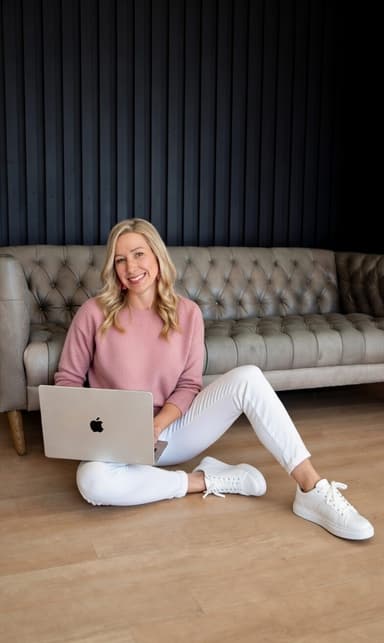
Aubree Felderhoff
Certified Holistic Health Practitioner (AADP) | Mold Recovery Concierge | Certified Primal Health Coach | Master Personal Trainer
Aubree spent 12 years and more than $250,000 searching for answers to a mystery chronic illness that 30-plus doctors couldn't solve. The first culprit was a mycotoxin-overloaded home that triggered a cascade of symptoms nobody could trace back to the source. After finally identifying the connection, remediating, and rebuilding her health, she faced a second exposure years later when water damage in her next home brought the symptoms flooding back.
That second experience is what shaped everything. She found a physician who understood antifungal treatment, completed neuroplasticity training, and fully recovered. Having navigated mold illness twice, from two different sources, she understands both how it starts and how it ends.
Aubree is a Certified Holistic Health Practitioner (AADP), a Certified Primal Health Coach, NASM Certified Trainer, and Cooper Clinic Certified. Before mold illness defined her life, she spent 14 years in elite fitness as a national champion collegiate gymnast. She brings that same discipline and evidence-based approach to mold recovery, helping families get clear answers faster, without the decade of wrong turns she endured.
More Mold-Related Episodes
98 | Mold Illness and Cell Danger Response: How to Break Free with Primal Trust Founder Dr. Cat King
You got out of the mold. You did the treatments. So why won’t your body settle down? If mold illness has left your nervous system stuck on high alert, Dr....
97 | Mold Q&A: Why Do Mold Symptoms Get Worse During Detox? 3 Reasons You’re Not Getting Better
Doing everything right in your mold recovery and somehow feeling worse than when you started? You are not failing, and you are not alone. This Mold Q&A...
96 | Got Mold? 3 Types of Inspectors and Which One to Trust with Kendra Seymour of Change the Air
Hidden mold in the home made Kendra Seymour’s family sick for years, and it started with one question: should we be standing here? She was watching a...
The newsletter
A little hope in your inbox
One email a week from me, with what actually helps families get better. No spam, unsubscribe anytime.
Ready for Personalized Guidance?
The podcast is a good starting point. If you want one-on-one help working through mold illness recovery, let’s talk.
Book a Discovery Call