
What Are Mycotoxins? The Complete Guide
Quick Answer
Mycotoxins are toxic compounds produced by certain mold species. Learn what they are, how they affect your health, how exposure is tested, and what recovery looks like.
If you've been sick for a long time and nobody can figure out why, you've probably heard the word "mycotoxins" at some point. Maybe a functional medicine doctor mentioned it. Maybe you fell down a rabbit hole at 2am after yet another inconclusive doctor's appointment. Either way, you're here, and you want real answers, not a wall of scientific jargon that leaves you more confused than when you started.
I spent 12 years and more than $250,000 trying to figure out what was destroying my health. Thirty-plus doctors. Thyroid medications. Brain scans. Supplements by the bagful. Nobody connected the dots until we finally discovered mold-related illness. And at the center of that whole picture was something I'd never heard of before: mycotoxins.
This guide covers everything you need to know about what mycotoxins actually are, how they get into your body, what they do once they're there, and what actually helps. I'm going to give you the honest version, not the version designed to keep you sick and spending forever.
What Mycotoxins Actually Are
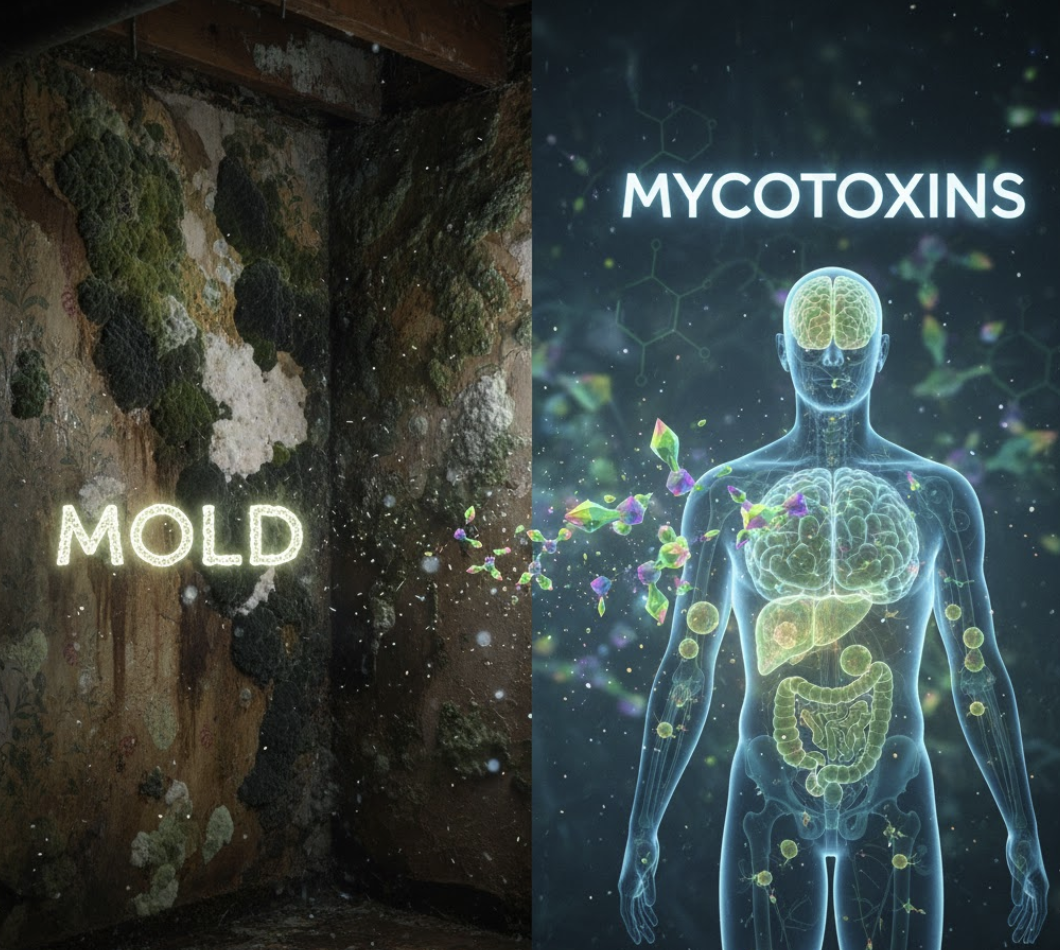
Mycotoxins are toxic secondary metabolites, meaning chemical compounds that certain mold species produce as a byproduct of their biological processes. The word comes from the Greek "mykes" (fungus) and the Latin "toxicum" (poison). They're not the mold spores themselves. They're what some molds release as they colonize and grow.
This distinction matters enormously, and it's one of the first things I wish someone had explained to me clearly. You can remediate visible mold from a surface and still have mycotoxin contamination in the air, in the dust, in your HVAC system, and in your body. The mold is gone but the poison it left behind can linger.
Not all molds produce mycotoxins. Molds are everywhere, outdoors, in soil, on food, in the air, and the vast majority are harmless. The problem occurs with specific mold species that are known mycotoxin producers, and specifically when those molds have the right conditions to grow aggressively: moisture, warmth, and organic material to feed on. Water-damaged buildings are the ideal environment.
Mycotoxins are also extraordinarily stable. They don't break down easily with heat, cold, or time. They can survive in building materials, clothing, and furniture long after the visible mold is gone. They're small enough to be airborne on dust particles and invisible to the eye. And once inside your body, they can accumulate in tissue and organs over time, particularly in people whose detoxification systems are already burdened.
How Mold Produces Mycotoxins
Mold produces mycotoxins primarily as a stress response. When a mold colony is competing with other organisms, under environmental pressure, or in conditions where it needs to defend its territory, it ramps up mycotoxin production as a kind of biological weapon.
This is why water-damaged buildings are so problematic. When building materials stay wet, mold colonizes them quickly. As competing mold species fight for space and resources, mycotoxin production increases significantly compared to outdoor mold in normal conditions. The result is a concentrated toxic environment that building occupants breathe and absorb daily, often for years before anyone suspects mold as the cause.
The relationship between mold growth and mycotoxin concentration is not always linear, which is part of why standard visible mold inspections miss so much. A relatively small colony of a highly toxic mold species like Stachybotrys chartarum can produce significant mycotoxin loads. Meanwhile, a large area of visible mold from a lower-toxicity species might produce far less. The mold you can see doesn't tell the whole story.
The Most Common Mycotoxins That Affect Human Health
There are hundreds of known mycotoxins, but a handful show up most frequently in clinical testing and building investigations. Here's what you actually need to understand about each of them.
Ochratoxin A
Ochratoxin A is one of the most commonly detected mycotoxins in people with mold illness. It's produced primarily by Aspergillus and Penicillium species and is found in both water-damaged buildings and contaminated food, particularly stored grains, coffee, dried fruit, and wine. Ochratoxin A is nephrotoxic, meaning it directly damages the kidneys. It also suppresses the immune system, disrupts neurotransmitter production, and has been classified as a possible human carcinogen by the International Agency for Research on Cancer.
Trichothecenes
Trichothecenes are a large family of mycotoxins produced by molds including Stachybotrys, Fusarium, and Trichoderma. These are among the most potent mycotoxins in terms of biological activity. They interfere directly with protein synthesis at the cellular level, which is why trichothecene exposure is associated with such a broad and severe symptom picture: immune suppression, neurological effects, respiratory damage, and gastrointestinal toxicity. Stachybotrys chartarum, commonly called black mold, produces a particularly nasty subset of trichothecenes called macrocyclic trichothecenes that are strongly associated with severe mold illness cases.
Aflatoxins
Aflatoxins are produced primarily by Aspergillus flavus and Aspergillus parasiticus and are among the most potent naturally occurring carcinogens known. They're more commonly associated with food contamination (peanuts, corn, tree nuts, and grains) than with building exposure, but Aspergillus species can colonize water-damaged buildings and produce aflatoxins in that environment as well. Liver damage is the primary concern with aflatoxin exposure.
Gliotoxin
Gliotoxin is produced by Aspergillus fumigatus and is particularly relevant for people with gut issues and immune dysregulation. It has the specific ability to suppress the immune system by inducing apoptosis (programmed cell death) in immune cells, which is one reason why Aspergillus infections are so difficult for immunocompromised individuals to fight off. It also disrupts the gut lining and is increasingly being studied in connection with candida overgrowth, since gliotoxin is also produced by Candida albicans.
Zearalenone
Zearalenone is a mycotoxin produced by Fusarium species and is unique because of its estrogenic activity. It binds to estrogen receptors in the body, which is why it's strongly associated with hormonal disruption. Women exposed to zearalenone frequently report irregular cycles, worsening PMS, estrogen dominance symptoms, and fertility issues. For anyone dealing with unexplained hormonal problems alongside other chronic symptoms, zearalenone is worth testing for specifically.
Fumonisins
Fumonisins are produced by Fusarium moniliforme and related species, most commonly associated with corn and corn products. They interfere with sphingolipid metabolism, which affects cell membrane function throughout the body. Fumonisin exposure has been linked to esophageal cancer in high-exposure populations and neural tube defects in animal studies.
How Mycotoxins Get Into Your Body
There are three primary routes of mycotoxin exposure, and understanding all three matters for both identifying exposure and recovering from it.
Inhalation
This is the primary route of exposure for people in water-damaged buildings. Mycotoxins attach to mold spores and dust particles that are small enough to become airborne. When you breathe them in, they can deposit in your nasal passages, airways, and lungs. Some are absorbed directly into the bloodstream through lung tissue. The respiratory route is particularly efficient at delivering mycotoxins into systemic circulation, which is why building exposure tends to produce more severe illness than dietary exposure alone.
Ingestion
Food contamination is a significant and underappreciated route of mycotoxin exposure. Ochratoxin A in coffee, aflatoxins in peanut butter, trichothecenes in stored grains, zearalenone in corn products. These exposures happen daily for most people without any awareness. The gut has some capacity to bind and eliminate ingested mycotoxins, but that capacity is overwhelmed when exposure is ongoing and the gut lining is already compromised.
Skin and Mucous Membrane Contact
Direct contact with contaminated materials can allow some mycotoxin absorption through the skin, though this is generally considered the least significant route compared to inhalation and ingestion. It's still worth noting for people handling contaminated building materials or personal belongings during a move or remediation.
What Mycotoxins Do to Your Health
This is the part that took me the longest to fully understand, and honestly the part that explains why mold illness is so consistently misdiagnosed. Mycotoxins don't produce one single recognizable symptom pattern. They produce dozens of symptoms across multiple organ systems simultaneously, which looks like nothing specific to a doctor running a standard panel.
Here's what we know from the research about the biological effects of mycotoxin exposure:
Immune system disruption: Many mycotoxins directly suppress immune function, either by killing immune cells or by dysregulating the signaling pathways that control immune response. This leaves the body less able to fight off infections, more prone to inflammatory conditions, and less capable of clearing the mycotoxins themselves.
Neurological and cognitive effects: Mycotoxins can cross the blood-brain barrier. Once in the brain, they're associated with neuroinflammation, disruption of neurotransmitter production and signaling, and damage to myelin (the protective coating around nerve fibers). The brain fog, memory problems, word retrieval issues, anxiety, and mood instability that mold illness patients report are not imagined. They have a measurable neurological basis.
Hormonal disruption: Some mycotoxins, particularly zearalenone, directly interfere with the endocrine system. Others disrupt the HPA axis (the hypothalamic-pituitary-adrenal axis), which regulates cortisol and the stress response. Thyroid disruption is common in mold illness patients, which is exactly what happened to me. My thyroid issues were real, they just weren't the root cause.
Gastrointestinal damage: The gut lining is one of the first casualties of mycotoxin exposure because the gut has direct contact with ingested mycotoxins and receives a significant portion of inhaled mycotoxins via mucociliary clearance (the system that sweeps particles from your airways into your throat). Increased intestinal permeability, dysbiosis, and chronic digestive symptoms are extremely common in mold illness.
Mitochondrial dysfunction: Mycotoxins interfere with mitochondrial function, meaning they impair the cellular machinery that produces energy. This is the underlying mechanism behind the profound fatigue that characterizes mold illness and why standard fatigue workups come back normal.
Oxidative stress: Mycotoxin exposure generates significant oxidative stress, depleting antioxidant systems and damaging cells throughout the body. This contributes to the multi-system inflammation pattern and accelerates tissue damage over time.
If you're experiencing symptoms across multiple body systems and want to understand whether mold could be the connection, take our free mold symptom assessment for a clearer picture.
Fatigue is usually the first thing people notice and the last thing that gets connected to mold. I wrote about why in mold fatigue: why you are exhausted no matter how much you sleep.
Why Doctors Keep Missing It
I don't blame most of the doctors I saw. I genuinely don't. They were working within the framework they were trained in, and mycotoxin illness doesn't fit neatly into that framework. But understanding why it gets missed so consistently is important if you're trying to navigate this for yourself.
Standard diagnostic medicine works by finding a single cause for a set of symptoms. Mycotoxin illness produces dozens of symptoms across dozens of systems, and each one looks like something else in isolation. My thyroid markers were off, so I got a thyroid diagnosis. My inflammation markers were elevated, so I got anti-inflammatory prescriptions. My fatigue was crushing, so I got tested for autoimmune conditions. None of those tests were wrong. They were all measuring real downstream effects of the same upstream cause.
Additionally, standard blood panels don't test for mycotoxins. At all. The complete blood count, the metabolic panel, the thyroid panel, none of them include mycotoxin-specific markers. If your doctor isn't specifically ordering mycotoxin testing, you are simply not being tested for it, regardless of how sick you are.
There's also a cultural and institutional resistance to mold illness as a diagnosis in mainstream medicine. This is changing, slowly, but it means many people are still told that mold illness isn't real, that their symptoms are stress-related, or that they need mental health support rather than environmental investigation. I heard versions of all of these. The research doesn't support that dismissal.
For a deeper look at what the science says about mold and recovery, read The Science Is Clear: Remove the Mold, and the Body Begins to Heal.
How Mycotoxin Exposure Is Actually Tested
This is where I want to be really direct with you, because the testing landscape is full of misinformation and expensive dead ends.
Mycotoxin Blood Serum Testing
The most important thing I learned through my own journey is that you should test your body before you test your building. Blood serum testing for mycotoxins is more affordable than most environmental testing and provides objective evidence of what's actually in your body. It will tell you whether you have a mycotoxin burden regardless of whether you can identify the source yet.
If you want to understand whether your symptoms could be mold-related before spending money on any testing, take the free symptom assessment at Mold Free Mom first. It takes about 15 minutes and gives you a clearer picture of whether this warrants further investigation.
What to Avoid
I want to be clear about ERMI testing (Environmental Relative Moldiness Index) because it gets recommended frequently in mold circles as a starting point. The creator of the ERMI test has publicly stated it was not designed for the clinical diagnostic purposes it's commonly used for. It's frequently performed incorrectly, relies on a single dust sample that may not represent the actual air quality in your home, and produces results that are routinely misinterpreted. It gives families false reassurance when it comes back "normal" and delays finding the real problem. It's not a reliable starting point for investigation.
If you are deciding where to start, blood testing vs. environmental testing explains why I have people test their body before they pay for an inspector.
What Recovery Actually Looks Like
I want to leave you with something real here because the mold illness space is full of either doom and gloom (you'll be sick forever, you'll always react to mold) or oversimplified claims that just taking supplements will fix everything. Neither is accurate.
Recovery is possible. I've been through it twice, once after our first mold-contaminated home and again more recently after water damage in our current house. The second time, with the right medical partnership and a targeted antifungal protocol, I felt significantly better within four weeks. That's not a testimonial I'm using to sell you something. That's just what happened.
What genuine recovery requires is getting out of the exposure first, reducing the mycotoxin burden in your body through targeted treatment (which for many people includes antifungal medication prescribed by a mold-literate physician), supporting your body's detox pathways, and doing the neuroplasticity work to help your nervous system stop operating in a constant threat response.
It's not a one-month fix. But it is a finite process with an actual end point, not a lifetime of protocols, supplements, and perpetual management. You shouldn't have to build your entire identity around being sick. I refused to, and I want to help you find your way to the other side of this too.
To understand more about whether your body can heal after mold exposure, read Can Your Body Heal From Mold? The Science Says Yes.
If you're ready to take the next step, our mold validation assessment is the clearest starting point. Or if you want to talk through where you are in the process, learn more about working with us directly.
The body does clear these compounds once exposure stops. The evidence for that is in can your body heal from mold, and if you want a guided plan for the process, the Mold Free Mom recovery programs are built around it.
Sources
- Bennett JW, Klich M. Mycotoxins. Clinical Microbiology Reviews, 2003. https://www.ncbi.nlm.nih.gov/pmc/articles/PMC164220/
- Pestka JJ. Deoxynivalenol: Mechanisms of action, human exposure, and toxicological relevance. Archives of Toxicology, 2010. https://pubmed.ncbi.nlm.nih.gov/20798930/
- Magan N, Aldred D. Why do fungi produce mycotoxins? In: Food Mycology: A Multifaceted Approach to Fungi and Food. CRC Press, 2007.
- Ostry V, Malir F, Toman J, Grosse Y. Mycotoxins as human carcinogens: the IARC Monographs classification. Mycotoxin Research, 2017. https://pubmed.ncbi.nlm.nih.gov/27888487/
- United States Environmental Protection Agency. Mold and Health. https://www.epa.gov/mold/mold-and-health
- Gut as a target of ochratoxin A: toxicological insights and the role of microbiota. International Journal of Molecular Sciences, 2025. https://pubmed.ncbi.nlm.nih.gov/41096709/
- Tao Y, et al. Ochratoxin A: Toxicity, oxidative stress and metabolism. Food and Chemical Toxicology, 2018. https://pubmed.ncbi.nlm.nih.gov/29309824/
- Centers for Disease Control and Prevention. Facts About Stachybotrys chartarum and Other Molds. https://www.cdc.gov/niosh/topics/indoorenv/stachybotrys.html
Frequently Asked Questions
What are mycotoxins?
Mycotoxins are toxic chemical compounds produced by certain mold species as a byproduct of their biological activity. They are not the mold itself, they are what the mold releases as it grows. Mycotoxins are associated with a wide range of human health effects including immune suppression, neurological symptoms, hormonal disruption, and organ damage.
What is the difference between mold and mycotoxins?
Mold is the living organism, a type of fungus that grows on organic material in moist environments. Mycotoxins are the toxic compounds that certain mold species produce. You can remove mold from a surface and still have mycotoxin contamination in the air, dust, and building materials. This is why remediation alone does not always resolve health symptoms.
Can mycotoxins make you seriously ill?
Yes. Mycotoxin exposure is linked to serious health conditions including kidney damage, liver damage, immune dysfunction, neurological impairment, hormonal disruption, and in cases of chronic high-level exposure, certain cancers. The severity depends on the type of mycotoxin, the level and duration of exposure, and individual genetic factors affecting detoxification.
How do I know if I have mycotoxins in my body?
The most reliable way to know is through mycotoxin blood serum testing. Panels through labs like Vibrant America or Great Plains Laboratory measure specific mycotoxins present in your body and can identify which species have been affecting you. Standard medical blood panels do not test for mycotoxins, so unless your doctor specifically orders mycotoxin testing, you will not be screened for it in a routine appointment.
What foods contain mycotoxins?
Common dietary sources of mycotoxins include coffee (ochratoxin A), peanuts and peanut butter (aflatoxins), corn and corn-based products (fumonisins, zearalenone), stored grains including wheat and oats (trichothecenes, ochratoxin A), wine and grape products (ochratoxin A), and dried fruits. Rotating your food sources and choosing higher-quality products reduces but does not eliminate dietary mycotoxin exposure.
Can mycotoxins cause brain fog?
Yes, and the mechanism is well-documented. Certain mycotoxins can cross the blood-brain barrier and produce direct neuroinflammation. Others disrupt neurotransmitter production and the signaling pathways that regulate cognitive function. The brain fog, memory issues, word retrieval problems, and mental fatigue reported by mold illness patients have a measurable neurological basis.
How long does it take to recover from mycotoxin exposure?
Recovery timelines vary significantly based on how long the exposure went on, the specific mycotoxins involved, the person's detoxification capacity, and the quality of treatment. With the right approach, many people notice meaningful improvement within weeks to a few months. Full recovery often takes longer, but recovery to a full and functional life is achievable.
Do I need to test my home before testing my body?
No. A mycotoxin blood or urine panel is more affordable than most environmental testing options and tells you whether you actually have a mycotoxin burden regardless of whether you have identified the source yet. If your body shows significant mycotoxin exposure, that is the signal to investigate your environment.
What is the difference between mold allergy and mold illness?
Mold allergy is an immune response to mold spores, producing typical allergy symptoms like sneezing, itchy eyes, and nasal congestion. Mold illness is a systemic toxic response to mycotoxins that goes far beyond allergic symptoms. The two can coexist, but mold illness involves a much broader and more severe symptom picture that is not resolved by antihistamines or allergy treatment.

Aubree Felderhoff
Board Certified Holistic Health Practitioner | Mold Recovery Concierge | Certified Primal Health Coach | Master Personal Trainer
Aubree spent 12 years and more than $250,000 searching for answers to a mystery chronic illness that 30-plus doctors couldn't solve. The first culprit was a mycotoxin-overloaded home that triggered a cascade of symptoms nobody could trace back to the source. After finally identifying the connection, remediating, and rebuilding her health, she faced a second exposure years later when water damage in her next home brought the symptoms flooding back.
That second experience is what shaped everything. She found a physician who understood antifungal treatment, completed neuroplasticity training, and fully recovered. Having navigated mold illness twice, from two different sources, she understands both how it starts and how it ends.
Aubree is a Board Certified Holistic Health Practitioner through the American Association of Drugless Practitioners (AADP), a Certified Primal Health Coach, NASM Certified Trainer, and Cooper Clinic Certified. Before mold illness defined her life, she spent 14 years in elite fitness as a national champion collegiate gymnast. She brings that same discipline and evidence-based approach to mold recovery, helping families get clear answers faster, without the decade of wrong turns she endured.
The newsletter
A little hope in your inbox
One email a week from me, with what actually helps families get better. No spam, unsubscribe anytime.
Recommended Products
Recommended Products may include affiliate links. See our Affiliate Disclosure for details.

Keep learning with mold illness guides
Start-here pages on symptoms, testing, CIRS, remediation, and hiring an inspector. Free tools and program paths are linked from each guide.
- How to Test for Mold IllnessWhy blood testing comes first, where urine mycotoxin and ERMI fall short, and how to order body vs home testing without wasting money.
- Mold Illness Symptoms GuideHow mold-related symptoms show up across body systems, why they get misdiagnosed, and when a pattern points to exposure.
Need personalized guidance?
Start with free guides and the symptom assessment, or talk with Aubree about the right program path.