Why We Left Our Dream Home and Threw Everything Inside Away
Quick Answer
We lived in our dream home. Then mold illness took everything. After 7 years of searching for answers, here's what we had to do to get our lives back.
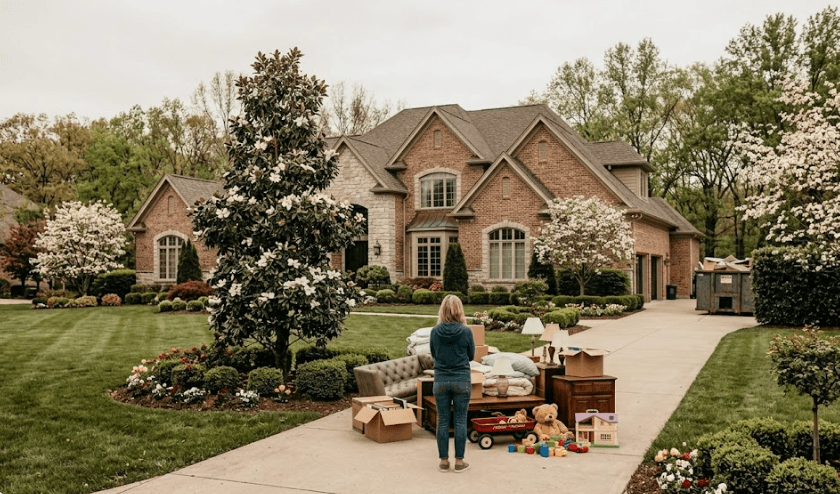
We lived in our dream home. The home I had planned to raise my babies in, welcome grandkids in someday, build our entire life inside of. Every room held a version of the future I had mapped out in my head. And every single item in it was poisoning me.
I didn't know that yet. But my body did.
By the time we made the decision to walk away and take almost nothing with us, I had been sick for seven years. I was past survival mode. I was treading water with my head bobbing up and down, gulping for air. I could no longer work. I could no longer exercise. I could no longer sleep or dream or imagine a future that looked different from the one I was trapped in. Life had become a prison sentence of endless supplements, detox protocols, therapies, and specialist appointments. I had become a burden, or at least that's what the illness had convinced me. And hope, the real kind, the kind that gets you out of bed, had become something I no longer let myself have. It had become too disappointing.
This is the story of the day we threw everything away. And what happened after.
What Does It Actually Mean to "Get Rid of Everything"?
When people hear that we threw everything away, they picture a dramatic moment. A single decision. Someone filling a dumpster in an afternoon.
That's not what it looked like.
It looked like starting with the easy things. The furniture I wasn't attached to. End tables. Decorations. Books I had read once and kept out of habit. I knew everything had to go, but I couldn't rip the bandaid all at once. So I paced myself through the loss.
And then I got to my babies' things.
Their toys. Their keepsakes. The stuffed animals that had been dragged everywhere and loved into softness. And eventually I got to the things that almost stopped me completely: my marked-up Bible, my childhood photo albums, and the Christmas decorations that had been passed down to me and that I had cherished for decades. Ornaments that held memories of people and Christmases that could never be recreated.
Those were the hardest. Not the furniture, not the clothes, not any of the practical things that cost money to replace. The things that held my faith, my history, and the traditions I had planned to pass down to my own children someday. Those were the things I had to decide to let go of.
I did eventually find peace in knowing I chose my health over my possessions. But some days it still stings. What I want you to know is that I also found creative ways to preserve what mattered. I kept papers and photos I wanted to save in clean storage containers and sent them in bulk to a scanning company so I could reprint them or create digital albums. That decision actually started a tradition I treasure now. I create family yearbooks every year. Something beautiful came from one of the hardest losses.
But we're getting ahead of the story.
How Did I Know It Was Time to Leave?
I was a national champion gymnast. My entire identity for most of my life had been built on what my body could do, on discipline, on pushing through pain and coming out stronger on the other side.
The day I realized I could no longer walk without it making me weaker was the day I truly gave up hope of ever getting well. I didn't understand why this was happening. I was in my thirties. Everyone kept telling me those were supposed to be the best years of my life. Instead, they crippled me, literally.
I had seen doctor after doctor. I had tried treatment after treatment. I had spent money I didn't have chasing answers that never came. And somewhere along the way, hope stopped being something I could afford to hold onto.
The day before God gave me my answer, I prayed and asked him for revelation or for the torture to stop. The next morning, I got my answer.
The Day I Finally Got My Answer (After Seven Years and 100+ Symptoms)
My husband had become my driver by that point. My vertigo and dizziness had grown severe enough that I could no longer drive myself anywhere. He was explaining this to a new employee at work one day, telling him he would need to leave early to take me to my cardiologist appointment. My heart had mysteriously become enlarged. I was in my thirties.
The new employee asked why a young, healthy athlete needed a cardiologist.
My husband explained that I had been very ill for years and we were still searching for answers. The employee paused and said it sounded similar to what his sister-in-law in another state had gone through. He gave my husband her number.
I called her that same day.
As I read through my list of symptoms, more than 100 of them at that point, she recognized almost every single one. Our stories were nearly identical. And I knew in my gut, before any test confirmed it, that her diagnosis was mine.
Mold illness.
After seven years, 30-plus doctors, and more money than I can calculate, the answer came through a stranger at my husband's job.
What My Doctor Told Me I Had to Throw Away
Once I was tested and diagnosed, I dove headfirst into understanding what mold illness actually is and what mycotoxins do inside the body. The mold-literate doctor I was working with, combined with the research I was consuming, made one thing clear: remediation alone was not enough.
Mycotoxins don't just live in walls. They live in everything porous. Fabric, wood, paper, mattresses, upholstered furniture, books, stuffed animals, clothing. If it could absorb moisture, it could be holding mycotoxins. And bringing those items into a new, clean home meant bringing the contamination with us.
The guidance was clear: porous items had to go. Anything that was pure glass or metal could potentially stay, but only if it was removed from the home and cleaned using a specific decontamination protocol before it ever entered our new space.
Hearing that felt like being told your home was going to catch fire and being asked to stand there and watch everything you love burn. Except you're the one who has to light the match. It was one of the most traumatic things I have ever experienced.
Pure glass and metal items that have been thoroughly cleaned using appropriate protocols are generally considered lower risk when leaving a moldy home. Everything porous, including fabric, wood, paper, and foam, is at risk of holding mycotoxins and should be evaluated carefully with the guidance of a mold-literate physician or environmental specialist.
The Hardest Things to Let Go Of
I want to be honest about what this process actually costs, because I think a lot of people in the mold community soften it or skip past it, and that doesn't help anyone.
We lost almost everything we owned. Every piece of furniture we had chosen together. Every decoration that made our house feel like a home. My children's toys, the ones worn smooth from being loved so hard. My marked-up Bible. My childhood photo albums. The Christmas decorations passed down through my family that I had planned to hand down to my own children someday.
There is grief in this process that doesn't get talked about enough. It is not just financial loss, though the financial pressure was enormous. My husband was navigating the stress of my illness, his own heartbreak, and the reality of having to purchase an entirely new home and fill it with entirely new everything, all at the same time. The weight of that on a marriage is real.
And somehow, on top of all of it, we were also being questioned by the people around us.
"Did You Really Have to Do That to Your Kids?" How People Reacted
People thought we were nuts.
I heard it directly. Comments about going overboard. Questions about whether we really needed to put our children through this. Suggestions that we were being extreme. From people who loved us, from people who didn't understand, sometimes from both at once.
I tried to explain. I showed research, I shared what our doctor had told us, I laid out the reasoning as clearly as I could. And eventually I stopped. I made the decision to distance myself from the voices that were pulling against what we needed to do and focus entirely on getting my family out.
Looking back, I understand why people reacted the way they did. Mold illness is invisible. The source is invisible. The suffering is invisible to everyone except the person experiencing it. When you can't see what's wrong, it's easy to question whether something is actually wrong.
But here is what I wish those people had done instead. I wish they had shown up for us the way people show up after a house fire.
Nobody Brings You Casseroles When It's Mold
I say this often because I think it captures something true about what mold illness takes from a family.
When your house burns down, people bring you casseroles. They start fundraisers. They show up with bags of clothes and toys for your kids. They don't question whether the fire was real.
Mold illness is experiencing a brutal diagnosis and a house fire at the exact same time. You are fighting for your life while simultaneously losing everything you have ever owned. And instead of casseroles, you often get gaslit. Instead of fundraisers, you get people telling you that you're being extreme. Instead of someone bringing your kids new shoes, you get quiet distance from the people you thought would show up.
Nobody sees the fire. So they don't treat it like one.
If you are someone who has a friend or family member going through this right now, I am asking you directly: show up for them. You don't have to understand it. You just have to believe them.
I Left My Home and Got Worse. Here's Why.
Here is the part of the story that doesn't get told often enough.
I left my home. I got rid of nearly everything I owned. I moved my family into a new space. And I felt worse for two years.
Two years.
I want to be clear about why, because if you are in the middle of this and wondering why leaving hasn't helped the way you thought it would, this matters.
During those two years I was following a protocol that was focused on endless supplements, binders, and an approach that never addressed my nervous system, never focused on opening drainage pathways, and never dealt with what was actually happening inside my body.
Because here is what I had not yet understood: when you have lived in a moldy environment long enough, your body can become colonized with mold internally. I had left the moldy home. But my body had become the moldy home.
The source of my exposure had moved from my walls into me. And no amount of relocating was going to fix that.
If you are still feeling sick after leaving your home and you have not been evaluated for internal mold colonization, that is worth exploring with a mold-literate physician. You can start with our post on why standard tests miss internal colonization and take our mold symptoms assessment to get a clearer picture of where you are. And if you want to talk through your specific situation with me directly, book a free discovery call here.
What Finally Started to Work
Two years after leaving our home, something began to shift.
I stopped the approach that wasn't working. I stopped measuring healing in the number of supplements I was taking or protocols I was following. I started paying attention to my nervous system, to the state of chronic threat my body had been living in for years, and I started learning how to work with my body instead of constantly trying to override it.
That was the beginning of becoming functional again.
Full healing took longer. It came when I finally addressed the internal colonization that had been driving my symptoms long after the environmental source was gone. That piece, understanding that the mold had set up residence inside my body, changed everything.
I share this not to give you a roadmap you can copy exactly, but to tell you that healing is not linear, the timeline is not the same for everyone, and getting worse before you get better does not mean you are doing it wrong. It may mean you haven't yet found the piece that's still missing.
If you want to understand what addressing internal colonization actually involves, start with a conversation with a mold-literate physician. Our mycotoxins guide covers how mycotoxins behave in the body, and our mold symptoms assessment can help you identify patterns that are worth bringing to your doctor.
What I Want You to Know If You're Sitting in That House Right Now
If you are reading this from inside a home you suspect is making you sick, or if you are standing in the middle of deciding whether to leave and take nothing with you, I want to talk directly to you.
Trust your gut.
I know how hard this is. I know the guilt of feeling like you are "making" your family leave, like you are the reason your children are losing their toys and their rooms and their sense of home. That guilt can be incapacitating. I lived inside it for a long time.
But nothing, not one single thing in that house, is worth your health. Things can be replaced. Life cannot. Time cannot. I lost 12 years that I could have spent being the mother I was meant to be. Twelve years fighting for an answer that was there the whole time.
I knew in my gut something was wrong, and I never let myself fully stop looking. That stubbornness, the one my gymnastics background gave me, ended up being the thing that saved me.
There is always hope. There is always the possibility of healing. Our bodies were created to heal. They just need to be given the right conditions and the right support. You are not crazy. You are not extreme. You are a person fighting for your life, and that is exactly what you should be doing.
Don't stop looking for answers. They are there.
If you want support figuring out your next step, our mold symptoms assessment is a good place to start. And if you are ready to talk through where you are and what your path forward looks like, I would love to connect with you personally. Book a free discovery call here.
If our story resonates, I share how all of this began in the episode Why I Became Mold Free Mom.
People ask whether leaving was really necessary. The research says removing the exposure is the single biggest factor in recovery; I laid it out in what one million people's data shows about leaving mold.
Sources
Frequently Asked Questions
Do I really have to throw everything away if I have mold illness?
Not always, but porous materials, including fabric, wood, paper, and foam, can hold mycotoxins and reintroduce exposure in a new environment. The guidance from a mold-literate physician and an experienced environmental specialist should drive that decision for your specific situation. There is no universal answer, but the risk of cross-contamination is real.
What items are safe to keep when leaving a moldy home?
Pure glass and metal items are generally considered lower risk, provided they are removed from the contaminated space and thoroughly cleaned using appropriate protocols before entering a new home. Anything porous should be evaluated carefully.
How do you preserve photos and sentimental items when leaving a moldy home?
One option is to place items you want to preserve in clean, sealed storage containers and send them to a bulk scanning service. This allows you to reprint physical copies or create digital albums without bringing contaminated originals into your new space.
Why did I feel worse after leaving my moldy home?
Leaving the source of exposure is necessary but not always sufficient on its own. If the body has become internally colonized with mold, symptoms can persist or worsen even after relocation. The internal source needs to be identified and addressed separately from the environmental one.
How long does it take to feel better after leaving a moldy home?
There is no single timeline. Some people begin to improve relatively quickly after removing exposure. Others, particularly those with internal colonization or nervous system dysregulation, may feel worse for an extended period before improvement begins. Working with a mold-literate physician to identify what is still driving symptoms is the most important step.
What is internal mold colonization and how do I know if I have it?
Internal mold colonization refers to mold establishing itself inside the body, particularly in the sinuses and gut, rather than just causing a reaction to external exposure. Standard allergy and urine tests often miss it. Blood testing for mycotoxin antibodies is a more reliable starting point. Talk to a mold-literate physician if you suspect this may apply to you.
How do I explain mold illness to family members who think I think I am overreacting?
This is genuinely hard. The illness is invisible, which makes it easy for people who are not experiencing it to question its severity. Sharing reputable resources from organizations like the CDC and EPA can help. Framing it as a health emergency that requires emergency-level action sometimes lands better than trying to explain the science.
Is it possible to fully recover from mold illness?
Yes. Full recovery is possible. It requires removing the source of exposure, addressing what is happening inside the body, and supporting the nervous system and detoxification pathways over time. It is rarely fast and rarely linear, but it is possible. I am living proof.
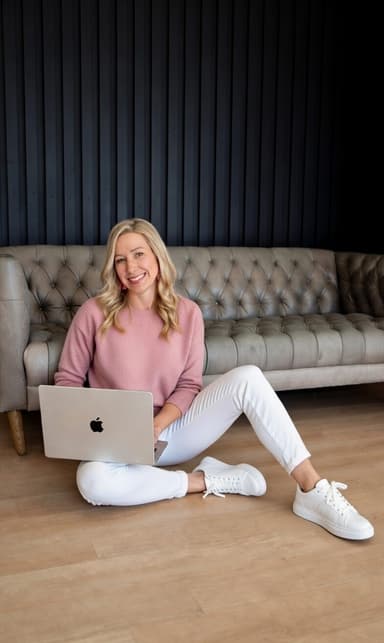
Aubree Felderhoff
Board Certified Holistic Health Practitioner | Mold Recovery Concierge | Certified Primal Health Coach | Master Personal Trainer
Aubree spent 12 years and more than $250,000 searching for answers to a mystery chronic illness that 30-plus doctors couldn't solve. The first culprit was a mycotoxin-overloaded home that triggered a cascade of symptoms nobody could trace back to the source. After finally identifying the connection, remediating, and rebuilding her health, she faced a second exposure years later when water damage in her next home brought the symptoms flooding back.
That second experience is what shaped everything. She found a physician who understood antifungal treatment, completed neuroplasticity training, and fully recovered. Having navigated mold illness twice, from two different sources, she understands both how it starts and how it ends.
Aubree is a Board Certified Holistic Health Practitioner through the American Association of Drugless Practitioners (AADP), a Certified Primal Health Coach, NASM Certified Trainer, and Cooper Clinic Certified. Before mold illness defined her life, she spent 14 years in elite fitness as a national champion collegiate gymnast. She brings that same discipline and evidence-based approach to mold recovery, helping families get clear answers faster, without the decade of wrong turns she endured.
The newsletter
A little hope in your inbox
One email a week from me, with what actually helps families get better. No spam, unsubscribe anytime.
Recommended Products
Recommended Products may include affiliate links. See our Affiliate Disclosure for details.
Keep learning with mold illness guides
Start-here pages on symptoms, testing, CIRS, remediation, and hiring an inspector. Free tools and program paths are linked from each guide.
- Mold Remediation GuideWhat proper remediation looks like, how to separate inspection from the fix, and what to do when you are still sick after the work.
- How to Test for Mold IllnessWhy blood testing comes first, where urine mycotoxin and ERMI fall short, and how to order body vs home testing without wasting money.
- Mold Illness Symptoms GuideHow mold-related symptoms show up across body systems, why they get misdiagnosed, and when a pattern points to exposure.
Need personalized guidance?
Start with free guides and the symptom assessment, or talk with Aubree about the right program path.