
Ochratoxin A: Symptoms, Sources, and How to Test
Quick Answer
Ochratoxin A is one of the most common mycotoxins worldwide, hiding in coffee, wine, grains, and water-damaged homes. Here is how to spot it and test.
If you have been chasing brain fog, kidney issues, or fatigue that no one can explain, ochratoxin A might be one of the reasons. It is one of the most common mycotoxins in the world, and most people are getting exposed every single day without knowing it. Not just from water-damaged buildings. From coffee, wine, bread, and dried fruit too. I found ochratoxin A in my own results, and it changed how I shop, what I feed my kids, and what I am willing to compromise on.
What is ochratoxin A?
Ochratoxin A is a mycotoxin produced by certain species of Aspergillus and Penicillium mold. It is one of the most studied mycotoxins in the world because it shows up in so much of the global food supply and because it is genuinely toxic to the human body.
Once ochratoxin A is in your system, it does not leave quickly. Research shows it has a half-life of around 35 days in humans, which is one of the longest of any mycotoxin we know about. That means a single exposure can stay measurable in your blood for months, and ongoing low-dose exposure from food builds up over time.
Ochratoxin A is classified by the International Agency for Research on Cancer as a Group 2B carcinogen, which means it is possibly carcinogenic to humans. The European Food Safety Authority has set maximum allowable levels in food because the data on its toxicity is that clear.
Where does ochratoxin A actually come from?
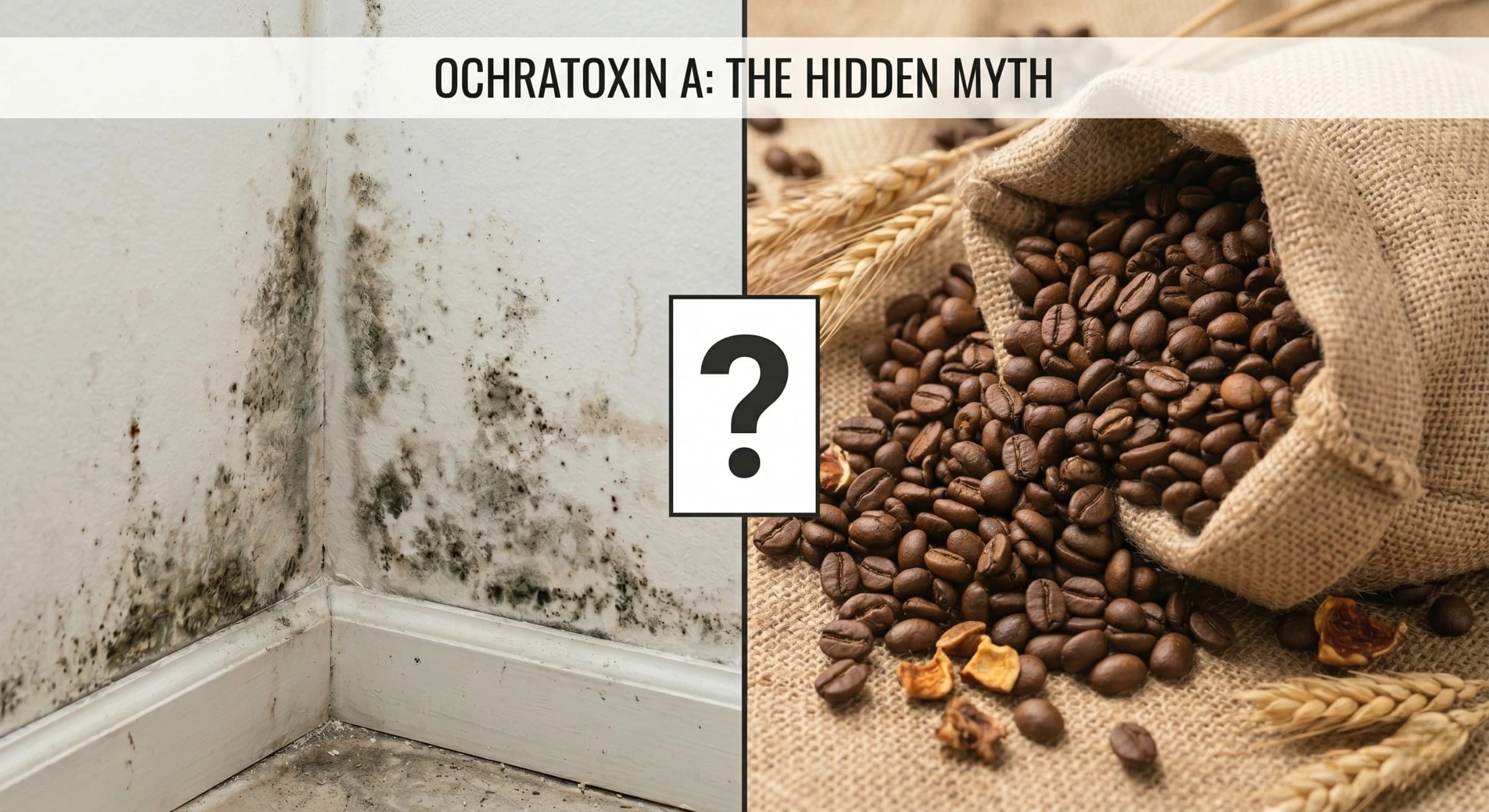
This is where most mold content gets it wrong. People hear "mycotoxin" and immediately picture a water-damaged wall. Water damage is absolutely part of the picture, but ochratoxin A is just as much a food problem as it is a building problem.
The Aspergillus and Penicillium species that produce ochratoxin A grow on stored crops. They love warm, humid storage conditions, which is why coffee beans, grains, wine grapes, dried fruit, and nuts are some of the most consistently contaminated foods on the market.
Here is the simple version. Ochratoxin A shows up wherever mold has had a chance to grow on food before it gets to you, and it shows up in homes wherever water has gotten into materials that mold can colonize.
What does ochratoxin A do to your body?
Ochratoxin A is hard on multiple organ systems, but the research keeps pointing back to one in particular. The kidneys.
Animal studies and human population data both show that ochratoxin A is nephrotoxic, meaning it damages kidney tissue. It has been linked to Balkan endemic nephropathy, a chronic kidney disease that clusters in regions of Europe with high dietary ochratoxin A exposure.
Beyond the kidneys, ochratoxin A is also:
- Neurotoxic. It crosses the blood-brain barrier and has been associated with brain fog, cognitive issues, and in animal studies, neurodegenerative changes.
- Immunotoxic. It suppresses immune function, which is one reason people exposed to ochratoxin A often catch every virus that comes through the house.
- Hepatotoxic. It puts stress on the liver, which is the organ trying to detox it in the first place.
- A possible endocrine disruptor. Emerging research suggests it may interfere with hormone signaling.
This is not a mild compound. It is one of the more biologically active mycotoxins, and the fact that it lingers in the body for weeks at a time means even moderate exposure adds up.
What are the symptoms of ochratoxin A exposure?
Symptoms of ochratoxin A exposure overlap heavily with other mycotoxin exposures, which is part of why it gets missed so often. The most commonly reported symptoms include:
- Persistent fatigue that does not improve with sleep
- Brain fog, memory issues, and word-finding problems
- Headaches
- Increased thirst and frequent urination (a kidney signal)
- Lower back pain near the kidneys
- Anxiety, low mood, or sudden personality changes
- Frequent infections or slow recovery from illness
- Joint pain and muscle aches
- Sensitivity to chemicals and smells
- Digestive issues, particularly when eating contaminated foods
If you have been told your symptoms are anxiety, perimenopause, or just stress, and you have water damage in your past or a diet heavy in coffee, wine, and grains, ochratoxin A is worth looking into.
Why is ochratoxin A so common in food?
Because mold is part of agriculture, and ochratoxin-producing mold loves the exact conditions our food supply creates.
Coffee beans get fermented and dried, often in humid climates. Wine grapes sit in bins. Grains get stored in silos for months. Dried fruit holds enough residual moisture to be a perfect surface for Aspergillus. Peanuts are stored underground before harvest. Every one of those steps is a potential growth opportunity for the mold that produces ochratoxin A.
The foods with the highest documented ochratoxin A levels are:
- Coffee, especially conventionally grown and processed beans
- Wine, particularly red wine made from grapes grown in warmer regions
- Grains, including wheat, oats, barley, rye, and corn
- Dried fruit, especially raisins, figs, and dates
- Nuts, especially peanuts
- Cocoa and chocolate
- Beer, since it is made from grains
- Spices, particularly paprika and black pepper
You do not have to eliminate every one of these to make a difference. You just have to know what you are working with.
How does ochratoxin A get into your home?
When ochratoxin A shows up from a building, it comes from Aspergillus or Penicillium colonies growing somewhere with a moisture source. That can be a slow leak under a sink, a roof issue, a flooded basement that did not get dried fast enough, or HVAC condensation that has gone unaddressed.
Aspergillus is the most common toxic mold in American homes, and several species of Aspergillus produce ochratoxin A. So if you have Aspergillus in your home, you may have ochratoxin A in your air and dust.
This is one of the reasons I am so blunt about the order of operations in blood testing versus environmental testing. If your body is showing ochratoxin A, your home is a suspect. But your body is the more reliable place to start.
How do you test for ochratoxin A exposure?
There are three main ways ochratoxin A gets tested for. They are not equally useful.
Blood testing for ochratoxin A antibodies. This is the most reliable way to know whether ochratoxin A has affected you at a level your immune system is responding to. Blood testing measures antibodies your body has made in response to the mycotoxin, which is a direct signal of meaningful exposure. It is also affordable compared to most environmental testing.
Urine mycotoxin testing. This is the test most often marketed online, but the science on it is messy. Urine testing measures what your body is excreting in the moment you collect the sample, which can vary wildly day to day based on hydration, what you ate, and whether your detox pathways are working. Results are often inconsistent, and a "normal" urine result does not rule out a real exposure. I do not recommend it as a standalone diagnostic.
Environmental testing of your home. Air and surface testing can identify Aspergillus and Penicillium species, but it does not directly measure ochratoxin A in your body. It is useful as a second step once a blood test gives you reason to investigate your environment.
The order matters. Test your body first. If your blood work shows ochratoxin A, then it is time to investigate your home and your diet.
Why I changed how I shop after finding ochratoxin A in my results
Ochratoxin A showed up in my blood work, and once I saw the number, I could not unsee it. My home was already remediated. We had already done the hard work on the building. So if ochratoxin A was still showing up, it had to be coming from somewhere else.
It was coming from my food.
I started with coffee, because coffee is one of the most contaminated commodities on the planet and because I drink it every day. We switched to mycotoxin-tested coffee. Bulletproof tests their beans for mold and mycotoxins, and that is what we use. I am not affiliated with them. I just like that they actually test.
From there I started paying more for organic grains and organic wine. I still enjoy wine on occasion, which I want to be honest about because I do not believe in pretending you have to give up everything to recover. Choosing better sources is not the same as eliminating something entirely.
I drifted away from peanut butter, which was hard because my kids loved it. We swapped to almond butter for most things, and I keep an eye on brands that test their nuts.
The unexpected win has been the dehydrator. My kids love drying their own fruit, and it has turned into one of those rare wins where the healthier choice is also the more fun one. They pick the fruit, they slice it, they watch it dry. They get the dried fruit they were going to eat anyway, and I get to skip the worst category of store-bought options.
None of this is about being perfect. It is about knowing where the high-risk foods are and making better choices in the categories where the data is clearest.
How to reduce your ochratoxin A exposure starting this week
If you suspect ochratoxin A is part of your picture, here is where to start.
- Switch to mycotoxin-tested coffee. This is the single highest-impact food swap most people can make, because coffee is consumed daily and is one of the most contaminated commodities.
- Buy organic grains and bread when possible. Organic certification reduces the use of certain agricultural practices that contribute to mold growth in storage.
- Be selective with wine. Drier climates, organic producers, and smaller-batch winemakers tend to have lower ochratoxin A levels.
- Cut or limit peanuts. Peanuts are one of the most contaminated nuts. Swap to almonds, cashews, or pistachios from brands that test.
- Skip the store-bought dried fruit or dehydrate your own. A basic dehydrator is one of the best investments you can make for a mycotoxin-aware kitchen.
- Address any home water damage promptly. Even a small leak that goes unaddressed for a few weeks is enough time for Aspergillus to colonize.
- Get a blood test for ochratoxin A antibodies if you have ongoing symptoms. Knowing where you stand is the foundation for everything else.
If you want help figuring out where to start, the mold symptoms assessment is a good first step to see whether ochratoxin A and other mycotoxin exposures might be part of what is going on.
What recovery from ochratoxin A exposure actually looks like
Recovery from ochratoxin A is not fast, and anyone who tells you otherwise is selling something. The 35-day half-life means it takes months for your body to clear a meaningful exposure, and that is assuming you are no longer being re-exposed.
The good news is that your body is genuinely capable of clearing it. Your liver, kidneys, and gut work together to process and eliminate mycotoxins. What you need is not a magic protocol. You need to stop the exposure, support your body, and give it time.
What that looks like in practice:
- Remove the source. If it is in your home, address the moisture and mold. If it is in your food, change what you are buying.
- Support liver and kidney function with hydration, fiber, and a clean diet.
- Work with a mold-literate physician if your symptoms are significant, especially if your kidney markers are off.
- Be patient. The body heals. It just does not heal on the timeline marketing materials suggest.
If you want guided support through this process, the Mold Free Mom program walks you through what to do step by step, and Aubree AI is there for the smaller questions in between.
Ochratoxin is one of several compounds mold produces. For the full picture of how they work and how the body handles them, read what mycotoxins are.
Sources
- International Agency for Research on Cancer. "Ochratoxin A." IARC Monographs Volume 56.
- European Food Safety Authority. "Risk assessment of ochratoxin A in food." EFSA Journal, 2020.
- National Institutes of Health. "Ochratoxin A and human health risk: A review of the evidence." PubMed, NIH.
- Centers for Disease Control and Prevention. "Molds in the Environment." CDC.gov.
- U.S. Environmental Protection Agency. "Mold and Health." EPA.gov.
- National Library of Medicine. "Ochratoxin A: Molecular Interactions, Mechanisms of Toxicity and Prevention at the Molecular Level." PubMed Central.
Frequently Asked Questions
What foods are highest in ochratoxin A?
Coffee, wine, grains (wheat, oats, barley, rye, corn), dried fruit (especially raisins, figs, and dates), peanuts, cocoa, beer, and certain spices like paprika and black pepper are the most consistently contaminated. Coffee and grains tend to be the biggest daily exposures for most people.
Can you taste or smell ochratoxin A in food?
No. Ochratoxin A is invisible, tasteless, and odorless. Food can be heavily contaminated and look, smell, and taste completely normal. This is one of the reasons it is so easy to be exposed without knowing.
Is ochratoxin A worse from food or from mold in your home?
Both matter, but they work differently. Food exposure tends to be a steady low-dose drip every day. Home exposure can be much higher per breath and continuous for as long as you live there. For someone with a remediated home, food becomes the bigger ongoing exposure. For someone still living in a water-damaged home, the home is almost always the bigger problem.
How long does ochratoxin A stay in your body?
Ochratoxin A has a half-life of around 35 days in humans, which is one of the longest of any mycotoxin. That means it takes months for your body to clear a meaningful exposure, even after the source is removed.
Does organic coffee have less ochratoxin A?
Organic certification does not directly measure mycotoxins, so organic alone is not a guarantee. What you want is coffee from a roaster that specifically tests for mold and mycotoxins. Some organic coffee tests low. Some does not. The label that matters is tested, not organic.
Can ochratoxin A cause kidney damage?
Yes. Ochratoxin A is one of the most well-documented nephrotoxic mycotoxins. It has been linked to chronic kidney disease in regions with high dietary exposure, and it is part of why kidney symptoms like increased thirst, frequent urination, and lower back pain show up in people with mold illness.
Is ochratoxin A the same as black mold toxin?
No. Black mold (Stachybotrys chartarum) produces a different family of mycotoxins called trichothecenes. Ochratoxin A is produced primarily by Aspergillus and Penicillium species, which are far more common in homes than Stachybotrys.
How accurate is urine testing for ochratoxin A?
Urine testing for ochratoxin A is highly variable. Results change based on hydration, what you ate the day before, and how well your detox pathways are working. A normal urine result does not rule out a real exposure, and a positive result does not always reflect ongoing exposure. Blood testing for ochratoxin A antibodies is more reliable for understanding whether your immune system has been activated by exposure.

Aubree Felderhoff
Board Certified Holistic Health Practitioner | Mold Recovery Concierge | Certified Primal Health Coach | Master Personal Trainer
Aubree spent 12 years and more than $250,000 searching for answers to a mystery chronic illness that 30-plus doctors couldn't solve. The first culprit was a mycotoxin-overloaded home that triggered a cascade of symptoms nobody could trace back to the source. After finally identifying the connection, remediating, and rebuilding her health, she faced a second exposure years later when water damage in her next home brought the symptoms flooding back.
That second experience is what shaped everything. She found a physician who understood antifungal treatment, completed neuroplasticity training, and fully recovered. Having navigated mold illness twice, from two different sources, she understands both how it starts and how it ends.
Aubree is a Board Certified Holistic Health Practitioner through the American Association of Drugless Practitioners (AADP), a Certified Primal Health Coach, NASM Certified Trainer, and Cooper Clinic Certified. Before mold illness defined her life, she spent 14 years in elite fitness as a national champion collegiate gymnast. She brings that same discipline and evidence-based approach to mold recovery, helping families get clear answers faster, without the decade of wrong turns she endured.
The newsletter
A little hope in your inbox
One email a week from me, with what actually helps families get better. No spam, unsubscribe anytime.
Recommended Products
Recommended Products may include affiliate links. See our Affiliate Disclosure for details.
 Single Session
The Get Unstuck Session
For families already in mold recovery who are stuck. One focused 50-minute session to identify exactly where you're stuck and the specific next step to move forward.
 Best Value
Mold Blood Test Bundle
The mycotoxin blood test ordered through my practitioner account, a personalized written review of your results, and a 50-minute call with me. One purchase, one practitioner, one path forward.
Keep learning with mold illness guides
Start-here pages on symptoms, testing, CIRS, remediation, and hiring an inspector. Free tools and program paths are linked from each guide.
- How to Test for Mold IllnessWhy blood testing comes first, where urine mycotoxin and ERMI fall short, and how to order body vs home testing without wasting money.
- Mold Illness Symptoms GuideHow mold-related symptoms show up across body systems, why they get misdiagnosed, and when a pattern points to exposure.
Need personalized guidance?
Start with free guides and the symptom assessment, or talk with Aubree about the right program path.