
Air Purification for Mold Recovery: What Actually Works (And What Doesn't)
Quick Answer
Your body cannot heal from mold illness while you're still breathing contaminated air. Learn why PCO technology works better than HEPA alone for mold recovery.
You can take all the supplements in the world. You can follow every protocol. But if you're still breathing in what's making you sick, your body is trying to heal while simultaneously fighting off new attacks. It's like trying to bail out a boat without plugging the hole.
Disclosure: This post contains affiliate links. If you purchase through our store or partner links, we may earn a small commission at no additional cost to you. We only recommend products Aubree has personally used in her own mold recovery.
Clean air isn't the whole answer to mold recovery, but nothing else works without it.
I learned this the hard way. Over twelve years of chronic illness, I tried everything. Different doctors, expensive treatments, thousands of dollars in supplements. Some of it helped marginally. None of it got me to the finish line. What I kept missing was the foundation: I had to stop the ongoing exposure completely before my body had any chance of actually healing.
Getting into clean air first is the most important thing you can do, and it matters both for your environment and inside the rooms you're spending time in every day.
Why Clean Air Is the Non-Negotiable First Step
Here's something that doesn't get said clearly enough: remediation clearing your home's mold problem doesn't automatically mean your indoor air is clean.
Mold spores are extraordinarily small, typically 2 to 100 microns in diameter, and they don't stay airborne indefinitely. They land on surfaces. They settle into upholstery, bedding, and carpet. They get stirred back up by foot traffic, HVAC airflow, and daily movement through the house. Even in a home that passed post-remediation clearance testing, residual spore load on surfaces can continue contributing to symptoms, especially in people whose immune systems are still highly sensitized.
Beyond spores, there's the mycotoxin question. Mycotoxins, the toxic compounds that certain molds produce, are far smaller than spores, often in the nanometer range. They attach to dust particles and persist in indoor environments long after active mold growth has been addressed.
This is why people often feel better when they leave their home (even a remediated one) and worse when they return. The body is responding to a cumulative environmental load, not a single dramatic exposure event.
The research bears this out. Studies on indoor air quality following water damage consistently find that surface-settled mold and mycotoxin contamination persists longer than airborne spore counts would suggest. Addressing only the air that passes through a filter isn't enough for most mold-recovery situations. You need something that works on the whole room.
The Problem with Standard HEPA Filters for Mold
HEPA filters are the gold standard for particle capture, and they're genuinely effective at what they do. According to EPA standards, a true HEPA filter must capture at least 99.97% of particles 0.3 microns or larger, and that includes most mold spores within that size range.
But HEPA filtration has two significant limitations for mold-specific recovery situations:
First, HEPA filters are passive. They only clean the air that physically passes through the machine. If you have a HEPA purifier running in the corner of your bedroom, it's cleaning the air in the vicinity of the unit, but mold spores that have settled on your nightstand, your curtains, or your mattress aren't going through that filter. They're sitting there waiting to be disturbed and re-aerosolized.
Second, mycotoxins are often below HEPA's capture threshold. Mycotoxins in their particle-bound form can range from 0.1 to 0.3 microns, right at the edge of or below what HEPA is designed to capture. Even a technically perfect HEPA filter may not be removing the mycotoxin load from your indoor environment.
This doesn't mean HEPA filters aren't worth using. They absolutely are, and they're an important part of a comprehensive air quality strategy. But for mold specifically, HEPA alone is incomplete.
What Is Photocatalytic Oxidation (PCO) Technology?
Photocatalytic Oxidation, or PCO, works on an entirely different principle than filtration. Rather than pulling air through a filter to remove particles, PCO generates reactive oxygen species (primarily hydroxyl radicals and superoxide ions) when ultraviolet light strikes a photocatalytic surface, typically titanium dioxide.
These reactive molecules are then released into the room, where they oxidize and neutralize organic compounds, including mold spores, mycotoxins, bacteria, viruses, and volatile organic compounds (VOCs). Crucially, they work both in the air and on surfaces throughout the room, not just in the immediate vicinity of the purifier unit.
Think of it as the difference between a water filter (passive, only cleans what goes through it) and chlorinating a swimming pool (active, treats the entire body of water).
PCO was originally developed for industrial and agricultural applications and was later adapted by NASA for use on the International Space Station, where maintaining air quality in an entirely sealed environment with no ability to open a window is a life-safety issue. The technology has since been refined substantially for residential and commercial use.
One important nuance: not all PCO products are equivalent. Some early implementations of PCO technology produced ozone as a byproduct, which is itself an airway irritant and counterproductive for anyone dealing with respiratory symptoms from mold exposure. The EPA has specifically warned against ozone-generating air cleaners for this reason. When evaluating any PCO product, ozone-free certification is a non-negotiable requirement.
The Research Behind PCO
The evidence base for PCO as an effective mold and pathogen control technology has grown substantially over the past two decades.
A study published in the Journal of Food Protection demonstrated that PCO technology achieved greater than 99% reduction in airborne fungal counts in controlled environmental conditions. Research from the International Journal of Environmental Research and Public Health found significant reductions in both airborne and surface-deposited mold species following PCO treatment in water-damaged building environments.
Independent laboratory testing has demonstrated PCO effectiveness against common mold species including Aspergillus niger, Cladosporium, and Stachybotrys chartarum (black mold), reducing airborne counts by over 95% and surface fungal loads by over 99% in controlled settings.
The mechanism is well-established: hydroxyl radicals produced by PCO react with the cell walls and mycotoxin molecules of mold organisms, breaking them down into water and carbon dioxide rather than simply trapping them in a filter where they remain viable.
For mycotoxins specifically, which are chemically stable organic compounds that survive HEPA filtration, the oxidative destruction that PCO provides is particularly relevant. Whereas filtration captures but doesn't neutralize, PCO actually breaks the mycotoxin molecule down.
PCO vs. HEPA: A Direct Comparison
| Feature | HEPA Filters | PCO Technology | HEPA + PCO Combined |
|---|---|---|---|
| Removes airborne particles | Yes (99.97% at 0.3 microns or larger) | Yes, destroys in air | Yes + destroys |
| Kills mold on surfaces | No | Yes | Yes |
| Addresses mycotoxins | Partial (size-limited) | Yes | Yes |
| Removes VOCs and odors | No (needs carbon add-on) | Yes | Yes |
| Filter replacement required | Yes (every 6-12 months) | No | Partial |
| Ozone concern | No | Depends on brand, verify | Varies |
| Coverage area | Near-unit only | Whole room + surfaces | Whole room |
| Works while you sleep | Yes | Yes | Yes |
The practical conclusion: HEPA and PCO address different parts of the problem. HEPA is better for large particle capture; PCO is better for surface contamination, mycotoxins, and active neutralization. A combined approach provides the most comprehensive protection, and for mold-recovery situations specifically, PCO should be part of whatever system you choose.
What to Look for When Choosing an Air Purifier for Mold
Not every air purifier marketed for mold is worth your money. Here's what actually matters:
True PCO technology, not ionization. Ionizers and PCO are sometimes conflated in marketing materials, but they work differently. True PCO uses a photocatalytic surface and UV light to generate hydroxyl radicals. Make sure that's what you're getting, not just an ionizer being marketed with PCO language.
Ozone-free certification. This is non-negotiable if you have any respiratory symptoms. Ozone is a lung irritant that will make mold-related airway issues worse. Look for independent third-party certification that ozone output is at or below 0.05 ppm (the FDA standard for medical devices used in occupied spaces).
Third-party efficacy testing. Any reputable air purification company should be able to point you to independent laboratory test results, not just internal studies, demonstrating real-world pathogen and mold reduction. If the evidence is marketing claims without lab data behind them, look elsewhere.
Appropriate coverage area. Coverage area claims are often overstated. A unit rated for 1,500 square feet under ideal conditions may only effectively cover 750 square feet in a typical home environment with furniture, obstructions, and air stratification. Size up rather than down.
Ongoing cost of ownership. HEPA filters need replacement every 6-12 months, which adds up. Factor this into your total cost of ownership when comparing products, not just the purchase price.
Safety for continuous use. For mold recovery, you need this running 24/7, not just when you remember. Make sure the unit is designed for continuous operation and that any heat generated won't become a fire risk.
What I Use and Recommend
After twelve years of navigating mold illness and trying a lot of products that didn't deliver, I'm careful about what I put my name on. I use PCO-based air purification in my own home and have seen firsthand what a difference it makes in how I feel.
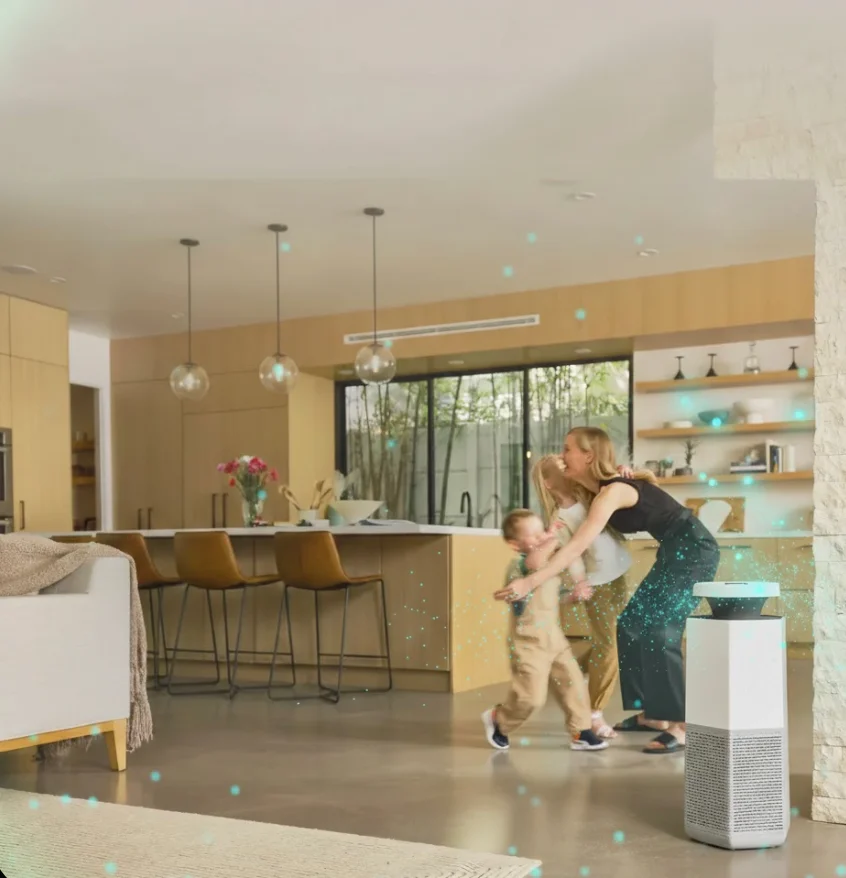
The brand I recommend and use is Puraclenz. Here's why it earned my trust:
Their technology uses true PCO, not ionization dressed up with PCO marketing language. They have over 20 patents protecting the specific implementation, and their efficacy claims are backed by independent third-party laboratory testing showing 99.9% reduction in common mold species. They're certified ozone-free. And the core PCO technology doesn't require consumable filters to keep running, which matters for long-term affordability.
I recommend two of their products depending on your situation:
Puraclenz Photon P3000X: Their PCO-focused unit covering up to 3,000 square feet. If mold is your primary concern and you want a straightforward, high-coverage solution, this is the one. No HEPA component means no filters to replace. Just continuous PCO protection.
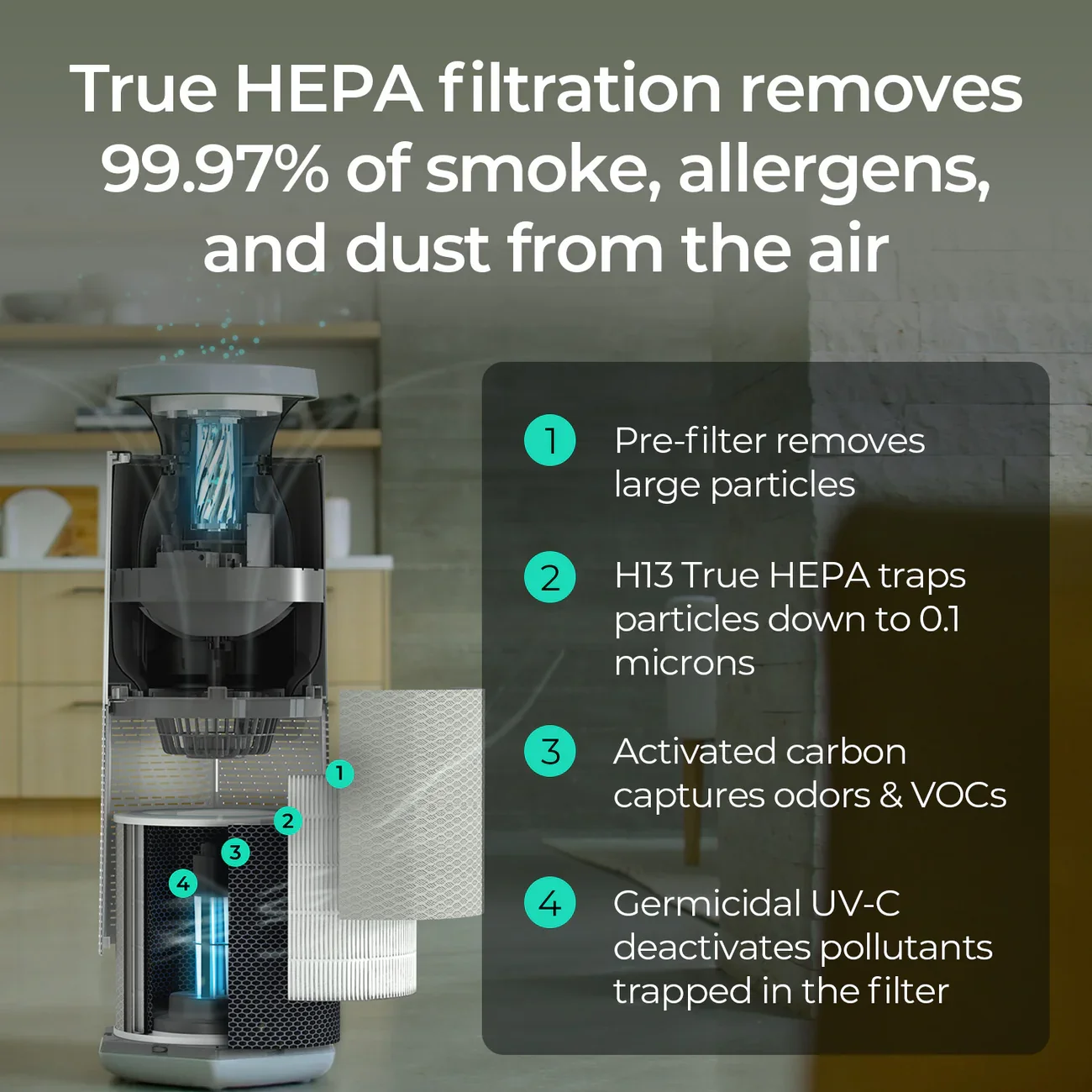
Puraclenz Core C750: Their comprehensive system combining PCO with HEPA, activated carbon (for VOCs and odors), and UV-C germicidal light, covering up to 750 square feet. Better if you're dealing with multiple air quality concerns like allergies, pets, smoke, or odors in addition to mold.
Both are available in our store with affiliate pricing. I only recommend products I've actually used, and this is one of them.
The Bottom Line
Clean air is the foundation of mold recovery, not optional, and not something you can compensate for with better supplements or more aggressive protocols. Your body cannot heal from something it's still being exposed to.
HEPA filtration is a good start but incomplete for mold-specific recovery. PCO technology adds active, whole-room neutralization of spores and mycotoxins, including on surfaces that a passive filter can never reach. The combination of both provides the most comprehensive protection.
No matter where you are in your recovery journey, still in a moldy home, post-remediation, or in a new space trying to stay ahead of it, getting your indoor air right is the first thing to get right.
Everything else builds from there.
Sources
- Goswami P, et al. "Photocatalytic degradation of mycotoxins using TiO2 under UV irradiation: A review." Food Control. 2017;82:170-182. https://www.sciencedirect.com/science/article/abs/pii/S0956713517301603
- Vohra A, Goswami DY, Deshpande DA, Block SS. "Enhanced photocatalytic inactivation of bacterial spores on surfaces in air." Journal of Industrial Microbiology and Biotechnology. 2006;33(3):163-170. https://pubmed.ncbi.nlm.nih.gov/16133122/
- United States Environmental Protection Agency. "What are air cleaners and air purifiers?" EPA Indoor Air Quality. https://www.epa.gov/indoor-air-quality-iaq/air-cleaners-and-air-purifiers
- United States Environmental Protection Agency. "Ozone Generators that are Sold as Air Cleaners." EPA. https://www.epa.gov/indoor-air-quality-iaq/ozone-generators-are-sold-air-cleaners
- Daisey JM, Angell WJ, Apte MG. "Indoor air quality, ventilation and health symptoms in schools: an analysis of existing information." Indoor Air. 2003;13(1):53-64. https://pubmed.ncbi.nlm.nih.gov/12627910/
- Mendell MJ, et al. "Respiratory and allergic health effects of dampness, mold, and dampness-related agents: a review of the epidemiologic evidence." Environmental Health Perspectives. 2011;119(6):748-756. https://pubmed.ncbi.nlm.nih.gov/21269928/
- Srikanth P, et al. "Bioaerosols in indoor environment: composition, health effects and analysis." Indian Journal of Medical Microbiology. 2008;26(4):302-312. https://pubmed.ncbi.nlm.nih.gov/18974501/
- NASA Technical Reports Server. "Photocatalytic Oxidation Technology Development for Space Applications." NASA. https://ntrs.nasa.gov/
This post contains affiliate links. If you purchase through our store, we may earn a small commission at no additional cost to you. We only recommend products we've personally used and believe in. See our affiliate disclosure for full details.
Frequently Asked Questions
Will an air purifier make a difference if I still have mold in my house?
Yes, but it's not a substitute for remediation. It buys you time and reduces your ongoing exposure load while you address the source. PCO technology actively destroys mold spores and mycotoxins in the air and on surfaces, which means your body is fighting less on a daily basis even before remediation is complete. You still need to fix the root cause.
How long before I notice a difference in my symptoms?
Most people notice improvement in sleep quality and sinus congestion within the first one to two weeks of running high-quality air purification continuously. Cognitive symptoms like brain fog tend to improve more gradually. Keep in mind that your body's inflammatory response takes time to come down. Cleaner air initiates the process, but the healing itself unfolds over weeks and months.
Is PCO technology safe for children and pets?
Yes, with the critical caveat that the unit must be ozone-free. Ozone is a respiratory irritant that will worsen airway symptoms, and some air purifiers (including some marketed as PCO) produce ozone as a byproduct. The EPA specifically warns against ozone-generating air cleaners in occupied spaces. Always verify ozone-free certification before purchasing any air purifier for a home with children, pets, or anyone with respiratory sensitivities.
Can I just use a regular HEPA filter instead of PCO?
HEPA filtration is valuable but insufficient on its own for mold recovery. HEPA captures airborne particles within its size range but can't address mold that's already settled on surfaces, and mycotoxins often fall below HEPA's effective capture threshold. PCO actively destroys contaminants throughout the room, not just what drifts through the machine. For mold specifically, either PCO alone or PCO combined with HEPA provides more complete protection than HEPA alone.
How often do PCO units need maintenance?
True PCO units without HEPA components (like the Puraclenz Photon) don't have consumable filters to replace. The photocatalytic surface is long-lasting and the UV bulb typically has a multi-year lifespan. Units combining PCO with HEPA (like the Puraclenz Core) have a HEPA filter requiring periodic replacement, typically every 12 months depending on your air quality and usage. Factor this into your cost comparison when evaluating products.
Does the coverage area listed on the box actually mean that?
Coverage area claims are measured under ideal conditions, typically an empty room with good air circulation. In a real home with furniture, soft surfaces absorbing reactive molecules, and normal airflow patterns, effective coverage is usually 50-70% of the stated rating. If a unit is rated for 3,000 square feet and you're trying to cover a 1,500 square foot open floor plan, you're probably fine. If you're in a heavily furnished space with lots of soft goods, size up.
Should I run my air purifier continuously or just part of the time?
Continuously, particularly during active mold recovery. Airborne spore counts and mycotoxin levels rebuild in between cycles if you're only running the unit intermittently. For maintenance in a clean environment, running it on a lower setting continuously is better than high-intensity periodic use. Make sure whatever unit you choose is rated for continuous operation.
I had remediation done. Do I still need air purification?
Yes, at least for the recovery period. Post-remediation clearance testing verifies that airborne mold counts have returned to acceptable levels, but residual spore and mycotoxin load on surfaces can persist, and your body's immune response doesn't instantly calm down just because the clearance test passed. Running air purification during the recovery phase supports your body in completing the healing process in a lower-burden environment.

Aubree Felderhoff
Board Certified Holistic Health Practitioner | Mold Recovery Concierge | Certified Primal Health Coach | Master Personal Trainer
Aubree spent 12 years and more than $250,000 searching for answers to a mystery chronic illness that 30-plus doctors couldn't solve. The first culprit was a mycotoxin-overloaded home that triggered a cascade of symptoms nobody could trace back to the source. After finally identifying the connection, remediating, and rebuilding her health, she faced a second exposure years later when water damage in her next home brought the symptoms flooding back.
That second experience is what shaped everything. She found a physician who understood antifungal treatment, completed neuroplasticity training, and fully recovered. Having navigated mold illness twice, from two different sources, she understands both how it starts and how it ends.
Aubree is a Board Certified Holistic Health Practitioner through the American Association of Drugless Practitioners (AADP), a Certified Primal Health Coach, NASM Certified Trainer, and Cooper Clinic Certified. Before mold illness defined her life, she spent 14 years in elite fitness as a national champion collegiate gymnast. She brings that same discipline and evidence-based approach to mold recovery, helping families get clear answers faster, without the decade of wrong turns she endured.
Need personalized guidance?
Talk to our AI coach or book a session with Aubree for one-on-one support.